
...

By Brendan Cole
Senior Reporter
0
Share
Newsweek is a Trust Project member
See more of our trusted coverage when you search.Prefer Newsweek on Googleto see more of our trusted coverage when you search.
Donald Trump is right to be concerned about the prices Americans pay for beef, but his plan to allow an influx of foreign ground beef to lower costs is only a “short-term Band-Aid,” founder of American meat distribution firm Good Ranchers, Ben Spell, has told Newsweek.
Years of drought, high feed costs and herd liquidation have spiked beef prices, which the U.S. president looked to address by announcing that it would allow 300,000 metric tons of ground beef imports at a reduced tariff rate for 90 days.
Trump said on August 21 that the meat could be sold at 25 percent below market prices as his administration grapples with Americans' cost-of-living concerns ahead of critical midterm elections in November.
Read More
Trump Says He Has a Beef Deal. Here Are Five Unanswered Questions 9 min read

“We disagree that more cheap foreign beef is the long-term solution,” said Spell, whose firm sources meat from within the United States. “It's a shot in the arm for American families, and I know people need relief, but there's a bigger underlying problem that has to be addressed.”
The White House said last week it would issue an executive order within two weeks, but so far there are no details on where the beef is coming from, who would sell it at a discount, or how savings would reach consumers.
The policy faced pushback from farm and ranch groups and GOP lawmakers, who are often aligned with the president on agricultural policy. Spell said the problem was “10 years in the making, so you can't fix it in 90 days.”
When contacted for comment, White House spokesperson Kush Desai told Newsweek: “President Trump has repeatedly affirmed his support for America’s ranchers and farmers, including in last week’s announcement.
“While the Administration is taking steps to address a short-term supply crunch in the beef market, the Administration is simultaneously working closely with ranchers to grow America’s cattle-herd size, which is currently at a multi-decade low.”
...
Questions Over Origin of Imported Beef
Spell, whose firm calls for greater transparency about where the meat Americans buy comes from, said there is a tension between American ranchers looking to rebuild the country's herd and being asked to compete with an influx of discounted foreign beef.
“We're not saying that we don't need imports, but we feel strongly that if you're going to import meat from Argentina or South America or Mexico, it should have to be labeled where it's come from,” he said.
The U.S. has had no mandatory Country of Origin Labeling (COOL) law for beef or pork since Congress repealed the program in 2015 following a World Trade Organization dispute with Canada and Mexico. Spell said Trump's plan could deprive consumers of information they might need if they wanted to pay more for American-produced product than cheaper imports.
“With no accountability and sourcing, there can't be transparency and quality,” Spell said. “I know the intent here is to try to give the American families a better price at the grocery store, but there's so little information around all of this.”
Related Story
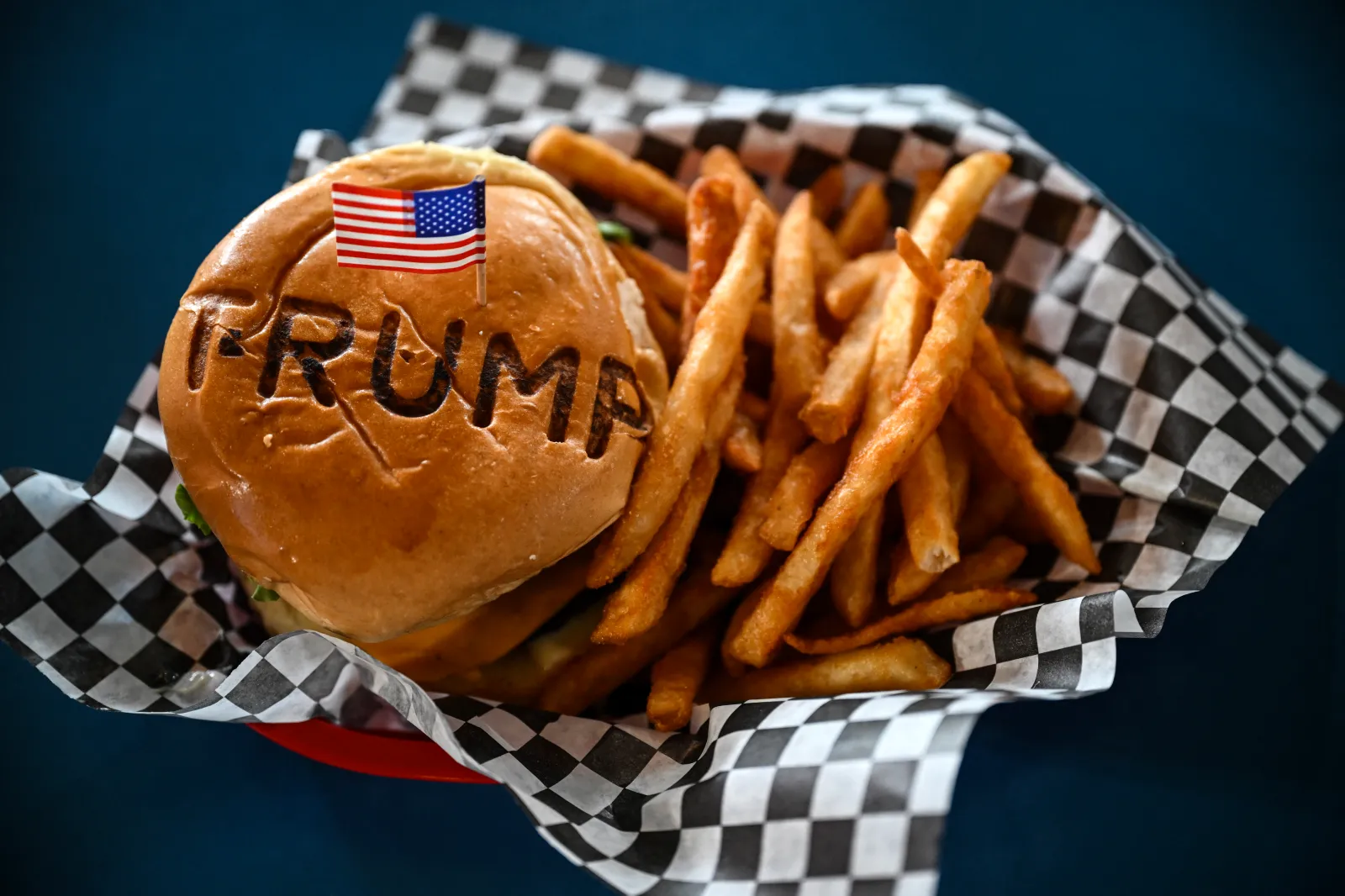
Trump’s Beef Bet Forgets the Rest of the Burger
Record Beef Imports Into the U.S.
Trump’s announcement follows record imports of fresh and frozen beef from Mexico and Canada, as well as Australia, Brazil, Nicaragua, New Zealand, and Argentina.
In October 2025, American cattle ranchers reacted angrily to Trump’s suggestion to import more beef from Argentina, whose president, Javier Milei, is an ally. But in February 2026, the Trump administration increased the tariff-rate quota for Argentine lean beef trimmings by 80,000 metric tons.
There is no confirmation that any of these countries would be supplying the beef under Trump’s plan, but David Anderson, a professor and extension economist for livestock and food product marketing at Texas A&M University, said a Chinese tariff on beef imports exceeding quota levels could see beef from Brazil entering the U.S. later this year.
Anderson told Newsweek that importing more beef, especially trimmings for ground beef, may mean some lower wholesale prices and put downward pressure on beef prices, but added, “How much would show up in grocery store prices? I think that is harder to say.”
Senator Tim Sheehy, a Montana Republican who represents one of the top cattle-producing states, said American ranchers had already been struggling against the meatpacker monopoly, referring to four firms, JBS, Tyson Foods, Cargill and National Beef, which control roughly 85 percent of U.S. beef processing capacity.
Sheehy posted on X that Trump’s action “will make it more difficult for American ranchers to rebuild our herd and bring prices down for the American people."

...
Rebuilding the US Herd: A Long-Term Strategy
Bill Bullard, CEO of R-Calf USA, a cattle producer trade association, said that Trump’s plan would hurt farmers and could discourage the expansion of the domestic herd.
“Increasing imports doubles down on a failed strategy that has substituted foreign beef for rebuilding domestic production,” he told Newsweek in a statement.
“Herd expansion takes years,” Bullard said, “producers deciding whether to retain heifers today must have confidence that future cattle prices will justify that investment.”
Economic growth strategist Dan Varroney, author of Rethinking Economic Growth, told Newsweek that with the smallest U.S. cattle herd in approximately 75 years, rebuilding domestic capacity requires ranchers to retain breeding animals instead of selling them. This would mean foregoing current sale proceeds and committing capital for several years.
But Varroney believes an influx of imported beef sold under Trump’s plan at a promised discount could pressure the domestic cattle market and weaken producer confidence when the U.S. needs ranchers to invest.
“That concern is real because cattle producers must make decisions today that will determine supplies several years from now,” he said. "Cow-calf producers facing drought, high input costs and difficult access to capital cannot adjust production quickly in response to a government announcement or a temporary change in prices.”
If producers think that policy will repeatedly intervene when market prices begin supporting herd expansion, some may become less willing to retain breeding animals and make the investments required to rebuild, Varroney added.
As Spell from Good Ranchers said: “We've got to figure out how we incentivize and get the next generation raising more cattle and rebuilding the herds.”
Contact Newsweek editors on this story: Matthew Robinson and Sam Wilson.
Update 8/27/26, 3:33 a.m. ET: This article was updated with comment from the White House.
View 0 Comments
Submit Correction
View Editorial & AI Guidelines