...

By Alice Gibbs
Senior Reporter
0
Share
Newsweek is a Trust Project member
See more of our trusted coverage when you search.Prefer Newsweek on Googleto see more of our trusted coverage when you search.
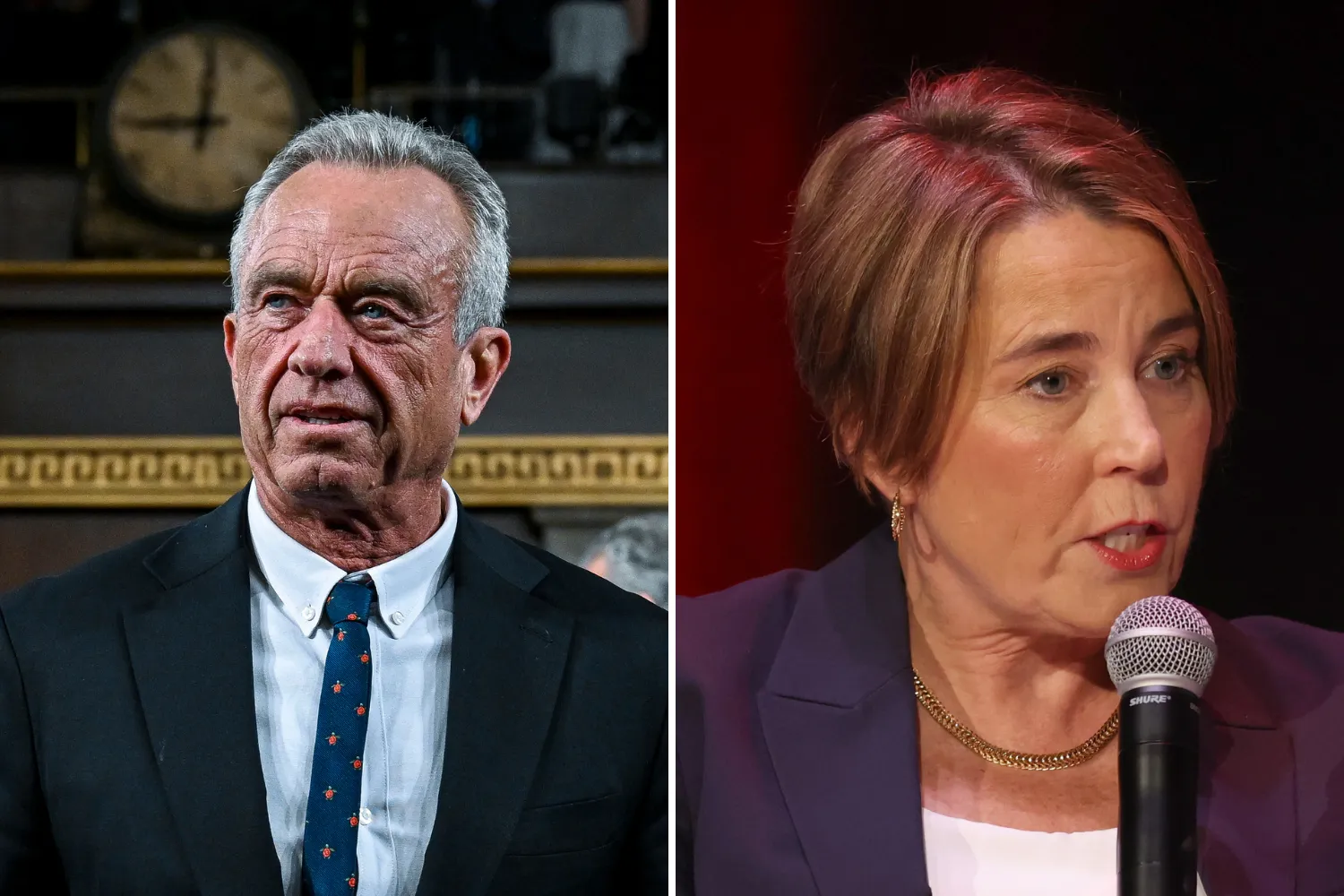
Massachusetts Governor Maura Healey has responded to remarks from Health and Human Services Secretary Robert F. Kennedy Jr. about Dunkin’ Donuts with a four‑word message that quickly drew attention online.
After Kennedy suggested the coffee chain may need to prove the safety of its ingredients, Healey posted an image on X featuring a Dunkin’ cup beneath a single star and the words "Come and take it," a reference to the historic flag first used during the Texas Revolution.
The post was widely shared after The Boston Globe highlighted Kennedy’s comments, which singled out Dunkin’ Donuts—a Massachusetts‑based brand—as part of his broader push to overhaul the U.S. food ingredient approval system.
Read More
Clip of Donald Trump Singing While Dressed as a Farmer Resurfaces Online3 min read

National Park Service Deletes Job Posting After People Spot Hilarious Error3 min read

EA’s Horror As People Create Jeffrey Epstein With Kids in ‘The Sims 4’3 min read

Newsweek reached out to Governor Maura Healey and Robert F. Kennedy Jr. via email for comment.
Why It Matters
Kennedy’s comments and Healey’s response highlight a growing debate over federal oversight of food and beverage ingredients, as well as tensions between national health policy and regional economic identities.
Dunkin’ is a major employer and a well‑known brand in Massachusetts, where it has long been viewed as a local staple. Healey’s post signaled public resistance to potential federal action that could affect the company, even as Kennedy frames his proposals as necessary public‑health reforms.
The exchange also underscores how Kennedy’s food policy agenda is drawing political pushback, particularly when it intersects with well‑known consumer brands.
What To Know
Speaking at a rally at Brazos Hall in Austin, Texas, Kennedy said his department would ask companies including Dunkin’ and Starbucks to show safety data supporting the consumption of high‑sugar drinks.
"We’re going to ask Dunkin’ Donuts and Starbucks, ‘Show us the safety data that show that it’s OK for a teenage girl to drink an iced coffee with 115 grams of sugar in it,’" Kennedy said, adding, "I don’t think they’re going to be able to do it."
MAHA Action, Kennedy’s nonprofit health advocacy group, said in a statement that the reforms aim to ensure American foods meet the highest safety and nutritional standards globally.
The Trump administration released new dietary guidelines in January, with officials calling them the "most significant reset of federal nutrition policy in history." The new nutritional guidelines introduced an inverted food pyramid, while U.S. government’s dietary guidelines recommend limiting added sugars to less than 10 percent of daily caloric intake.
Kennedy has said the effort includes closing what he calls the "GRAS loophole," referring to the Generally Recognized as Safe policy that allows companies to self‑certify the safety of certain ingredients without direct FDA approval.
Healey responded by posting an image on X resembling the 1835 "Come and Take It" flag, replacing the cannon with a silhouetted Dunkin’ cup.
...
What Happens Next
It remains unclear whether Kennedy’s comments will lead to formal regulatory action or changes affecting Dunkin’ or other food and beverage companies.
The online exchange appears to reflect an early flashpoint in Kennedy’s effort to reshape food regulation—and a sign that resistance may come not just from industry groups, but also from elected officials in states tied closely to the brands involved.
View 0 Comments
Submit Correction
View Editorial & AI Guidelines