
...

By Sophie Clark
Live News Reporter
0
Share
Newsweek is a Trust Project member
See more of our trusted coverage when you search.Prefer Newsweek on Googleto see more of our trusted coverage when you search.
A provision in the Senate's version of the budget bill that would allow for millions of dollars to go directly toward the Trump administration's restructuring the Office of Management and Budget has sparked concerns that the move could lead to circumventing Congress in mass layoffs of federal workers.
It is a move that Ben Olinsky, senior vice president of Structural Reform and Governance at the left-leaning Center for American Progress, called "deeply, deeply concerning."
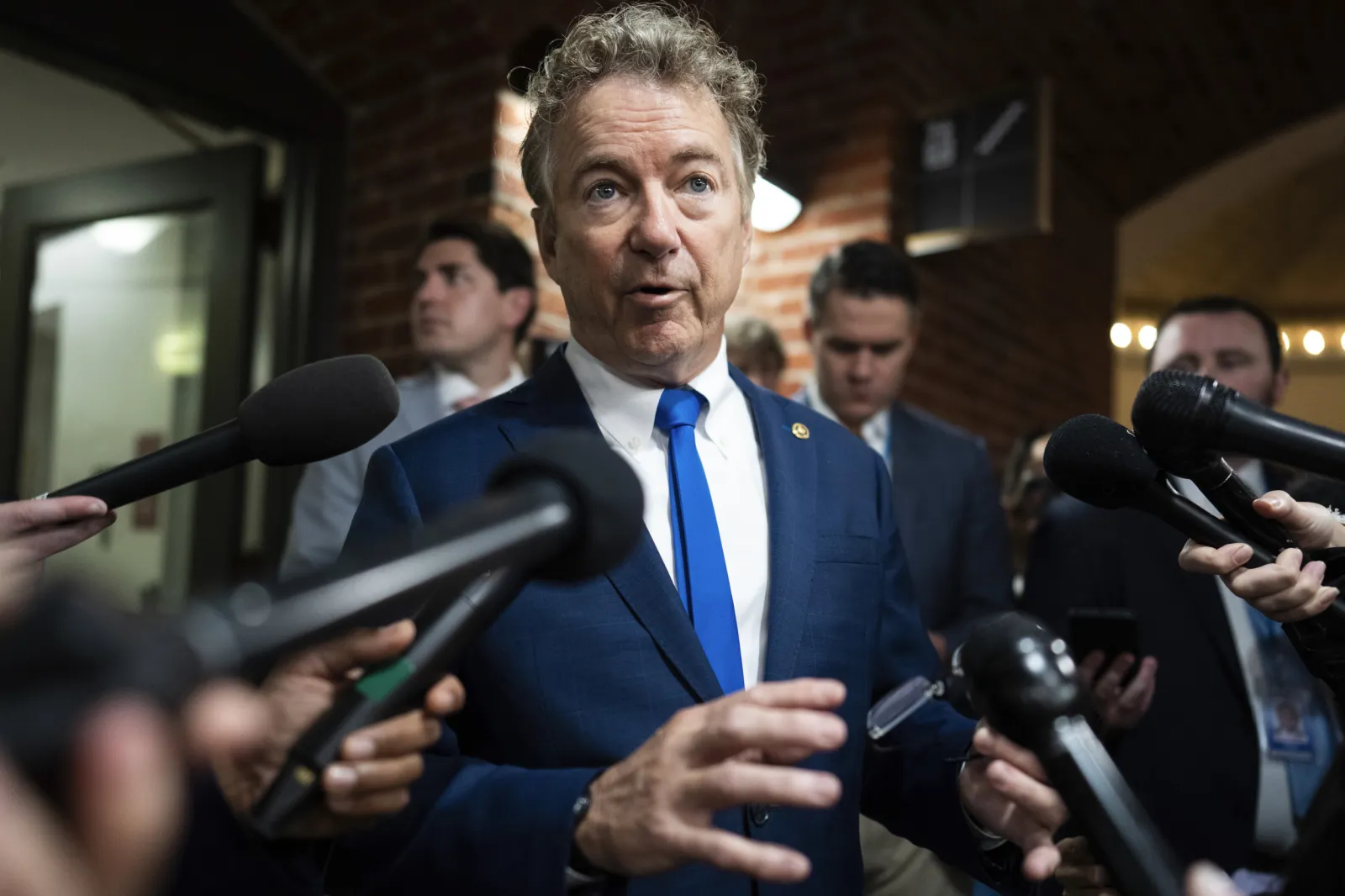
Newsweek contacted Republican Senator Rand Paul, the chairman of the Senate Committee on Homeland Security and Governmental Affairs, via email for comment.
Read More on Politics
Why It Matters
Mass federal layoffs was one of the first moves made by President Donald Trump when he retook office in January. This was done under the oversight of the newly created Department of Government Efficiency (DOGE) that was led by top Trump donor and the world's richest man, Elon Musk.
The reduction in workforce was a central tenant of OMB's director Russ Vought's vision in Project 2025, a conservative blueprint for Republicans that was issued during the 2024 presidential campaign. Trump distanced himself from the project during the campaign, but quickly tapped a number of voices behind it, including Vought, for positions in his administration.
A number of those affected by layoffs initiated at the start of Trump's second term are now in court as they say they were made redundant without Congressional approval. This Senate provision could allow for federal employees to be fired with little to no legal recourse, according to critics.
...
What To Know
The proposal in the Senate bill, written by the Committee on Homeland Security and Governmental Affairs, would give $100 million to OMB, according to a report by Government Executive.
Olinsky says that the move could allow the agency to restructure governmental departments without the seeking the approval of Congress.
Olinsky referenced the lawsuits by federal employees fired in DOGE cuts, telling Newsweek: "[This bill is] exactly the kind of thing that the president has been trying to do, I would say, illegally, as he seeks to shut down departments or agencies, or limit [agencies] to a handful of staff down from thousands and do large mass layoffs and other kinds of cuts to entire functions or programs.
"So, there would be no further review by Congress, no further action. It would simply be automatic. It is approved by this language without [Congress] having seen it first. That is dramatically concerning to me."
Those in favor of the bill say the president should have the ability to cut waste as deemed appropriate "without obstruction."
The Senate Committee on Homeland Security and Governmental Affairs said: "This provision would reestablish the authority for a president to reorganize government as long as these plans do not result in an increase in federal agencies and the plan does not result in an increase in federal spending."
Olinsky told Newsweek it would lead to current and future distrust in the government by federal workers.
The move would revitalize a provision last used in 1984 that allows the president to reorganize the federal government, but Olinsky told Newsweek that it differs from that version in one significant way.
"Those previous reorganization authorities that were granted to the president still had a role for Congress," he said, adding that Congress had a certain amount of time to either approve or disapprove of the plan, and that determined whether the president's plan could go into effect.
"In the current reorganization language, it says that most of the statute that's currently on the books, or that was on the books through 1984, will not apply. And it basically says the president can put together a reorganization plan, and as long as it's making government smaller, it is deemed approved," he added.
...
"The executive actions that the Trump administration has been taking are absolutely taking Project 2025, the most extreme parts of it, and putting them into effect. And, actually going much further in many cases."
Project 2025, which Vought co-authored, says that the president should be able to "discharge... nonperforming employees."
"Federal employees are often ideologically aligned—not with the majority of the American people, but with one another, posing a profound problem for republican government, a government "of, by, and for" the people," Project 2025 says.
Olinsky said that people fired as a result of DOGE cuts could continue their suits in court, but anyone fired under the new provision would not have a case against the government. He said the only means of legal recourse for fired employees would be if mass firings reduced the government's ability to monitor enforcement functions.
What People Are Saying
Ben Olinsky, senior vice president of Structural Reform and Governance at the Center for American Progress, told Newsweek: "This [bill] would basically give [Trump] carte blanche to refashion the entire federal government in ways that he likes.
"Now, even under this language, it basically means you have to make the government smaller, not larger. But there's a lot of playing you could do to assist with [Trump's] priorities and stifle functions of government that he just doesn't like.
"This should be deeply, deeply concerning to anyone."
What Happens Next
The House does not have a similar rule in its budget bill, so if the provision remained in the Senate version of the legislation, it could not be removed through a parliamentarian complaint to the Byrd Rule by the House.
Update 06/25/25, 11:55 a.m. ET: The headline and copy have been updated for clarity and to provide additional context.
View 0 Comments
Submit Correction
View Editorial & AI Guidelines