...

By Aliss Higham
Reporter
0
Share
Newsweek is a Trust Project member
See more of our trusted coverage when you search.Prefer Newsweek on Googleto see more of our trusted coverage when you search.
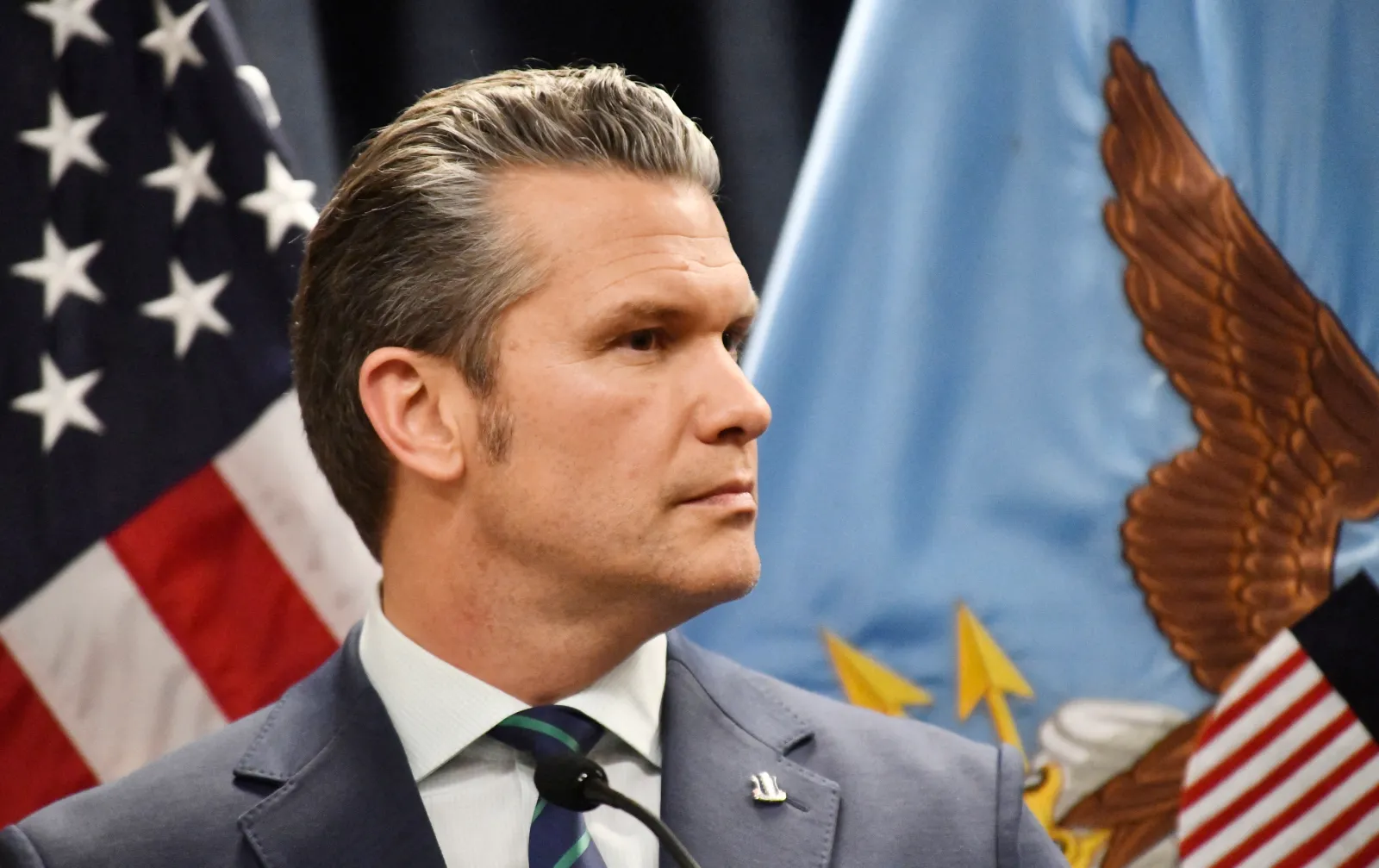
Defense Secretary Pete Hegseth has been criticized for saying "no quarter" will be shown to Iran, as the U.S. and Israel continue their military campaign.
Speaking during a Pentagon news briefing on March 13, Hegseth said the U.S. will "keep pressing, we will keep pushing, keep advancing, no quarter, no mercy."
Newsweek has contacted the Department of Defense for comment via email.
Read More on News
Why It Matters
"No quarter" means refusing to show mercy, spare lives, or take prisoners during conflict.
According to the International Committee of the Red Cross database of international humanitarian law, "the prohibition on declaring that no quarter will be given is a long-standing rule of customary international law already recognized in the Lieber Code, the Brussels Declaration and the Oxford Manual and codified in the Hague Regulations."
Hegseth did not declare "no quarter" as a direct order to the U.S. military during the press conference. Giving that order is considered a war crime under modern international law.
Hegseth Draws Criticism
His comments have drawn criticism from Democratic lawmakers, including Senator Mark Kelly of Arizona.
Writing on X, formerly Twitter, Kelly said: "'No quarter' isn’t some wanna be tough guy line—it means something. An order to give no quarter would mean to take no prisoners and kill them instead. That would violate the law of armed conflict. It would be an illegal order. It would also put American service members at greater risk. Pete Hegseth should know better than to throw around terms like this."
...
“The U.S. is party to the Geneva Conventions and bound by international humanitarian law,” Virginia Senator Mark Warner, the top Democrat on the Senate Intelligence Committee, said regarding Hegseth's remarks.
“Whether it’s the secretary’s comments this morning, or his assertion that the military won’t be governed by what he terms ‘stupid rules of engagement,’ rhetoric like this is unacceptable and actually endangers U.S. service members.”
“These comments are very striking,” Brian Finucane, a senior adviser at the International Crisis Group, a think tank, told Al Jazeera. “It raises questions about whether this belligerent, lawless rhetoric is being translated into how the war is being conducted on the battlefield.”
Marko Milanovic, an international law professor at the University of Reading in the United Kingdom, told the Huff Post Hegseth’s remarks should not necessarily be interpreted as encouraging war crimes, and may instead reflect the kind of exaggerated, violent rhetoric often used by Trump and his senior advisers.
“In this particular context, this was just some kind of general political statement, the type of Trumpian hyperbole that one can expect from Hegseth et al,” said Milanovic. “The ‘no quarter’ war crime applies in a different context, if a commander or political leader says that if enemies try to surrender, no such surrender will be accepted and they will all be killed.”
Hegseth Gives Iran War Update
During the briefing, Hegseth also said Iran’s new supreme leader, Mojtaba Khamenei, had been wounded in an attack and was likely disfigured, while casting doubt on whether he was still capable of governing.
“We know the new so-called not-so-supreme leader is wounded and likely disfigured,” Hegseth said. “He put out a statement yesterday. A weak one, actually, but there was no voice and there was no video. It was a written statement.”
The Pentagon chief offered no evidence to support his comments. Iran has not released details about Khamenei’s condition.
View 0 Comments
Submit Correction
View Editorial & AI Guidelines