10
Loading video...

By Mandy Taheri
Reporter
0
Share
Newsweek is a Trust Project member
See more of our trusted coverage when you search.Prefer Newsweek on Googleto see more of our trusted coverage when you search.
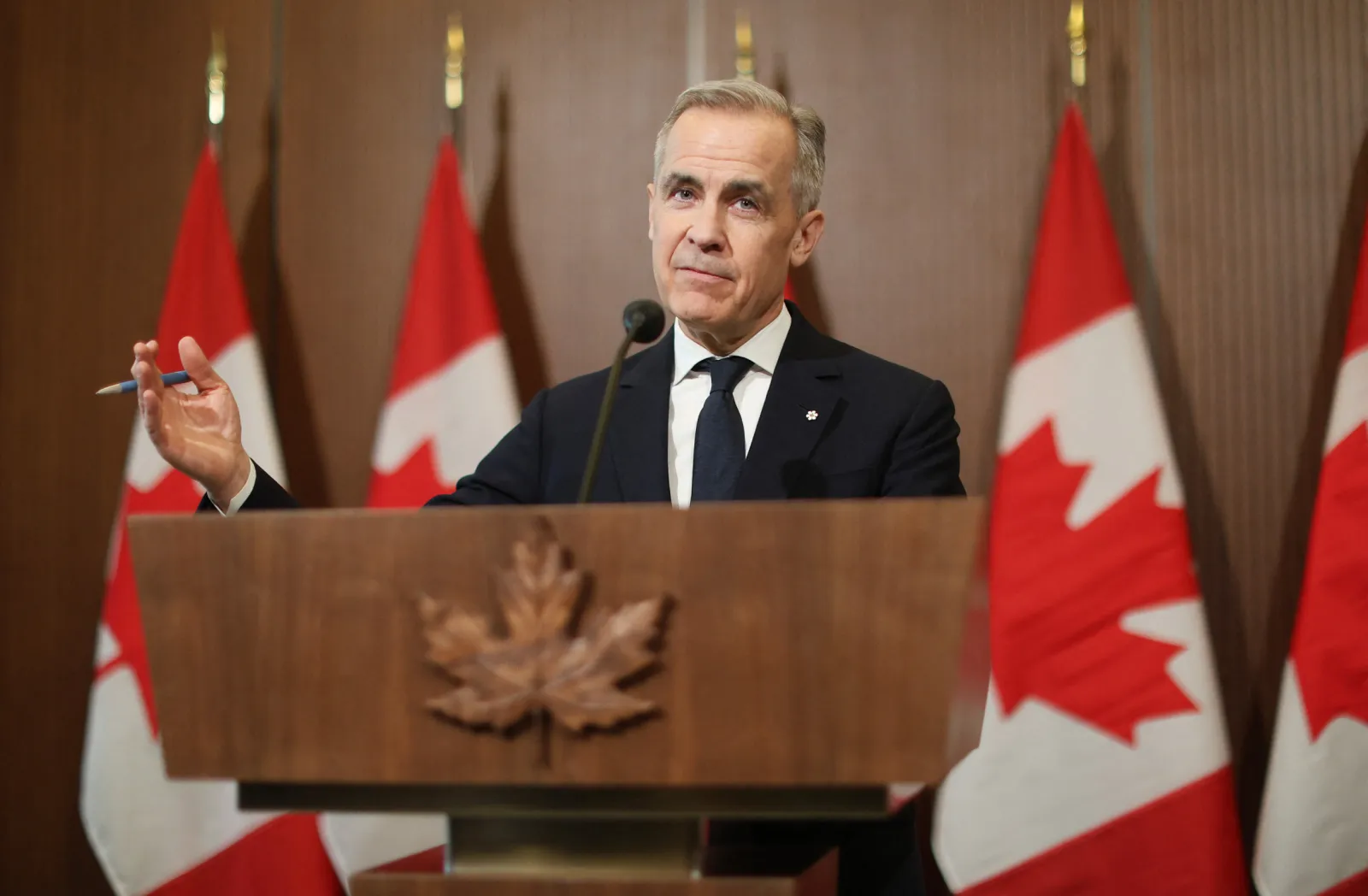
Canadian Prime Minister Mark Carney warned that Americans will experience "damage" and "pain," during a Thursday announcementthat his country will impose retaliatory tariffs on U.S. vehicle imports in response to President Donald Trump's newly implemented 25 percent auto tariffs.
Newsweek has reached out to the U.S. Treasury and Department of Commerce for comment via email on Thursday.
Why It Matters
Canada, one of the closest U.S. trading partners, announced retaliatory tariffs on Thursday in response to Trump's "Liberation Day" tariffs the day prior, which included a 25 percent auto tariff on Canada.
Read More on Politics
Trump has argued that the dozens of global tariffs he imposed Wednesday are necessary to restore U.S. manufacturing, while economists have warned that companies will pass off the prices to American consumers, resulting in higher prices.
The stock market tumbled Thursday morning as investors grappled with the economic impact of the tariffs.
...
What To Know
In a Thursday announcement, Carney, who has served in the role since March after succeeding Justin Trudeau, said Canada will match U.S. tariffs. Carney for years worked in central banking.
He clarified that the Canadian tariffs will target vehicle imports rather than auto parts, which are included in the American measures. Autos are the country's second-largest export.
"Given the prospective damage to their own people, the American administration should eventually change course," Carney said.
However, he added:"Although their policy will hurt American families, until that pain becomes impossible to ignore, I do not believe they will change direction, so the road to that point may indeed be long. And will be hard on Canadians just as it will be on other partners of the United States."
The tariffs' impacts are already being felt, Carney argued. In a video posted on social media, he called out the U.S. and said Canada would pick up the leadership slack, saying: "We believe in international cooperation. We believe in the free and open exchange of goods, services and ideas. And if the United States no longer wants to lead, Canada will."
Car manufacturer Stellantis told Newsweek in a statement Thursday that the changing economic trade policies have impacted the company, saying: "As a result of pausing production at several of Stellantis' Canadian and Mexican plants, there will be temporary layoffs at the Warren Stamping and Sterling Stamping plants [Michigan] as well as the Indiana Transmission Plant, Kokomo Transmission Plant and Kokomo Casting Plant [Indiana]."
U.S. tariffs announced on Wednesday impact dozens of countries.
What People Are Saying
President Donald Trump, on Wednesday: "For decades, our country has been looted, pillaged, raped and plundered by nations near and far, both friend and foe alike.
"Taxpayers have been ripped off for more than 50 years. But it is not going to happen anymore."
European Commission President Ursula von der Leyen: "President Trump's announcement of universal tariffs on the whole world, including the EU, is a major blow to the world economy."
Japanese Prime Minister Shigeru Ishiba: "The U.S. government's broad trade restrictions will have a significant impact not only on the economic relationship between Japan and the U.S., but also on the global economy and the multilateral trading system as a whole."
British Prime Minister Keir Starmer: "Nobody wins in a trade war. That is not in our national interest. And we have a fair and balanced trade relationship with the U.S."
Ernie Tedeschi, director of economics at the Budget Lab at Yale, previously told Newsweek: "...this would bring tariffs back to where they were in America in the early 1900s. It would raise about $3 trillion over a decade—enough to pay for about half of the tax cut extension, but it would also raise prices by the equivalent of more than a year's worth of normal inflation and cut U.S. economic growth in 2025 in half."
What Happens Next
Trump's tariffs on imported autos went into effect on Thursday. A 10 percent "baseline" tariff will take effect on April 5 and the reciprocal tariffs will kick in on April 9.
Carney has called snap elections for April 28. U.S.-Canada relations are expected to be a defining issue in the upcoming election, as parties grapple with rising tensions and national sovereignty concerns.
Reporting by the Associated Press contributed to this story.
Update 4/3/25, 2 p.m. ET: This article has been updated with additional information.
View 0 Comments
Submit Correction
View Editorial & AI Guidelines