10
Loading video...

By Gabe Whisnant
News Editor
0
Share
Newsweek is a Trust Project member
See more of our trusted coverage when you search.Prefer Newsweek on Googleto see more of our trusted coverage when you search.
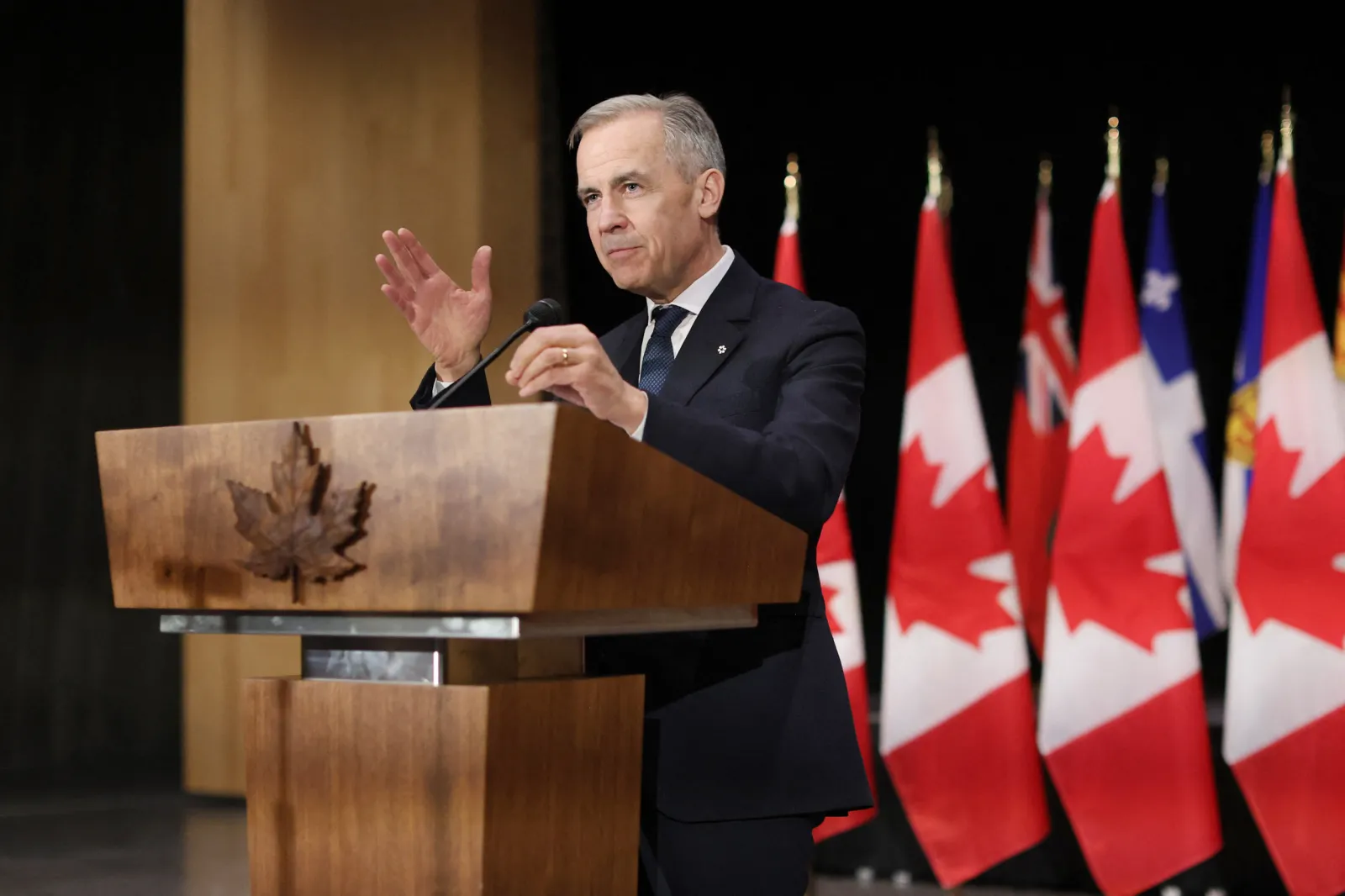
Canadian Prime Minister Mark Carney criticized the state of U.S.-Canada relations during a poignant visit to Gander, Newfoundland — the small town that famously welcomed thousands of stranded American airline passengers after the 9/11 attacks.
"This crisis caused by the U.S. president and those enabling him... we lament a friendship lost," Carney said, adding that Canadians have "moved past the shock" and must now focus on self-reliance.
His remarks came on the second day of Canada's national election campaign and amid heightened tensions with U.S. President Donald Trump, whose trade policies and sovereignty challenges have left many Canadians feeling betrayed.
Read More on Politics
Why It Matters
Carney, addressing Gander residents, recalled the town's heroic actions during 9/11, when nearly 6,600 passengers were diverted there after the U.S. closed its airspace. Gander's population of just 10,000 opened homes, schools, and community centers to the stranded travelers. Locals provided food, shelter, and comfort, even as air traffic controllers turned into makeshift chefs to support their unexpected guests.
...
"You showed friendship to people who were fearful," Carney said. "In a crisis, you showed your character. When people needed help, you gave it."
What to Know
His visit included a stop at the home of Beulah Cooper, who famously welcomed and comforted Dennis and Hannah O'Rourke — parents of a New York firefighter who died at the World Trade Center. The story of Gander's compassion later inspired the hit Broadway musical "Come from Away," a symbol of the deep historical bond between the two nations.
But Carney's tone shifted when addressing the current state of that relationship. He sharply criticized Trump's trade war, including steel and aluminum tariffs and threats of sweeping economic sanctions. He also condemned Trump's inflammatory rhetoric suggesting Canada should become the U.S.'s 51st state, calling it a violation of Canadian sovereignty.
Carney emphasized Canada's history of supporting the U.S., from the Iranian hostage crisis to the Afghanistan war, where Canada suffered significant losses. But he made it clear that times have changed: "We are going to wait this out. They are going to come to the table, and we are going to negotiate a good deal for Canadians."
Canada's Election and Donald Trump
Ahead of their April 28 vote, Carney and his Conservative opponent Pierre Poilievre both say Trump must respect Canada's sovereignty.
Carney only recently replaced Justin Trudeau as the country's prime minister after the latter resigned in January. Trudeau remained in power until the Liberal Party elected Carney as its new leader, who has now called a snap election that will be held on April 28.
Liberals have drawn comparisons between Poilievre and Trump, but he has sought to distance himself from the U.S. president and pledged to put "Canada first."
Poilievre has insisted he would stand up to Trump.
"You can be respectful and firm and I believe we have to be both," he told reporters on Sunday as he launched his campaign. "I will insist the president recognizes the independence and sovereignty of Canada. I will insist he stops tariffing our nation."
In a Fox News interview last week, Trump said Poilievre is "stupidly, no friend of mine" and that it's "easier to deal" with a Liberal. But top Trump ally Elon Musk has endorsed Poilievre.
What People Are Saying
Trump told Fox News' Laura Ingraham in a recent interview: "I deal with every country, indirectly or directly. One of the nastiest countries to deal with is Canada."
He continued: "Canada was meant to be the 51st state because we subsidize Canada by $200 billion a year," referencing an exaggerated estimate of the U.S. trade deficit with Canada, which the U.S. Trade Representative's Office placed at $63.3 billion for 2024.
Beulah Cooper told the Associated Press: "There's too many bad words for me to say on the phone about what I think of Trump. "Canada was the best ally they had."
Carney said in Gander: "They think they will weaken us. They think that they can own us quite frankly, that's what they think. We are going to get stronger. We are going to wait this out. They are going to come to the table and we are going to negotiate a good deal for Canadians."
What Happens Next
Trump's 25 percent tariffs on Canadian imports, alongside the 10 percent tariff on Canadian energy imports, began in early March. Last week, Trump's 25 percent duties on steel and aluminum came into effect for all countries. Trump has said that his "reciprocal tariffs"—aimed at amending what he sees as unfairness in America's trading relationships—are set to come into effect on April 2.
Reporting by the Associated Press contributed to this story.
Update: 3/24/25, 4:18 p.m. ET: This article has been updated with additional information and remarks.
View 0 Comments
Submit Correction
View Editorial & AI Guidelines