10
Loading video...


By Matthew Robinson and Jesus Mesa
0
Share
Newsweek is a Trust Project member
See more of our trusted coverage when you search.Prefer Newsweek on Googleto see more of our trusted coverage when you search.
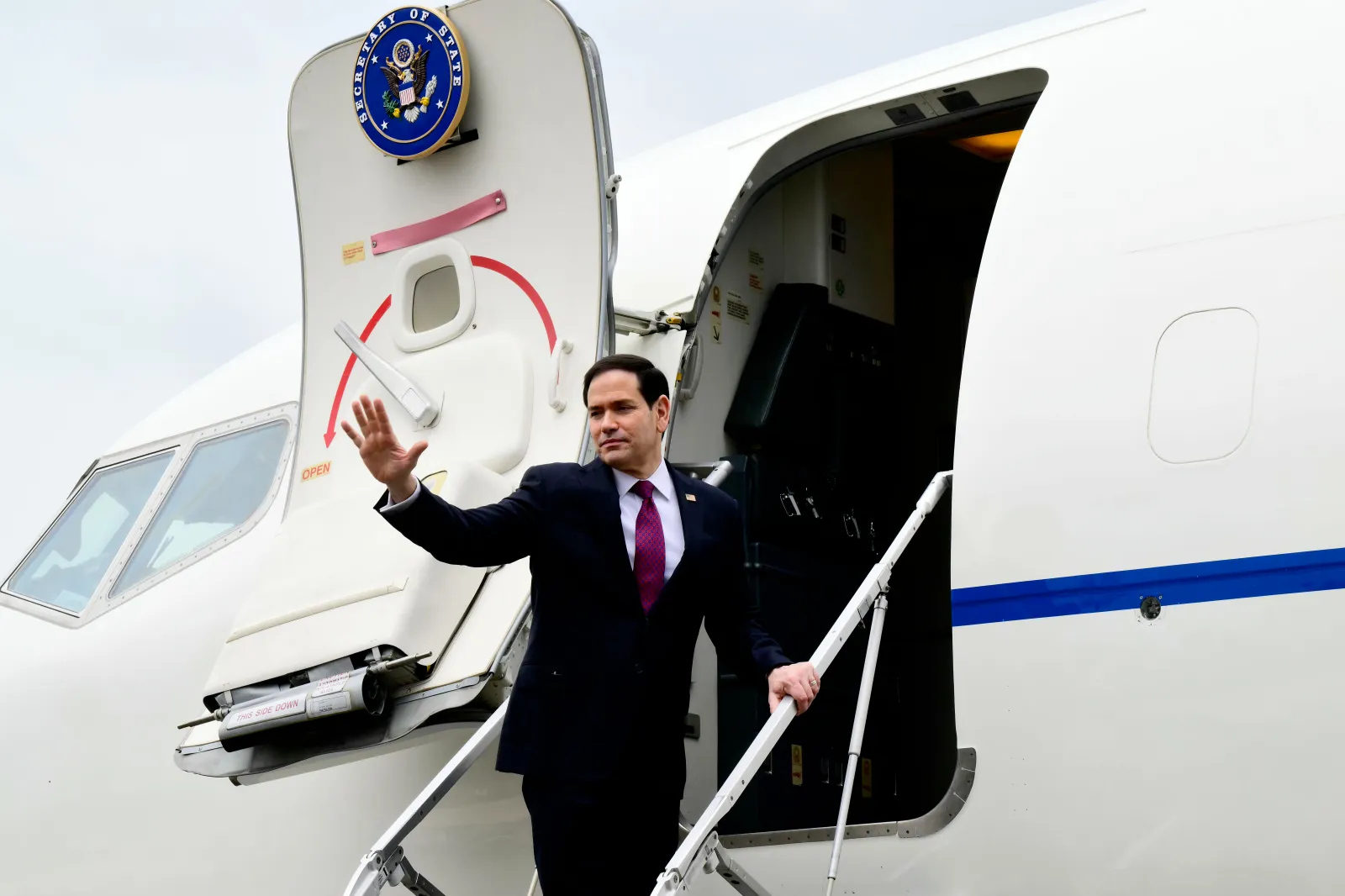
Secretary of State Marco Rubio has offered to forge a new relationship between the United States and Cubans, blaming Cuba's leaders for the nation's significant food and fuel shortages.
In a video message delivered in Spanish on Cuban Independence Day, Rubio said that Cubans were suffering from blackouts and shortages because the country's leaders had "plundered billions of dollars, but nothing has been used to help the people."
"We in the U.S. are offering to help you not only alleviate the current crisis, but also to build a better future," Rubio said.
Read More on News
He added: "President Trump is offering a new relationship between the U.S. and Cuba. But it must be directly with you, the Cuban people, not with GAESA.
"First, we are offering $100 million dollars in food and medicine for you, the people. But they must be distributed directly to the Cuban people by the Catholic Church or other trusted charitable groups. Not stolen by GAESA to sell in one of their stores."
'Not With GAESA'
In his video address, Rubio blamed the country's current problems on greed and corruption in its leadership.
"The real reason you don't have electricity, fuel, or food is because those who control your country have plundered billions of dollars, but nothing has been used to help the people," Rubio said.
He said the United States is offering $100 million in food and medicine to the Cuban people, but it must be distributed by the Catholic Church or other trusted charitable groups.
"President Trump is offering a new relationship between the U.S. and Cuba," Rubio added. "But it must be directly with you, the Cuban people, not with GAESA."
GAESA, a military-controlled conglomerate, is estimated to hold $18 billion in assets and control roughly 70 percent of Cuba's economy. Rubio's emphasis on circumventing the entity signaled that Washington views it as the primary obstacle to a settlement with ordinary Cubans.
...
Cuba's Swift Rejection
In a response Wednesday morning, Cuba's embassy in the U.S. said Rubio had lied and that the United States was subjecting the island nation to cruelty.
"The reason the U.S. Secretary of State lies so repeatedly and unscrupulously when referring to Cuba and trying to justify the aggression to which he subjects the Cuban people is not ignorance or incompetence," the embassy said in a post on X. "He knows full well that there is no excuse for such cruel and ruthless aggression."
President Miguel Díaz-Canel urged the United States to lift its embargo rather than offer conditional aid.
"The damage could be eased in a much simpler and faster way by lifting or relaxing the blockade, since it is known that the humanitarian situation is coldly calculated and induced," he said.
The Castro Indictment
Rubio's message came just hours before the Trump administration announced criminal charges against the former Cuban president Raul Castro.
The indictment of Castro, now 94, represents a prosecution more than 30 years in the making. The charges stem from a 1996 incident in which Cuban fighter jets shot down planes operated by Brothers to the Rescue, a Miami-based exile group that conducted rescue missions.
Four people, including three Americans, were killed in the attack over international airspace.

...
Acting Attorney General Todd Blanche attended a ceremony in Miami honoring the victims of the 1996 shootdown as the charges were announced.
Federal prosecutors in Miami first drafted charges against Castro in the late 1990s following the shootdown, an incident that hardened U.S.-Cuba relations and prompted Congress to strengthen the embargo against the island.
What Cuba Says About the Airspace Incident
Cuba's embassy challenged the historical narrative underlying the indictment, contending that the 1996 incident was not an unprovoked attack but a response to repeated violations of Cuban airspace. In a social media post, the embassy noted that more than 25 territorial violations occurred between 1994 and 1996 and that Cuba had formally denounced each one in writing to the U.S. Department of State, the Federal Aviation Administration, and the International Civil Aviation Organization.
"Were diplomatic and institutional channels exhausted before tensions escalated in the airspace?" the embassy asked. "Yes, rigorously and repeatedly. Each of the more than 25 territorial violations that occurred between 1994 and 1996 was formally denounced in writing. No one can claim ignorance."
Díaz-Canel on Mounting US Pressure
In a Newsweek exclusive interview in April, Cuban President Miguel Díaz-Canel struck a defiant tone against Trump's threats while acknowledging the humanitarian toll of intensified American pressure. Díaz-Canel said Cuba was prepared to defend itself militarily if necessary, but warned that any U.S. military operation would result in "immense losses for both nations and peoples."
He characterized the current situation as a "multidimensional aggression" on the part of the United States, with a "devastating effect on the lives of the people." The Cuban leader said the blockade and energy restrictions have created acute shortages that his government cannot resolve, even as it maintains the institutional capacity to provide healthcare and other services.

...
"We have the capacity to do it, but the blockade prevents us from obtaining the supplies and having the energy needed," Díaz-Canel said, citing the example of more than 90,000 Cubans awaiting surgical operations, including more than 11,000 children.
He also pushed back against the premise of American pressure, questioning why the U.S. would invest so heavily in isolating Cuba if it truly believed the island's economy and political system were failing on their own merits.
"If we are so incapable, why don't they allow us to fail on our own?" Díaz-Canel asked.
Economic Collapse and Military Preparation
The backdrop to Rubio's appeal is an island economy in acute distress. Electricity is available for only two hours per day in some parts of Cuba. Food is scarce. The Trump administration has effectively imposed a blockade on the island by threatening sanctions on countries supplying it with fuel, triggering widespread power outages and deepening an already fragile economic situation.
President Trump has been seeking regime change in Cuba, where communists have been in charge since Raúl Castro's late brother Fidel Castro led a revolution in 1959. Trump said in March that Cuba "is next" following Maduro's capture and has repeatedly signaled that the fall of the Cuban government is an achievable objective.
Cuban officials have begun preparing for the possibility of military confrontation. U.S. intelligence officials told Axios that Cuba has acquired at least 300 attack drones from Russia and China in recent months. The Cuban government has also said it would prepare a "bloodbath" response should the United States attempt a military intervention.
How Cubans Are Coping With Daily Darkness
Cubans have endured daily blackouts since the start of the year after Trump cut off Venezuelan oil and threatened tariffs against countries like Mexico that once supplied oil to Cuba.
Last month, a Russian tanker carrying oil supplies reached the island for the first time in several months, providing temporary relief. Cubans received a few additional hours of electricity per day, up to six hours in some areas of Havana.
Trump called it a humanitarian gesture. The U.N. has criticized the U.S. blockade, saying it is causing a humanitarian crisis on the island.
But as those supplies ran out last week, Cubans took to darkened streets at night, banging pots and pans in peaceful protests known as cacerolazos.

...
One Havana resident told Newsweek the demonstrations had grown, particularly among families and vulnerable women with children. Power outages now stretched 24 to 48 hours between electricity, they said, far too long to recharge devices or preserve food.
Wealthier families have adapted by installing solar lights, fans and battery-powered devices. But most Cubans remain under strain, though not yet in panic.
Rising May temperatures and humidity have intensified the crisis. Air conditioning units sit idle, and the heat compounds daily hardship.
"Blackouts are as bad as they were at the beginning of the year," one resident told Newsweek on condition of anonymity. "The grid collapse feels familiar. But the heat is different. It's unbearably hot. It makes people miserable and desperate, just wanting to blame someone to get a fan back on."
View 0 Comments
Submit Correction
View Editorial & AI Guidelines