10
Loading video...


By Leonardo Feldman and Jesus Mesa
0
Share
Newsweek is a Trust Project member
See more of our trusted coverage when you search.Prefer Newsweek on Googleto see more of our trusted coverage when you search.
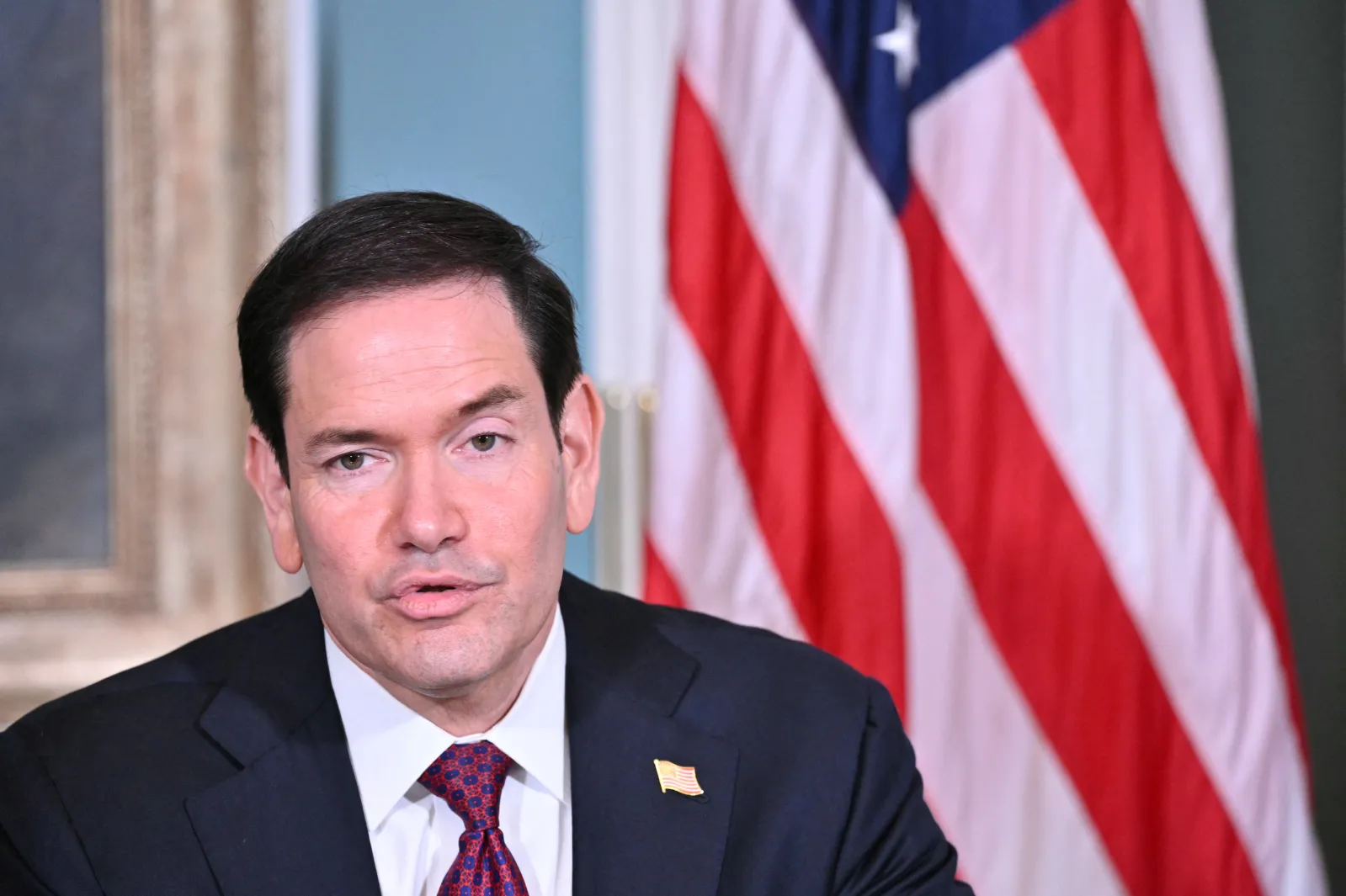
Secretary of State Marco Rubio said Venezuela's path back to elections remains a work in progress and that the transition would take months and weeks rather than years—roughly six months after Nicolás Maduro was removed from power.
"It's a process, and they have to happen," Rubio told Newsweek after a meeting with Paraguayan Vice President Pedro Alliana in Washington, D.C., on Tuesday. "Obviously there's a lot of work that has to happen to lay the groundwork for an election."
Rubio laid out conditions he said would need to be in place before a vote.
Read More on Politics
"You have to have true freedom of the press. You have to have multi-party participation. You have to have national reconciliation. You have to have an electoral commission that will accurately count the votes," he said.
The secretary said the administration was pursuing two tracks at once, political and economic.
"We want to improve the daily lives, help improve the daily lives of Venezuelans economically so that they're better off, they're more prosperous," Rubio said. "I think that helps as well facilitate the political transition."
Asked when elections could be expected, Rubio declined to offer a date.
"I think it's going to require some persistence and a little bit of patience, not years, but certainly months and weeks," he said. "It's going to take some time to get there."
He pointed to the length of time the government had been in place.
"You're dealing with a system that's been in place now for almost three decades," Rubio said. "So it's not going to be from one day to the next."
Rubio cited the post-Cold War transitions in Eastern Europe and Paraguay's own shift from authoritarian rule as comparisons. Paraguay, he said, took almost 3 1/2 years to complete that process.
...
"I know we are all used to instant results, or at least expectations of instant results," he said. "But if you want to do it right, what you want to have is a democratic transition that happens that brings society together."
Rubio said a future Venezuelan government will not take office facing a collapsed state.
"They're not inheriting a disaster. They're not inheriting a reconstruction process. They're inheriting a functional state," he said, adding that the direction of the transition was positive even if the pace was not.
"The needle's pointed in the right direction. And even though the progress is probably slower than all of us will want, there is progress and progress will happen and we're committed to it."
Impatience Grows in Venezuela
Nearly eight months after a U.S. military operation removed Maduro from power, the rapid economic and political turnaround Washington promised has yet to materialize. Days after the ousted leader's January 3 capture, President Donald Trump said American companies would quickly help rebuild Venezuela's oil industry.
But as of early August, no new petroleum deals with U.S. firms had been finalized, according to Axios. Oil executives and administration officials told the outlet the delay largely reflects the Energy Department's cautious approach toward Caracas. The impasse has exposed divisions within the industry, with major companies such as Exxon and ConocoPhillips moving cautiously while smaller independent firms push for faster access to Venezuela's vast oil reserves.

...
Progress on the political front has been equally slow. U.S.-backed talks between Venezuela's ruling party and opposition figures resumed in Caracas on August 1. The negotiations are being led by National Assembly President Jorge Rodríguez and former opposition lawmaker Dinorah Figuera, with U.S. officials describing Washington's role as facilitating rather than directing the process.
The State Department has repeatedly said it will not dictate Venezuela's election timetable, saying the country is still recovering from the June 24 earthquakes that killed more than 5,500 people. Previous rounds of dialogue from 2017 to 2024 ended without lasting agreements.
Acting President Delcy Rodríguez has sought to attract foreign investment by opening Venezuela's oil sector, including eliminating the requirement that state-owned PDVSA hold majority stakes in joint ventures. In recent weeks, State Department officials have urged her government to sign additional contracts with independent U.S. firms, Axios reported, as the administration searches for a tangible economic success ahead of the next stage of Venezuela's transition.
Amid the Delays, Optimism Still Runs Deep
Despite the slow pace of oil deals and the lack of a firm election timetable, public optimism has held up better than the headlines might suggest. Polling by ORC Consultores, conducted before the June earthquakes, found that hope among Venezuelans had climbed to 81 percent in February from 51 percent in December. The disaster pushed that figure down to 65 percent, but it remained about 15 points higher than the average recorded throughout 2025.
The same survey found broad support for foreign investment, with 84 percent viewing it favorably and 88 percent expressing trust in multinational companies. Trust in the United States reached 70 percent, a dramatic shift in a country where anti-American sentiment stood at 61 percent as recently as 2006. Confidence in Trump personally was measured at 68 percent.
Separate polling by AtlasIntel for Bloomberg, conducted after the earthquakes, found that 75 percent of Venezuelans trusted the United States to help lead reconstruction efforts. That compared with 59 percent for the European Union, 48 percent for the United Nations and 39 percent for China.
Opposition figures who have spent decades navigating Chavismo strike a similarly patient tone. Henrique Capriles, a National Assembly member and two-time presidential candidate, told Newsweek in an interview that he remains confident in the trajectory Rubio has outlined, even if political progress has lagged behind the economic transition.
"It's true that the United States has economic interests. But I believe there is, or should be, awareness in Washington that democracy is very important in Venezuela, that voting is part of democracy," Capriles said. "I would bet on the success of what Secretary Rubio has laid out."
Still, there are many who see the absence of María Corina Machado from the negotiating table as the transition's most unresolved fault line. The Nobel Peace Prize laureate and Edmundo González, the ticket that independent observers say actually won the disputed 2024 election, have declined to join the August 1 talks, arguing the process was built without their input.
Contact Newsweek editors on this story: Jason Lemon and Edward T. Cummins.
View 0 Comments
Submit Correction
View Editorial & AI Guidelines