...

By Joe Edwards
Reporter
0
Share
Newsweek is a Trust Project member
See more of our trusted coverage when you search.Prefer Newsweek on Googleto see more of our trusted coverage when you search.
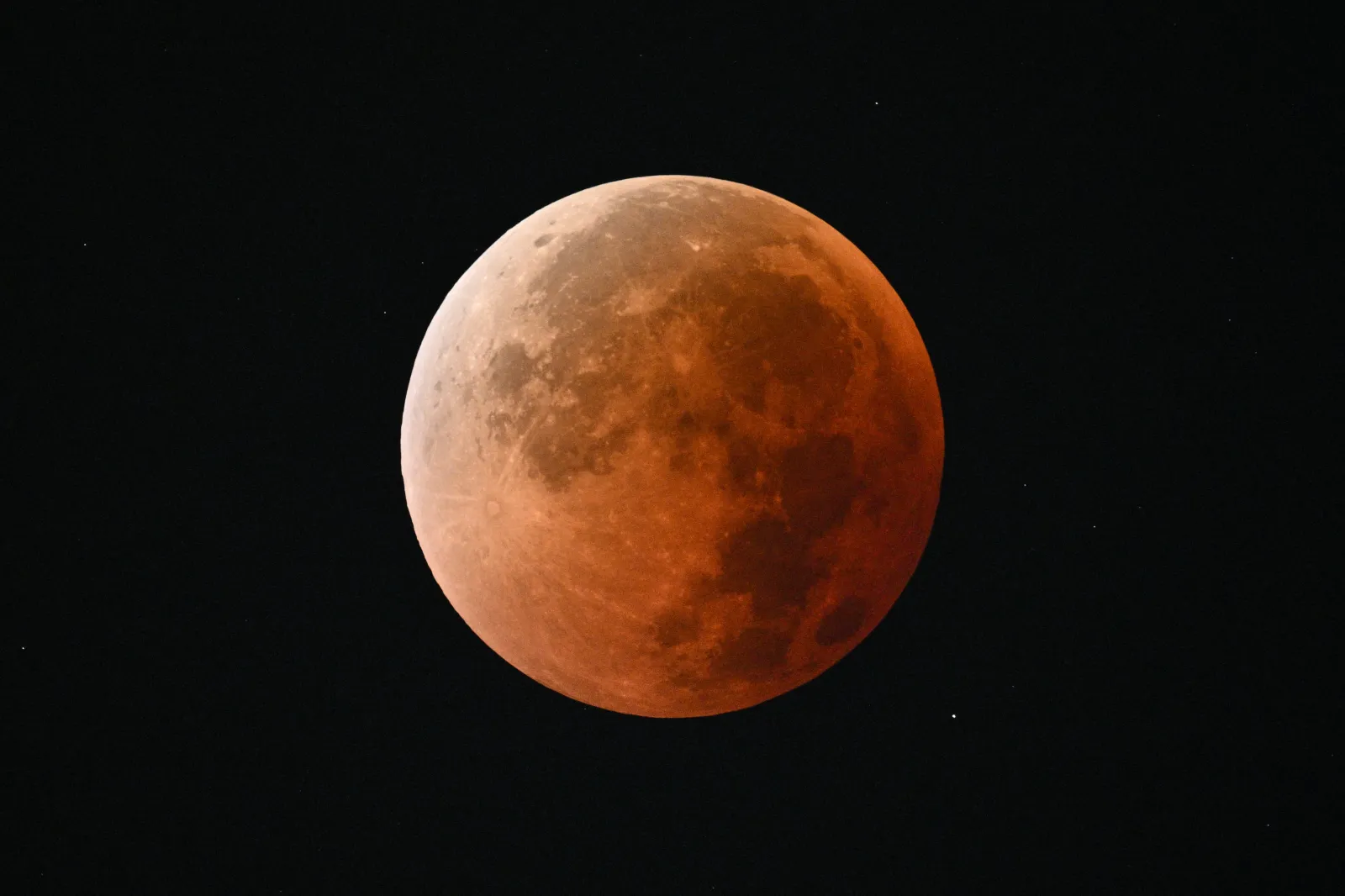
A total lunar eclipse will turn the Moon red on March 3, with visibility spanning the Pacific, parts of Asia and Australia, and the Americas, according to NASA.
Why It Matters
The event offers an unaided-eye view of Earth’s shadow crossing the moon, providing an accessible lesson in celestial alignment for skywatchers.
Read More on News
What To Know
NASA explained that a lunar eclipse happens when Earth passes directly between the sun and the moon during a full moon, casting Earth’s shadow on the lunar surface and often tinting it reddish-orange at totality.
On March 3, 2026, totality will be visible from eastern Asia and Australia in the evening, across the Pacific throughout the night, and in the early morning for North and Central America as well as far western South America, with a partial eclipse visible in central Asia and much of South America, and no eclipse visible in Africa or Europe, according to the agency.
...
No special equipment is required; a clear line of sight to the moon is enough, though darker locations and the use of binoculars or a small telescope will enhance the view, NASA said. For photography during totality, it said a tripod and multi-second exposures will help capture the reddened lunar disk.
NASA explained that during a total lunar eclipse, the moon takes on a deep red or orange hue because Earth blocks nearly all direct sunlight. The only light that reaches the lunar surface has passed through a thick layer of Earth’s atmosphere, which creates the "blood moon" appearance.
The agency also issued a timeline for what to expect during the event:
- Penumbral eclipse begins at 12:44 a.m. PST / 3:44 a.m. EST / 08:44 UTC, when subtle dimming starts as the moon enters Earth’s penumbra.
- Partial eclipse begins at 1:50 a.m. PST / 4:50 a.m. EST / 09:50 UTC, as the moon enters the umbra and a dark "bite" appears on the lunar disk.
- Totality begins at 3:04 a.m. PST / 6:04 a.m. EST / 11:04 UTC, when the entire moon is within the umbra and turns coppery red.
- Totality ends at 4:03 a.m. PST / 7:03 a.m. EST / 12:03 UTC, as the red hue fades and the shadowed "bite" appears on the opposite side.
- Partial eclipse ends at 5:17 a.m. PST / 8:17 a.m. EST / 13:17 UTC, with only subtle dimming remaining in the penumbra.
- Penumbral eclipse ends at 6:23 a.m. PST / 9:23 a.m. EST / 14:23 UTC, marking the conclusion of the event.
What People Are Saying
NASA Solar System said in a post on social media platform X, Tuesday: "A total lunar eclipse is coming.
"In the early morning hours of March 3, 2026 (UTC), the full Moon will pass through Earth’s shadow, reddening the lunar surface."
What Happens Next
On March 8, NASA said skywatchers can look for a "conjunction" of Venus and Saturn appearing close together from Earth’s perspective.
View 0 Comments
Submit Correction
View Editorial & AI Guidelines