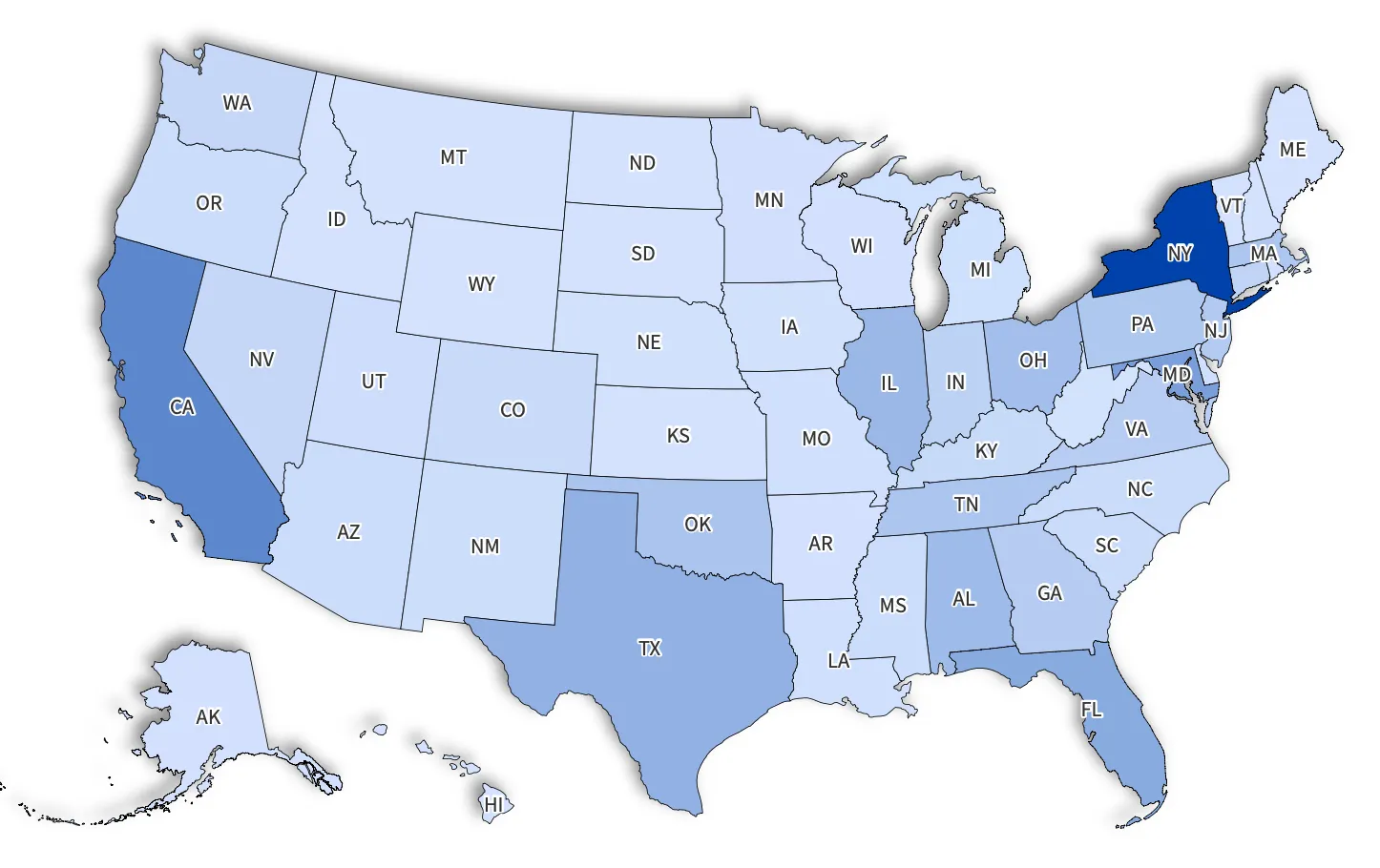
FLOURISH/USDA/SNAP theft map

By Aliss Higham
Reporter
0
Share
Newsweek is a Trust Project member
See more of our trusted coverage when you search.Prefer Newsweek on Googleto see more of our trusted coverage when you search.
Supplemental Nutrition Assistance Program (SNAP) benefit theft has become a pervasive issue in several states, with some of the most vulnerable families being left without vital food benefits.
Why It Matters
Some 40 million Americans receive SNAP benefits, which are loaded onto electronic benefit transfer (EBT) cards that can be used at approved retailers and select online stores. But they are vulnerable to fraud tactics as cards can be skimmed or cloned, something several states are trying to combat.
Read More on News
However, the problem is getting worse: Fraudulent SNAP transactions increased by 55 percent between the final quarter of fiscal year 2024 and the first quarter of fiscal year 2025, according to data from the U.S. Department of Agriculture's (USDA) Food and Nutrition Service.
What To Know
New York is by far the state with the most reported SNAP benefit thefts, with 151,000 claims made between 2023 and March 2025, totaling more than $80 million lost by SNAP users.
Second to the Empire State is California, with almost 86,000 claims and $38 million down the drain. In third place is Maryland, with 63,800 fraud instances and $24 million lost to criminal schemes.
On the other end of the spectrum, Wyoming has the least number of claims made to the USDA in the same time period, with only nine instances of reported stolen benefits. South Dakota and North Dakota have similarly low numbers—23 and 27, respectively. Meanwhile, Idaho, Vermont and Montana all have fewer than 100 reported thefts.
In New York, law enforcement recently uncovered a $66 million criminal scheme involving a USDA employee. In Ohio, three Columbus residents were recently charged in connection with a $600,000 SNAP theft.
Tackling the Issue
Lawmakers in several states are taking steps to combat SNAP fraud. In New York, the state Senate has passed a bill requiring EBT cards to be equipped with EMV chips—technology commonly used in credit and debit cards to make them harder to clone or steal.
The USDA has also vowed to crack down on SNAP benefit theft, announcing in April that it had taken part in "targeted benefit fraud" operations in California.
In 2024, the USDA ended its policy of reimbursing stolen SNAP benefits. Congress did not approve funding to continue the reimbursements in the budget resolution passed in December. As a result, the USDA announced that states may choose to replace stolen benefits using their own funds in the absence of federal funds.
Some lawmakers are working to fill this gap. In April, Democratic Representative Al Green of Texas introduced the SNAP Secure Act of 2025, which proposes restoring federal funding to reimburse SNAP benefit recipients who are victims of fraud or theft. A similar bill has been introduced by Republican Representative Zach Nunn of Iowa.
What People Are Saying
A Department of Agriculture spokesperson previously told Newsweek: "SNAP is a vital nutrition safety net for low-income Americans. When benefits are stolen, SNAP participants' ability to feed their families is threatened. USDA will continue to leverage every resource and authority that remains at its disposal to combat all forms of SNAP fraud and abuse."
Representative Al Green, a Democrat from Texas, said in a statement in April: "I intend to turn this legislation into a modified amendment to the next appropriations bill. If accepted, this legislation would ensure that those who have had their SNAP benefits stolen will be able to feed themselves and their families."
What Happens Next
To protect your SNAP benefits, the USDA recommends these tips:
- Use a strong PIN: Avoid easy combinations, such as 1234 or 1111.
- Keep your info private: Never share your PIN or card number outside your household. Cover the keypad when entering your PIN.
- Watch for scams: SNAP officials will never call or text asking for your PIN or card number.
- Update your PIN often: Change it monthly, ideally just before your benefits are added.
- Monitor your account: Check for charges you don't recognize. If you see any, change your PIN immediately and report it.
- Report theft: If you suspect card skimming or stolen benefits, contact your local SNAP office right away.
View 0 Comments
Submit Correction
View Editorial & AI Guidelines