...

By Jordan King
Reporter
0
Share
Newsweek is a Trust Project member
See more of our trusted coverage when you search.Prefer Newsweek on Googleto see more of our trusted coverage when you search.
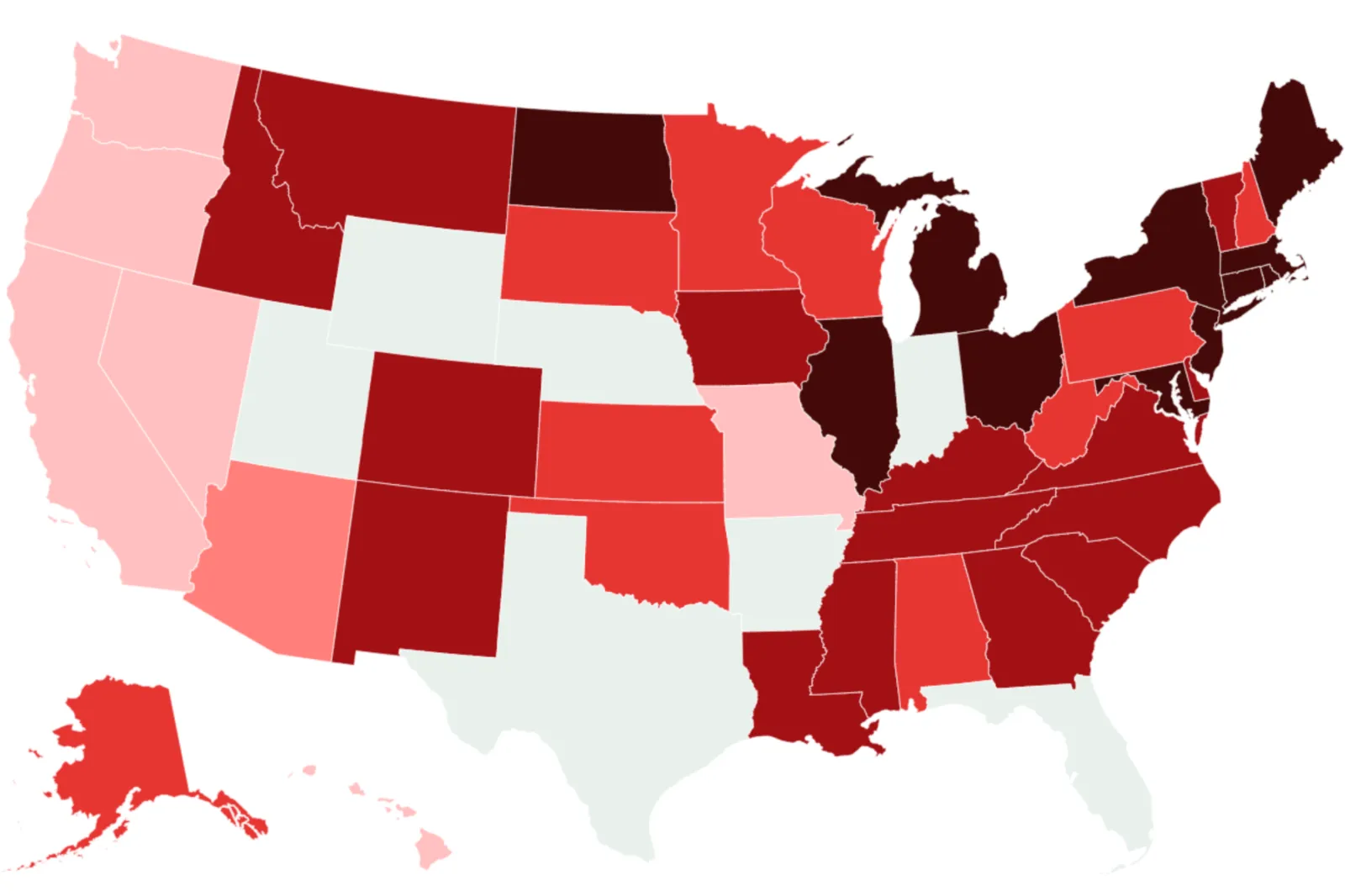
Newsweek has created a map showing where COVID-19 cases are growing across the country.
Last week, the U.S. Centers for Disease Control and Prevention (CDC) said the previous weekly percentage of emergency department visits with COVID-19 was "very low," and the virus' epidemic trend was "not changing."
This week, the CDC has said the weekly percentage of emergency department visits with COVID-19 is “very low” but that the epidemic trend is “growing.”
Read More on News
States where the epidemic trend is “growing” include North Dakota, Michigan, Illinois, Ohio, New York, New Jersey, Connecticut, Maryland, Massachusetts, and Maine.
Newsweek has contacted the CDC via email for comment.
Why It Matters
While COVID-19 is no longer a national emergency, it is one of respiratory diseases that impact resource planning, strain local healthcare systems and highlight ongoing risks for vulnerable populations, along with influenza and the respiratory syncytial virus (RSV).
What To Know
According to the CDC's Center for Forecasting & Outbreak Analytics (CFA) and National Center for Immunization and Respiratory Diseases (NCIRD), the agency's latest model uses the time-varying reproductive number, Rt, as an indicator of whether infections are expected to increase or decrease. An Rt value above 1 indicates an expanding epidemic, while values below 1 suggest declining infections.
As of December 2, COVID-19 infections are growing or likely growing in 24 states.
The CDC cautioned that holiday reporting effects may impact these figures and that Rt is a measure of transmission trends, not total disease burden.
What People Are Saying
The CDC said in its respiratory disease outlook: “CDC expects that the combined peak hospitalization rate due to COVID-19, influenza, and RSV will be similar (within 20% of the 2024-2025 peak) to that of last season, with low to moderate confidence, based on historical trends, expert opinion, and scenario modeling results. Combined peak hospitalization burden depends on the timing as well as the magnitude of each disease peak during the respiratory season.”
Jennifer Nuzzo, director of the Pandemic Center and a professor of epidemiology at Brown University, previously told Newsweek: "We often see an increase in infections in the fall, so the increase in the Midwest and Northeast is not surprising. In the wastewater data, we see that the increases are low compared to what we saw this past summer and in previous winter months. Based on this, I would expect to see more increases in other regions this fall, but likely not as bad as earlier fall increases."
What Happens Next
To protect themselves from COVID-19, the CDC recommends Americans practice good hygiene—such as frequent hand washing—and take steps to breathe cleaner air or to wear masks in public places to avoid transmission.
While it previously advised all Americans stay up to date on COVID-19 vaccines, the CDC has dropped that blanket recommendation and now says that vaccination should be decided on "individual-based decision-making."
View 0 Comments
Submit Correction
View Editorial & AI Guidelines