...


By Brendan Cole and John Feng
0
Share
Newsweek is a Trust Project member
See more of our trusted coverage when you search.Prefer Newsweek on Googleto see more of our trusted coverage when you search.
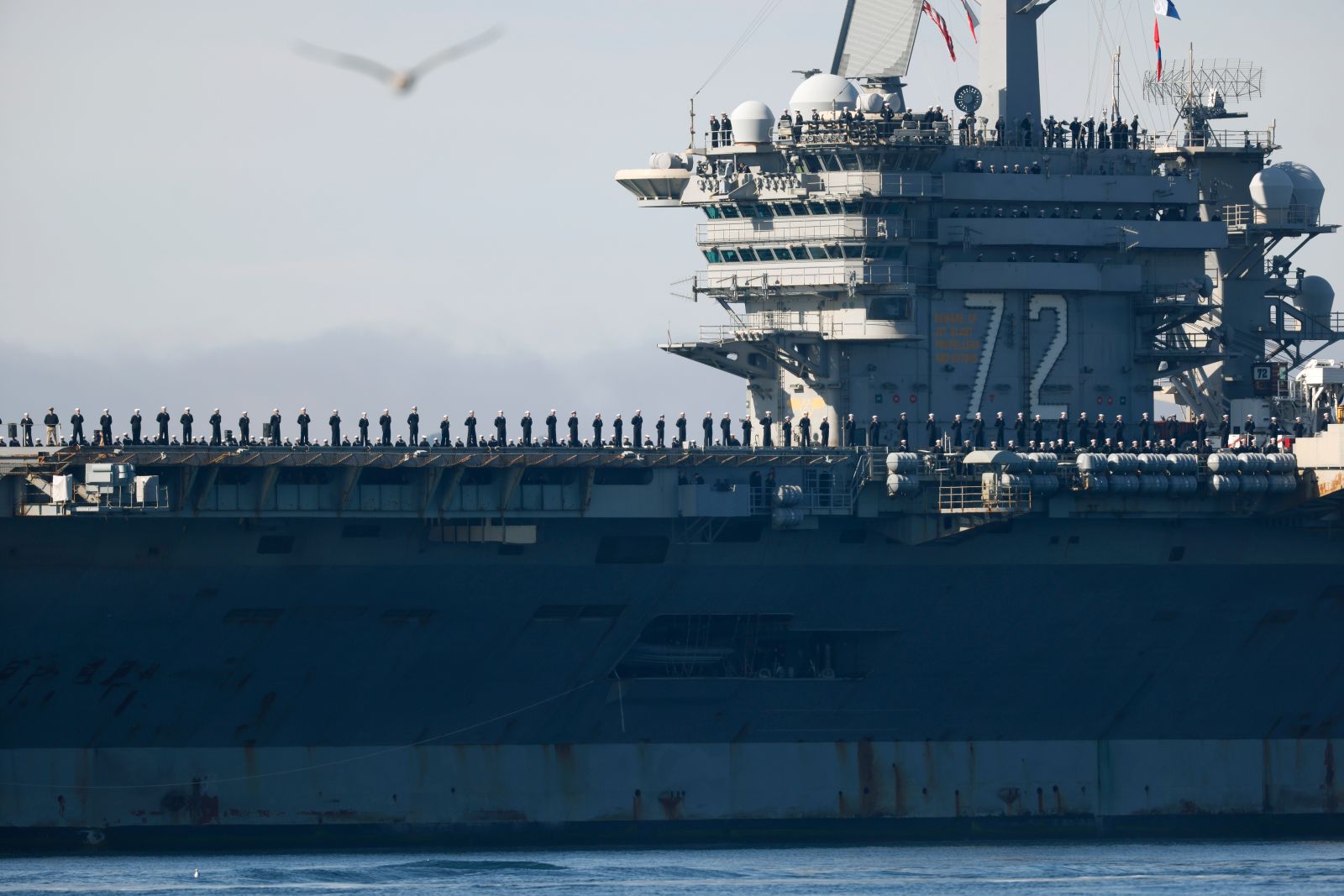
A Newsweek map shows the likely route of the U.S. Navy aircraft carrier USS Abraham Lincoln as it steams toward the Middle East.
The vessel had been operating in the South China Sea and conducted live-fire exercises this month. However, it has now been redeployed to the U.S. Central Command area of responsibility, along with its strike group.
It comes after a warning by President Donald Trump over the deadly crackdown on Iranian protesters, who have posed the biggest threat to the ruling regime in years.
Read More on News
Newsweek contacted the Pentagon for comment by email outside of regular working hours.
Why It Matters
Trump said this week that "help was on its way" for protesters in Iran, and the White House said "all options remain on the table" for the U.S. to take military action against Iran.
American and British troops subsequently started evacuating the Al Udeid air base in Qatar on Wednesday amid concerns that an attack was imminent.
Trump has so far refrained from ordering strikes on Iran, but the deployment of the USS Abraham Lincoln Carrier Strike Group is a significant transfer of American military hardware at a time of heightened tensions.

...
What To Know
Protests in Iran that started on December 28 have led to the deaths of more than 2,600 people, according to the U.S.-based Human Rights Activists News Agency. Trump has reiterated warnings that a continued violent crackdown on protesters by the ruling regime could prompt unspecified U.S. intervention.
As tensions in the region continue to grow, NewsNation reported Wednesday that the USS Abraham Lincoln was moving from the South China Sea to the Middle East.
The Pentagon has not officially confirmed its destination, but defense officials and tracking data indicate the carrier strike group is repositioning to bolster deterrence, according to the specialist outlet Army Recognition.
Newsweek’s map shows the likely route the strike group will take as it moves westward out of the Indo-Pacific region. The Lincoln was last seen on Wednesday making a westward turn in the South China Sea, according to satellite imagery captured by the European Space Agency's Copernicus Earth observation program.
It will take about a week—possibly up to 10 days—for the carrier strike group to to reach the Indian Ocean region, according to Forbes.
Cato Institute fellow Jon Hoffman told Newsweek that striking Iran risks both entangling Washington in the domestic upheaval without a clear endgame, and endangering U.S. troops stationed across the Middle East.
"Those clamoring for American involvement will likely press for sustained U.S. engagement to ensure the regime's demise and manage an internal transition—something the United States should avoid given its overextension abroad," he told Newsweek.

...
What People Are Saying
U.S. envoy to the United Nations Mike Waltz told the U.N. Security Council on Thursday: "President Trump is a man of action, not endless talk like we see at the United Nations. He has made it clear all options are on the table to stop the slaughter. And no one should know that better than the leadership of the Iranian regime."
He also rejected accusations by Iran that the protests are a "foreign plot to give a precursor to military action."
"Everyone in the world needs to know that the regime is weaker than ever before, and therefore is putting forward this lie because of the power of the Iranian people in the streets. They are afraid. They're afraid of their own people," Waltz said.
What Happens Next
Waltz said on Thursday that "all options are on the table" regarding the U.S. response to Iran, and warned that any further killings would have grave consequences.
Trump has backed off for now, but there will be anticipation over his next move if the protests continue.
View 0 Comments
Submit Correction
View Editorial & AI Guidelines