
By Hugh Cameron
Reporter
0
Share
Newsweek is a Trust Project member
See more of our trusted coverage when you search.Prefer Newsweek on Googleto see more of our trusted coverage when you search.
Millions of Americans are struggling to make ends meet, battling mounting debts, and turning to credit to cover everyday expenses.
According to a study from the personal finance website WalletHub, released on Thursday, consumers across the country now find themselves in a heightened state of “financial distress”—defined as having a credit account in forbearance or with deferred payments—with some cities seeing a significant deterioration among residents' personal fiscal outlooks.
Why It Matters
The past year has underscored the financial challenges facing many Americans, as persistent inflation and labor market fears weighed on household budgets and fiscal confidence, with surveys revealing successive drops in consumer sentiment to recession-level lows. Amid these pressures, and with more of the country living paycheck to paycheck, the reliance on credit has also ballooned, contributing to record-breaking levels of household debt, rising rates of default and, as the study finds, financial distress.
Read More on News
What To Know
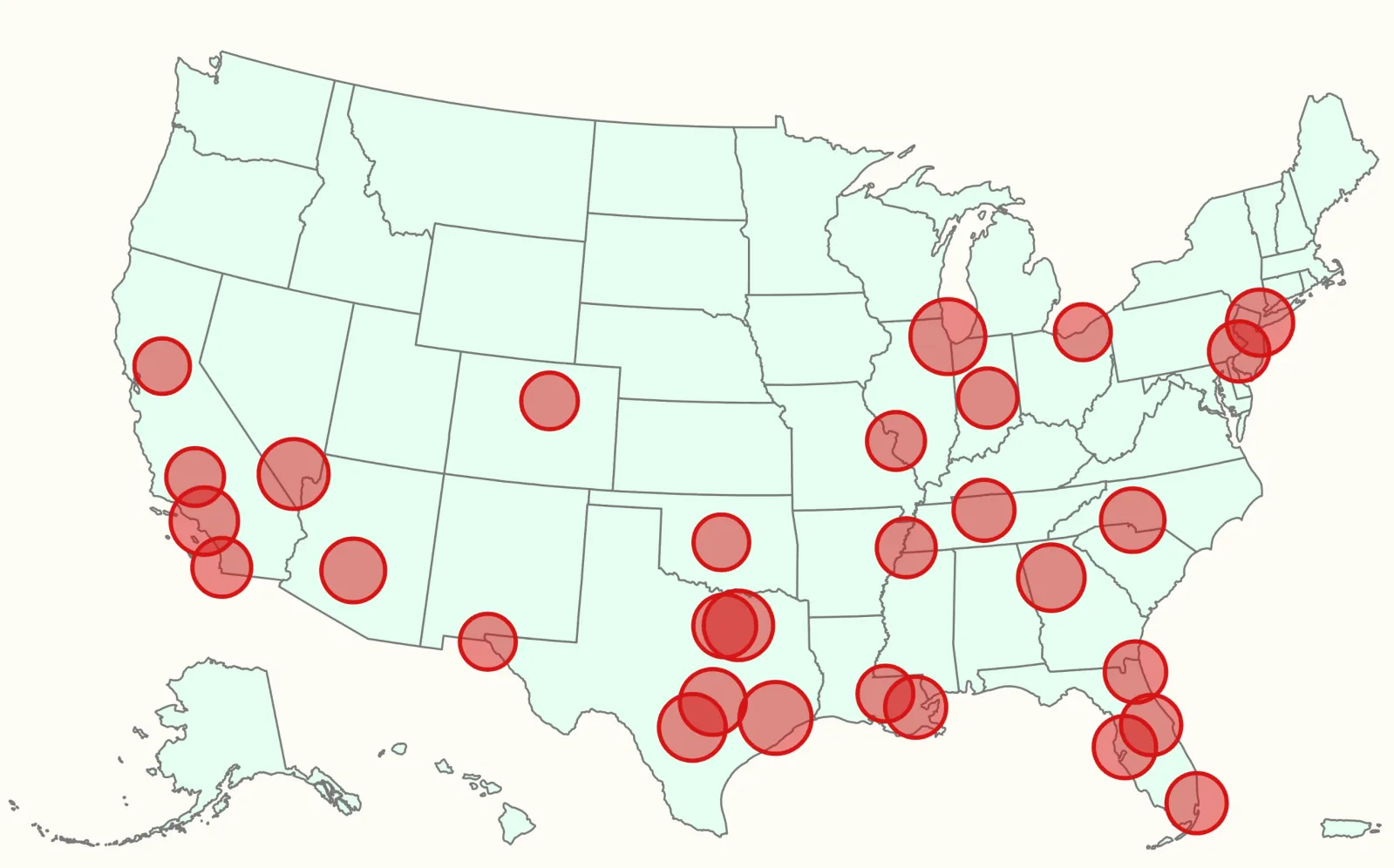
According to WalletHub’s report, based on an analysis of the 100 largest U.S. cities for which data was available, levels of financial distress could be determined by the share of credit accounts in distress, but also scored across several other indicators, including the increase in bankruptcy filings and search interest for terms like “debt” and “loans.”
"Financial distress varies widely by region because it’s driven not just by current economic conditions, but by how quickly financial strain is spreading and how deeply it’s affecting residents’ credit behavior,” WalletHub analyst Chip Lupo told Newsweek.
With an overall score of 77.74 out of 100 and ranking first for both the share of people with accounts in distress and the average number of such accounts per person, Chicago, Illinois, was identified as the city with the highest share of “financially distressed” residents.
While broadly in line with the rest of the nation when it comes to average credit scores and increases in the number of bankruptcy filings, Lupo said the most concerning signal—and the factor which pushed it to the top of WalletHub’s rankings—is “the speed and scale of deterioration” among Chicagoans' credit.
“Chicago had the largest year-over-year increase in the share of people with distressed accounts (+29.64 percent) and the largest spike in the average number of distressed accounts per person (+126.99 percent),” he said. “On top of that, it ranks first in Google Search interest for both ‘debt’ and ‘loans,’ signaling heightened demand for borrowing.”
This reality has been felt by many nationwide. Rodney Williams, co-founder of the community finance website SoLo Funds, last week told Newsweek that his platform had seen “an increase in borrower activity where members are requesting loans referencing unemployment and layoffs for the reason as to why they need access to capital.”
“The reality for many Americans is that finding meaningful work and building financial resilience feels tougher than ever,” he added.
Chicago is followed by Houston, Texas—with an overall score of 71.10 and ranking highly across most categories—with Las Vegas, Dallas, and Los Angeles rounding out the top five.
By contrast, Anchorage, Alaska, ranked last in WalletHub’s analysis, with only 2.5 percent of residents having accounts in distress—a figure that is low compared to both the nationwide average and the city’s own levels from previous years.
What People Are Saying
WalletHub analyst Chip Lupo told Newsweek: “Cities like Chicago appear more distressed because financial strain is widespread and accelerating, with more people falling behind and seeking relief at the same time. Cities like Anchorage look less distressed because fewer residents are struggling, and key distress metrics are trending downward.”
What Happens Next
Hard data on the U.S. economic situation have shown signs of improvement in recent weeks, with both the latest employment and inflation reports from the Department of Labor exceeding analysts’ expectations.
View 0 Comments
Submit Correction
View Editorial & AI Guidelines