
By Aliss Higham
Reporter
0
Share
Newsweek is a Trust Project member
See more of our trusted coverage when you search.Prefer Newsweek on Googleto see more of our trusted coverage when you search.
Across the United States, several major cities are stepping ahead of federal policy by increasing their local minimum wage in 2026.
These urban areas—where housing, transportation and daily living expenses tend to run high—are adjusting wages in an attempt to better reflect the real cost of living workers face.
Why It Matters
The 2026 minimum wage increases in several U.S. cities highlight the growing divide between the stagnant federal rate and the cost of living in metropolitan areas.
Read More on News
With the federal minimum wage—$7.25 per hour—unchanged for the past 16 years, many states and cities have taken independent action to address rising housing, food and health care costs. According to the Bureau of Labor Statistics’ Inflation Calculator, $7.25 in 2009 would need to be $11.12 in 2025 to maintain the same purchasing power.
For millions of low-wage workers, these local adjustments provide a modest but meaningful boost to take-home pay—often making the difference between meeting basic needs and falling short. Some cities have gone further, establishing minimum wage rates above state levels to account for higher living costs in major metropolitan regions.
What To Know
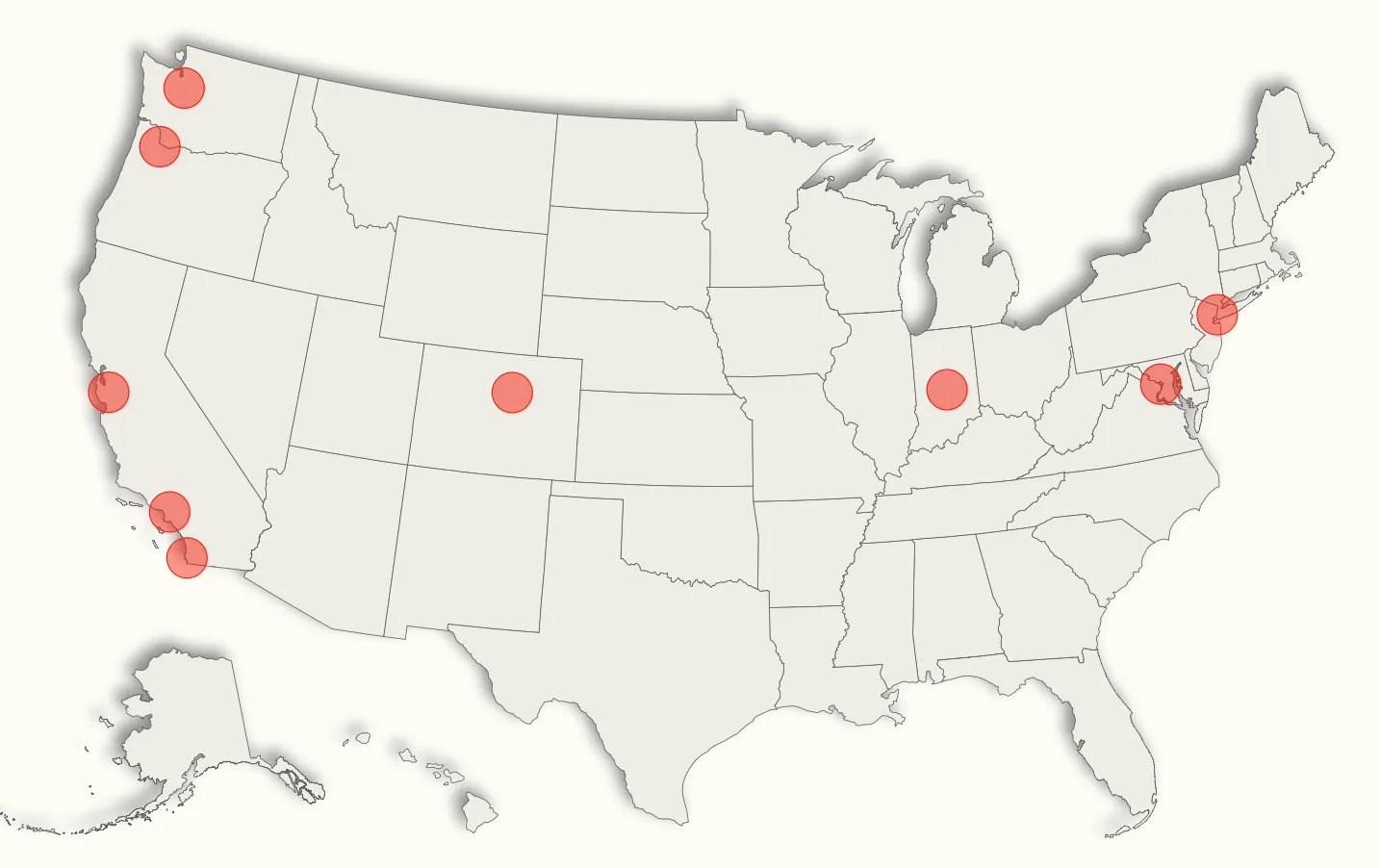
The following cities have announced their current and upcoming 2026 minimum wage rates:
-
Seattle, Washington
- Current: $20.76
- 2026: $21.30
-
Los Angeles, California
- Current: $17.87
- 2026: Rate to be adjusted July 2026
-
New York, New York
- Current: $16.50
- 2026: $17.00
-
Portland, Oregon
- Current: $15.45
- 2026: Rate to be adjusted July 2026
-
Washington, D.C.
- Current: $17.95
- 2026: Rate to be adjusted January 2026
-
Minneapolis, Indiana
- Current: $15.97
- 2026: $16.37
-
Denver, Colorado
- Current: $18.81
- 2026: $19.29
-
San Diego, California
- Current: $17.25
- 2026: $17.75
-
San Jose, California
- Current: $17.95
- 2026: $18.45
States With $15 Per Hour or Higher Minimum Wage
Several states have minimum wage rates of $15 or higher. These include California, where the minimum wage is $16.50, and Connecticut, where it’s $16.35. Delaware, Illinois, Maryland and Massachusetts each maintain a $15 minimum wage. New Jersey’s rate is slightly higher at $15.49, while New York’s minimum is $15.50 and may be higher in certain areas. Rhode Island also sets its minimum at $15, and Washington’s statewide rate is $16.66. The nation’s capital, meanwhile, maintains a minimum wage of $17.95. These higher rates seek to offset the rising costs of living and providing workers with wages that are closer to what is needed to meet basic expenses in their regions.
States Without Minimum Wage Laws
Five states—Alabama, Louisiana, Mississippi, South Carolina and Tennessee—do not have their own minimum wage laws. In these states, the federal minimum wage of $7.25 applies.
Georgia and Wyoming have minimum wages of $5.15. In these states, the federal minimum wage of $7.25 applies.
What Happens Next
Earlier this year, Republican Senator Josh Hawley of Missouri and Democratic Senator Peter Welch of Vermont unveiled a bipartisan proposal to increase the federal minimum wage to $15 per hour, more than double the current rate.
View 0 Comments
Submit Correction
View Editorial & AI Guidelines