...

By Marie Boran
Technology Reporter
0
Share
Newsweek is a Trust Project member
See more of our trusted coverage when you search.Prefer Newsweek on Googleto see more of our trusted coverage when you search.
A Newsweek maps shows states adopting cellphone restrictions in schools, following the first ban by Florida in July 2023.
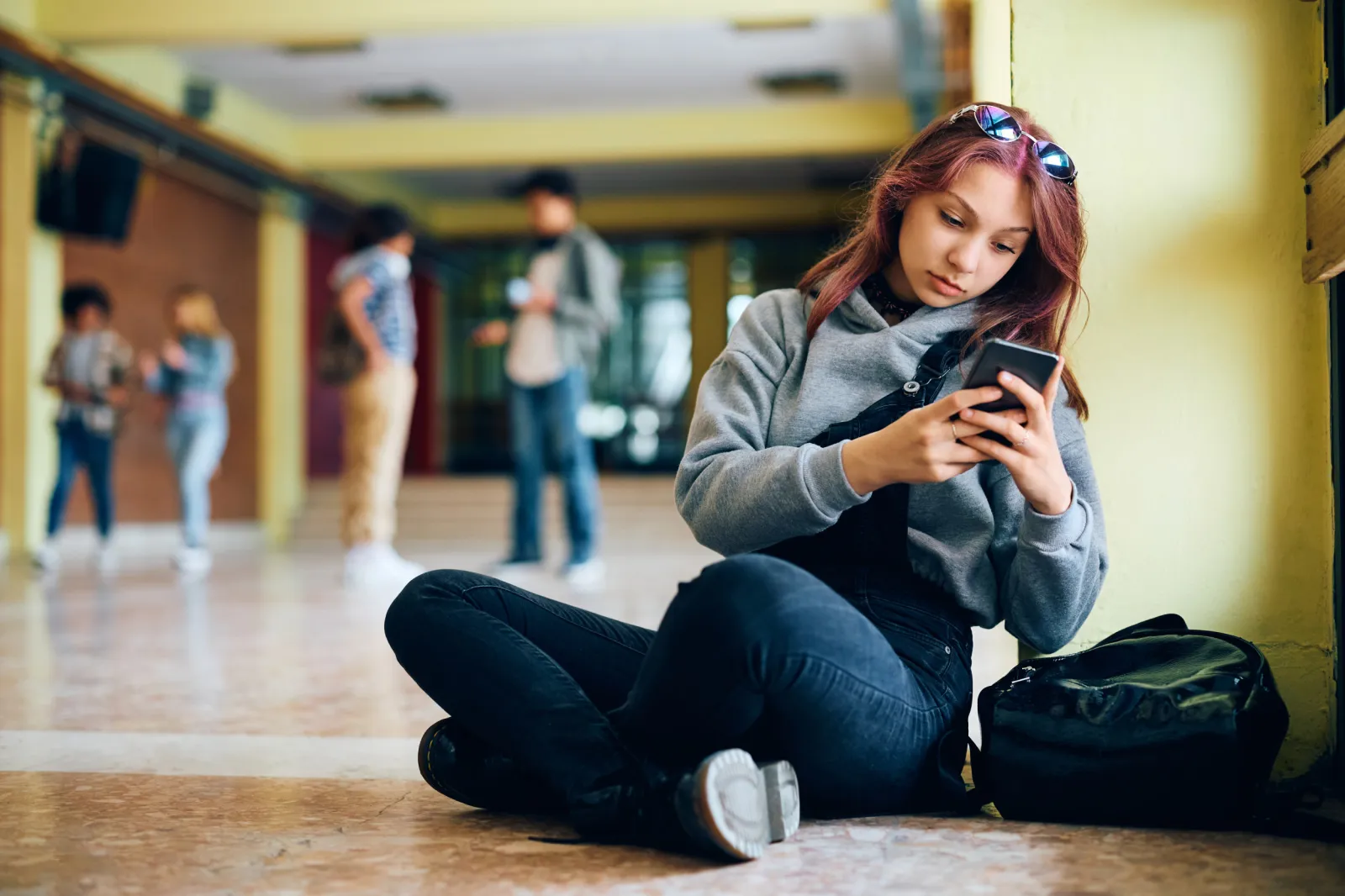
These restrictions come on the back of research and recommendations over how high school children and younger are using cellphones during class hours. A Pew Research Center survey carried out in 2023 found 72 percent of high school teachers felt usage was a major problem, and 60 percent said cellphone policies were very or somewhat difficult to enforce.
"The debate over cellphone bans in U.S. schools highlights the tension between reducing school distractions and mitigating online bullying versus leveraging technology for education and the need to teach responsible tech use," Jackie Leavitt, co-chief editor of Cloudwards.net, a publication focused on digital safety and cloud-based technology, told Newsweek.
Read More on Tech
Leavitt added: "It's crucial to emphasize the importance of teaching children social engagement skills outside of technology, fostering face-to-face interactions and building interpersonal abilities that remain fundamental in both personal and professional spheres."
The map shows which states have school cellphone restriction policies across the U.S, followed by a state-by-state breakdown of these policies for the 15 states affected.
As reported by Education Week, these policies can be broken down into four broad categories, from loosest to most restricted: incentives to create policy, recommended policy, required policy, and statewide restriction.
Alabama
On February 8, the state's Board of Education adopted a resolution addressing the use of electronic devices in schools. While not mandating action, the resolution "strongly encourages" education boards to implement policies restricting the use of cellphones and similar devices on school grounds. State Superintendent Eric Mackey said at the time: "It's about cellphones, but it is really more about screen time and social media."
Arkansas
On August 8, the state launched an initiative under Governor Sarah Huckabee Sanders to curb cellphone use in schools throughout the state. The pilot program offers funding to public school districts for the purchase of secure storage pouches, allowing students to safely stow their phones during class hours. The University of Arkansas Office of Education Policy will conduct a yearlong evaluation, gathering feedback from students and parents through surveys, as well as monitoring mental health data.
California
On September 23, 2024, Governor Gavin Newsom signed the Phone-Free Schools Act into law. This legislation requires all public schools in California to develop and implement policies restricting student cellphone use during school hours. Schools must adopt these policies by July 1, 2026, following a collaborative process that involves input from students, parents, and educators. To ensure the policies remain relevant, they must be reviewed and updated every five years.
The law includes several exceptions. Students are permitted to use their phones for individualized instruction, medical necessities, and in emergency situations. Additionally, teachers and administrators retain the discretion to allow cellphone use when they deem it appropriate.
Connecticut
The State Board of Education introduced voluntary guidelines on August 21, 2024, to help school districts design their own cellphone policies. These recommendations advocate age-specific restrictions across different educational levels. For elementary and middle schools, the guidelines suggest a complete removal of cellphones and similar devices, including smartwatches, from classrooms.
For high schools, where the focus is on minimizing distractions rather than outright prohibition, one suggested method is allowing students to keep their phones but requiring them to be turned off during lessons. While these guidelines are not mandatory, both the governor and the state education commissioner are strongly urging districts to implement them.
Delaware
Similar to Arkansas, the state is providing funding for a cellphone pilot program centered on the use of phone pouches. Under this scheme, which has been provided with $250,000 in total, school districts can apply for financial support to acquire storage pouches, providing a secure place for students to keep their phones while in class.
To assess the impact of this initiative, the state education department is mandated to conduct a thorough evaluation. The department is required to submit a comprehensive report by May 1, 2025, detailing the program's effectiveness.
Florida
In 2023, Florida became the first state to legally ban cellphone use in schools with the law coming into effect on July 1 of that year. The legislation prohibits students from using smartphones during class hours. However, educators have the discretion to allow cellphone use for educational activities within designated areas of their classroom.
Additionally, the law addresses social media usage among students. It forbids access to social networking platforms via school internet connections and mandates that schools educate students in grades 6-12 about the various impacts of social media, including its effects on social interactions, emotional well-being, and physical health.
Indiana
Senate Bill 185, which became operational on July 1, 2024, compels state educational institutions to establish guidelines prohibiting cellphone use in classrooms. It mandates that school districts and charter schools implement policies restricting student use of portable electronic devices, including smartphones, tablets, and laptops, during instructional periods.
However, there are exceptions: educational activities authorized by teachers, emergencies, management of students' health needs, accommodations required by a student's education plan.
...
Louisiana
An existing cellphone law was updated in the state on May 28, 2024. It now mandates that students power off their devices and keep them stored away throughout the school day. This rule applies to both school grounds and school buses. However, the legislation includes exemptions for students whose Individualized Education Plans (IEPs) specifically require the use of electronic devices.
Minnesota
By March 15, 2025, school districts must implement policies governing student cellphone use, as mandated by recent state legislation. The law also directs state school principal associations to develop best practices aimed at mitigating cellphones' impact on student behavior, mental health, and academic performance.
In response, the 'cellphone Tool Kit' was launched in July 2024. This model policy states: "Students are encouraged not to bring cellphones or other electronic devices including smartwatches, and earbuds/air pods to school."
Ohio
Signed into law on May 19 to take effect on July 1, Ohio's policy on cellphone use states that school districts are required to establish policies regulating student cellphone use during school hours, with the primary aim of reducing usage.
The law mandates these policies include exemptions for students who rely on cellphones to manage health conditions or access special education services. To assist districts in this process, the state education department is tasked with creating a model policy (like Minnesota's cellphone Tool Kit) that can serve as a reference guide.
Oklahoma
On September 11, 2024, Governor Kevin Stitt launched the Oklahoma Phone-Free School Challenge via executive order. It invites students, educators, and superintendents across the state to propose strategies for managing cellphone use in schools, addressing issues such as distraction, bullying, and learning disruptions.
Participating districts are required to implement cellphone policies by November 29, 2024. These policies will be shared with the governor's office and other state officials, contributing to a comprehensive "Oklahoma Phone-Free Schools" best practices report.
Pennsylvania
Governor Josh Shapiro has signed legislation expanding the state's School Safety and Mental Health grant program. The new law allows schools to use these funds to purchase lockable smartphone bags, provided they implement an official policy banning cellphone use during school hours. It is not mandated; schools not seeking grant money retain autonomy over their cellphone rules.
The bill's sponsor, Senator Ryan Aument, said: "Kids spend so much time on social media and using their smartphones that it's taking a toll on them mentally, emotionally and academically. Smartphone restrictions have proved successful in reversing these trends."
South Carolina
Schools face a statewide ban on cellphone usage that must be in effect by January 1, 2025. The state Board of Education has mandated that the minimum requirement is for students to keep devices turned off and stored from the first morning bell until dismissal.
The various school districts have flexibility to enforce stricter rules and determine consequences for violations. Those failing to adopt policies at least as stringent as the state's mandate risk losing state funding. While the core ban is uniform, implementation details are left to individual districts' discretion.
Virginia
On July 9, 2024, Governor Glenn Youngkin signed an executive order directing the state Department of Education to issue guidelines for establishing cellphone-free environments in K-12 schools. The order will set a deadline for school districts to adopt related policies and procedures by January 2025.
"This guidance will ensure K-12 Virginia students have a distraction-free environment to focus on learning and reduce the alarming mental health crisis and chronic health conditions from cellphones and social media affecting Virginia students," said the Virginia education department in an official release.
Washington
On August 28, 2024, State Superintendent of Public Instruction Chris Reykdal released a policy brief encouraging school districts to develop and implement their own policies to limit student cellphone use, with a target implementation date of the 2025-26 academic year.
"The research is clear: Reducing the use of cellphones in class improves concentration and learning, improves mental and physical health, and reduces pressures caused by social media," said Superintendent Reykdal in an official guidance document.

...
View 0 Comments
Submit Correction
View Editorial & AI Guidelines