...

By Joe Edwards
Reporter
0
Share
Newsweek is a Trust Project member
See more of our trusted coverage when you search.Prefer Newsweek on Googleto see more of our trusted coverage when you search.
Pollen levels are set to grow across much of the U.S., with experts warning of an intense allergy season that could last longer into the fall.
Meteorologists at AccuWeather are predicting that 39 states will see pollen counts exceed historical averages, making 2025 a challenging year for allergy sufferers.
Why It Matters
Approximately one in four adults and nearly one in five children in the U.S. experience seasonal allergies, according to AccuWeather. Higher pollen levels could mean more severe symptoms, including nasal congestion, itchy eyes, and respiratory discomfort.
Read More on News
What To Know
AccuWeather pollen forecasts for 2025 indicate that tree, grass, and weed pollen levels will be elevated in certain regions.
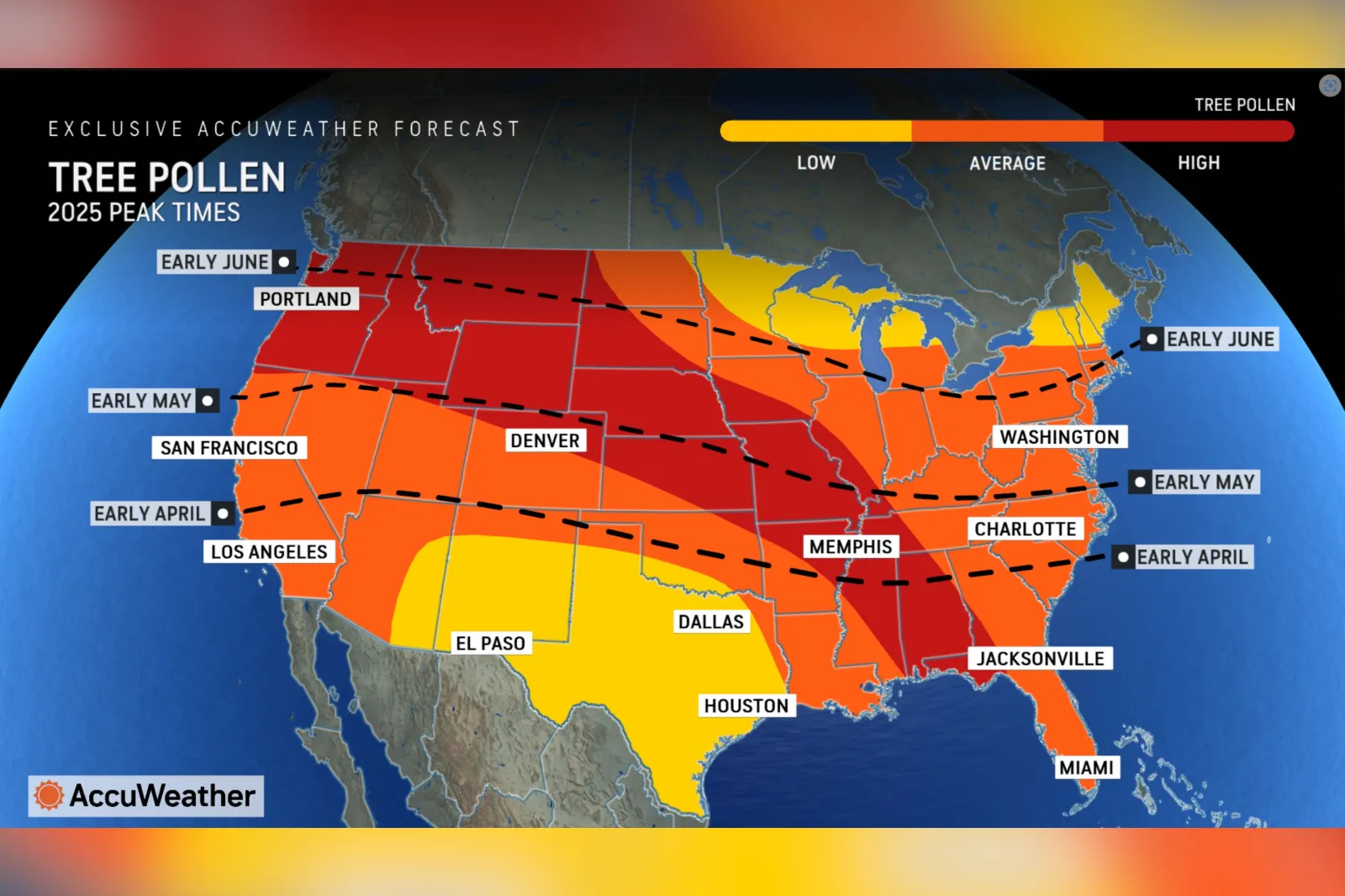
Tree pollen is expected to be above historical averages across a 2,000-mile stretch from the Gulf Coast to the Northwest, spanning 22 states.
In the Northeast and Great Lakes regions, a late frost will delay tree pollen production, offering temporary relief before levels rise later in the season, the outlet said.
...
Grass pollen levels are anticipated to be high across the Northeast, mid-Atlantic, and parts of the Northwest due to warm temperatures and ample rainfall, AccuWeather said in an advisory shared with Newsweek.
In the Southeast, including Florida, Georgia, Alabama and South Carolina, dry weather is expected to limit grass pollen during parts of the summer season.

...
Meanwhile, the coastal Carolinas, the southern Plains, and the Gulf Coast could experience the highest concentrations of weed pollen, a forecast map from the weather outlet showed.
Increased rainfall in late August and September could also lead to a second peak in weed pollen, after an initial peak in July across the Tennessee Valley, AccuWeather said.

...
What People Are Saying
In an advisory shared with Newsweek, AccuWeather senior meteorologist Brett Anderson said: "Many allergy sufferers have noticed their symptoms worsen over the past decade. The trend of more intense allergy seasons getting a jump start earlier in the spring and lasting later into the fall follows the overall trend line of warmer and wetter spring seasons in America.
"There will be variability year to year depending on spring temperatures, storm tracks, and additional moisture from tropical storms and hurricanes, but the overall trend is clear. Pollen counts are on the rise and seasonal allergies are getting worse for millions of people as our climate continues to warm."
AccuWeather senior meteorologist and allergy expert Alan Reppert said: "Millions of people living with seasonal allergies will be struggling with more intense symptoms that will likely stick around longer this year in many areas.
"You can blame wet and warm weather patterns expected later this year for pollen levels that will reach levels higher than the historical average in many places."
What Happens Next
Experts recommend checking local pollen forecasts, limiting outdoor exposure during peak times, and using air purifiers to manage symptoms.
Rain may provide temporary relief, but allergy seasons are expected to keep lengthening in the future.
View 0 Comments
Submit Correction
View Editorial & AI Guidelines