...

By Hollie Silverman
News Editor
0
Share
Newsweek is a Trust Project member
See more of our trusted coverage when you search.Prefer Newsweek on Googleto see more of our trusted coverage when you search.
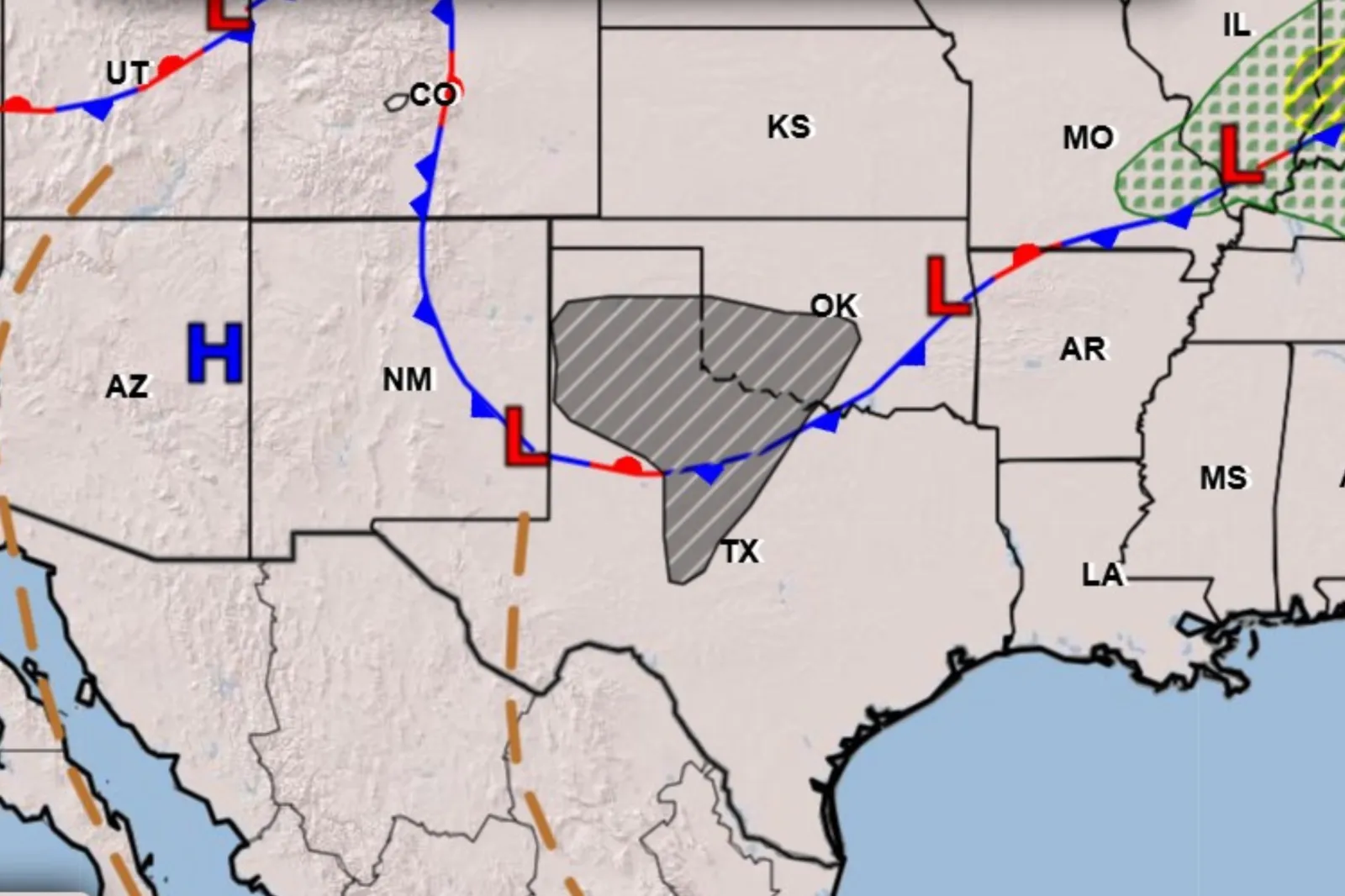
Forecasters warned that parts of the southern Plains and Southwest face “elevated to critical fire weather conditions” Sunday, as local National Weather Service (NWS) offices issued red flag warnings across large portions of Oklahoma and into Texas.
The NWS’s fire weather page also signaled continued risk across the central U.S., noting that “periods of critical fire weather will persist from the central Rockies to the central and southern Plains through the weekend” as warm, dry, and windy conditions overlapped with dry fuels.
What To Know
The Weather Prediction Center (WPC) reported a trailing cold front and gusty winds, combined with “very low relative humidity values, anomalously warm temperatures, and dry fuels,” created “elevated to critical fire weather conditions for portions of the Southwest and southern Plains” on Sunday.
Read More on Weather
The warnings covered dozens of counties in Oklahoma and extended into north Texas, aligning with federal guidance that highlighted a broad fire-weather corridor from the Southwest into the southern Plains.
With warm, dry, and windy patterns in place, safety advisories emphasized prevention. The Oklahoman listed common ignition sources and avoidance steps, such as fully extinguishing cigarettes, avoiding parking on dry grass, and refraining from using welding equipment during red flag periods.
...
What Is a Red Flag Warning?
Red flag warnings indicate meteorological and fuel conditions that substantially increase the likelihood that new fires will ignite and spread rapidly, elevating threats to life, property, and infrastructure across affected regions, including rural grasslands and communities at the wildland-urban interface.
The warnings are issued when a combination of strong winds, low relative humidity, and warm temperatures could contribute to "extreme fire behavior."
Where Have Red Flag Warnings Been Issued?
The NWS office in Norman issued a red flag warning early Sunday covering dozens of Oklahoma counties and portions of north Texas, with affected areas including: Harper, Woods, Alfalfa, Grant, Kay, Ellis, Woodward, Major, Garfield, Noble, Roger Mills, Dewey, Custer, Blaine, Kingfisher, Logan, Payne, Beckham, Washita, Caddo, Canadian, Oklahoma, Lincoln, Grady, McClain, Cleveland, Pottawatomie, Seminole, Hughes, Harmon, Greer, Kiowa, Jackson, Tillman, Comanche, Stephens, Garvin, Murray, Pontotoc, Cotton, Jefferson, Carter, Love, Hardeman, Foard, Wilbarger, Wichita, Knox, Baylor, Archer and Clay counties.
What Happens Next
The WPC said colder air would filter into the northwestern and central U.S. behind the front through Monday, while record heat was expected to persist into the workweek in parts of the Southwest, sustaining localized fire-weather concerns.
Additional fronts could reintroduce wind shifts and weather changes over the north-central U.S. and Great Lakes by midweek, with local fire-weather conditions dependent on humidity, fuel status, and wind forecasts.
In a polarized era, the center is dismissed as bland. At Newsweek, ours is different: The Courageous Center—it's not "both sides," it's sharp, challenging and alive with ideas. We follow facts, not factions. If that sounds like the kind of journalism you want to see thrive, we need you.
When you become a Newsweek Member, you support a mission to keep the center strong and vibrant. Members enjoy: Ad-free browsing, exclusive content and editor conversations. Help keep the center courageous. Join today.


View 0 Comments
Submit Correction
View Editorial & AI Guidelines