
10
Loading video...

By Andrew Stanton
Reporter
0
Share
Newsweek is a Trust Project member
See more of our trusted coverage when you search.Prefer Newsweek on Googleto see more of our trusted coverage when you search.
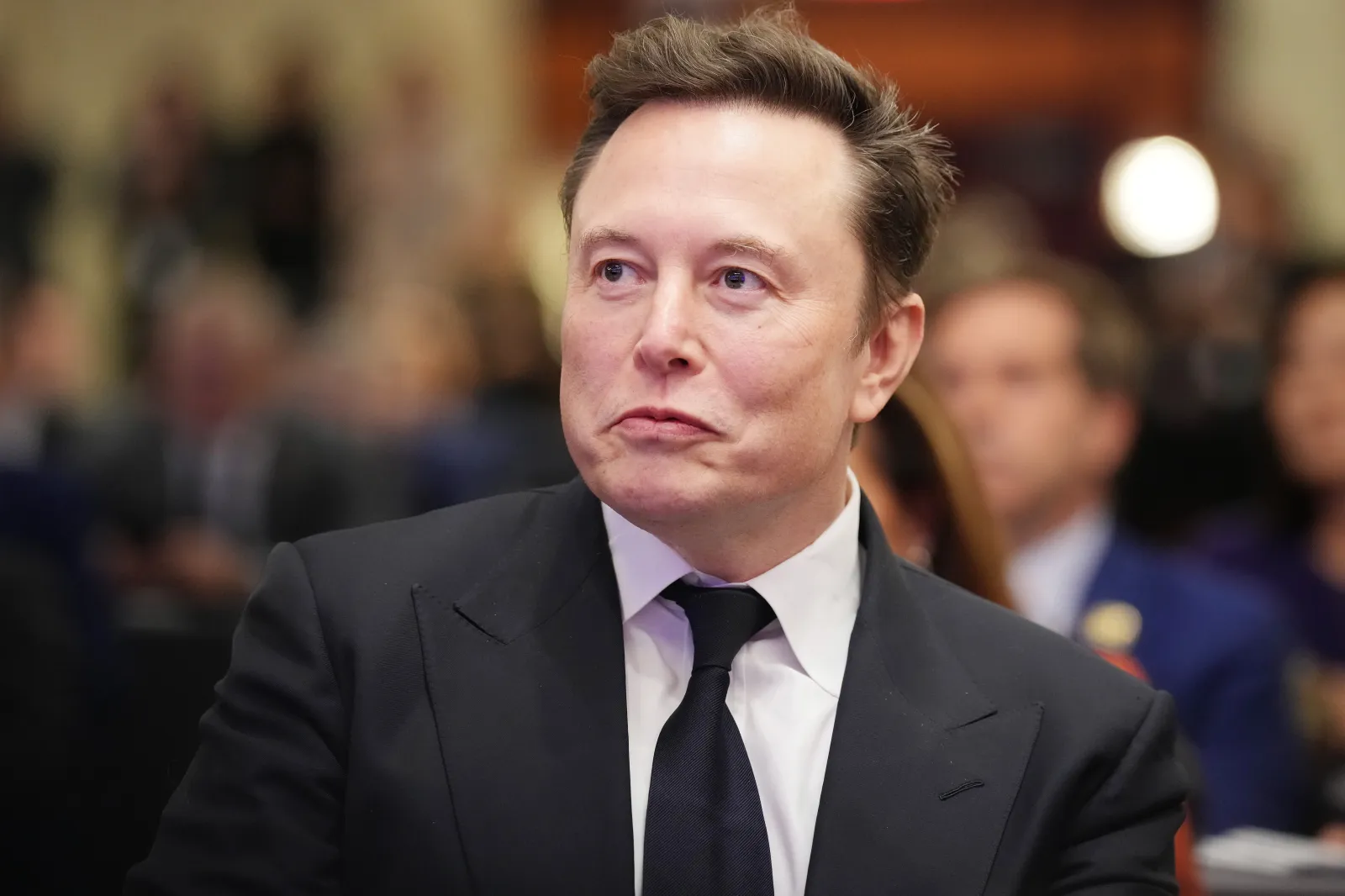
Elon Musk is opening his wallet to help Republicans in the midterm elections as they face tough economic headwinds in the campaign's final stretch.
Musk has spent more than $276 million on political spending for Republican groups since July, according to a new report from The New York Times. The donations come just over a year after the world’s wealthiest man said he planned to cut back on political spending amid a rift with President Donald Trump.
Republicans hope the significant spending will give them a boost, as polls suggest Democrats are in an increasingly strong position to not only take control of the House of Representatives but compete for control of the Senate in the November 3 elections.
Read More on Politics
The GOP is facing a difficult national environment. Historically, the party in the White House has lost seats in the midterms when the president’s approval rating is low, and Trump’s numbers have fallen since his return to the Oval Office amid growing frustration with the economy and cost of living among voters.
...
The latest wave of spending has gone to groups like the Senate Leadership Fund, rather than to specific candidates. But Federal Election Commission (FEC) filings reviewed by Newsweek showed that Musk has donated funds to several conservative House Republicans seeking reelection over the past few years.
Newsweek reached out to Musk for comment via press emails for SpaceX and Tesla.
Can Elon Musk Save Republicans?
The wave of spending may be “pretty limited” in terms of its impact for Republicans, Todd Belt, professor of political management at George Washington University, told Newsweek on Monday.
“I think it's going to be too little too late for this type of spending. I mean, you're not going to be able to change people's minds about what the real issues are in this election. And that's the economy,” he said.
The economy is “usually” the main issue in any election, and many voters have already connected economic problems to Trump, he said.
“I don't see how a bunch of spending right at the end is going to change many people's minds,” he said, noting that there is a “saturation point” when it comes to political advertising.
Where Elon Musk Is Spending His Money
The Times reported $276 million in political spending from Musk.
The majority of that spending, $158 million, was sent to the Senate Leadership Fund, which is supporting Republican candidates in key Senate races.
He has also donated $76 million over the summer to America PAC. Musk himself founded the America PAC, which has supported various Republican candidates in House and Senate races. It has reported more than $52 million in federal disbursements since January 2025, according to the FEC.
He has also given $20 million to the Congressional Leadership Fund, $10 million to Lone Star Liberty PAC, which is supporting Republican Senate candidate Ken Paxton, $10 million to the Republican Governors Association and $2 million to the Republican Attorneys General Association, his representatives told the Times.
In May, he made a $5 million donation to V-PAC: Victors Not Victims, which is supporting Republican Vivek Ramaswamy in Ohio’s gubernatorial race, according to FEC data.
He donated $10 million to Fight for Kentucky, a PAC supporting Republican Nate Morris, who ultimately withdrew from the Republican primary in Kentucky’s Senate race to Representative Andy Barr.
He made several donations in the second half of 2025 to his America PAC and the Senate Leadership Fund. In June 2025, he also donated $5 million to MAGA Inc., a Trump-aligned PAC.
Earlier in 2025, he also made donations to several Republicans. Here is a list of all Republicans he donated to, according to the FEC.
- Lauren Boebert (CO-04)
- Eric Burlison (MO-07)
- Ken Calvert (CA-40)
- Buddy Carter (GA-SEN)
- Andrew Clyde (GA-09)
- Mike Collins (GA-SEN)
- Eli Crane (AZ-02)
- Warren Davidson (OH-08)
- Brandon Gill (TX-26)
- Abe Hamadeh (AZ-08)
- Mark Harris (NC-08)
- Anna Paulina Luna (FL-13)
- John McGuire (VA-05)
- Mary Miller (IL-15)
- Barry Moore (AL-SEN)
- Andy Ogles (TN-05)
- Michael Rulli (OH-06)
- Keith Self (TX-03)
- Marlin Stutzman (IN-03)
- Derrick Van Orden (WI-03)
- Tony Wied (WI-08)
He also donated to Representative Darrell Issa, who later decided to retire after California redrew its maps, placing him in a less conservative seat. Carter and Ogles both lost their primaries.
Most of these Republicans are in solidly conservative districts, and only a few are expected to face competitive elections this year. Many are members of the conservative House Freedom Caucus. However, his donations to Republican groups may be spread out based on where those PACs believe the money could best be used to strengthen Republicans.
Senator Bernie Sanders, a Vermont independent, criticized the spending in a post on X.
"Elon Musk spent $290 million to elect Trump. It paid off. Since his election, Musk got $696 billion richer & became the world’s 1st trillionaire. But that’s not enough. Now, Musk is spending $366 million to keep Republicans in control of Congress. STOP MUSK. STOP OLIGARCHY," he wrote Monday.
Elon Musk’s Relationship With Donald Trump, Republicans: Timeline
Musk and Trump have had a tumultuous relationship in recent years. Musk backed Trump in 2024, but the two fell out once Trump took office and Musk was appointed to lead the Department of Government Efficiency (DOGE). But their relationship has thawed in recent weeks, with Trump awarding Musk, among other tech leaders, the National Medal of Science earlier in October.
Here is a look at how their relationship has shifted over the years.
- 2016: Elon Musk supported former Secretary of State Hillary Clinton over Trump in the 2016 election. He told CNBC he believed Trump was “not the right guy” to lead the country in November 2016.
- 2017: During Trump’s first term in office, Musk joined some White House advisory councils but later resigned after Trump’s withdrawal from the Paris Climate Agreement.
- 2020: Musk also declined to back Trump in 2020, instead supporting former President Joe Biden in that year’s election.
- May 2022: Musk announced that he would support Republicans in the 2022 midterms, describing the Democrats as the “party of division & hate.”
- June 2022: Musk said he was “undecided” about whether he would support Trump in the 2024 election over Florida Governor Ron DeSantis.
- May 2023: Musk initially supported DeSantis in the Republican presidential primary.
- July 2024: After the attempted assassination of Trump, Musk formally endorsed his presidential bid. In the weeks that followed, he would become a major donor, spending more than $250 million on the presidential race and other Republican campaigns. He also campaigned for Trump in battleground states.
- November 2024: After Trump’s victory, Musk was seen as taking on an increasingly visible role in the transition. Musk played a key role in killing a Republican-supported government funding bill, a move many believed underscored his influence over the president.
- January 2025: Trump established DOGE, which Musk would lead. Over the first few months of Trump’s second administration, Musk became among the most well-known members of the administration, frequently drawing attention and backlash over his recommended cuts to federal spending. Trump said he wanted Musk to keep working with him for "as long as possible."
- April 2025: Musk said he planned to take a step back from DOGE and refocus his efforts on Tesla amid the company's financial challenges and backlash from consumers who took issue with his role in the administration.
- June 3, 2025: Musk publicly broke with Trump over the One Big Beautiful Bill Act, describing it as a “disgusting abomination” in a post on X.
- June 5, 2025: Musk escalated his feud with Trump, writing that the president would have “lost the election” without him. Trump responded to him on Truth Social, writing that they once had a “great relationship” but that he was unsure if they would “anymore.”
- July 2025: Musk floated creating a new “America Party.”
- Late 2025: By the end of 2025, the feud had largely cooled. In November 2025, Musk attended Trump’s state dinner with the Saudi crown prince, Reuters reported.
- December 2025: According to Time magazine, Musk met with Trump in December 2025 and discussed AI with Trump.
- July 2026: By July, Musk had begun making major donations to Republicans in House and Senate elections, the Times reported.
- October 2026: Trump honored Musk and other tech leaders in the White House.
Republicans’ Chances of Losing House and Senate
Republicans have been trailing in key polls over the past few weeks as economic concerns mount.
In the House, Democrats only need to flip a handful of seats to win a congressional majority. As of Monday, Republicans held 218 seats and Democrats held 214 seats.
The latest Reuters/Ipsos poll from September 30 to October 5 had Democrats 7 points ahead of Republicans on the generic ballot, a key metric used to gauge where the race for House control stands.
Among 3,526 registered voters, 44 percent said they plan to vote for a Democratic candidate, while 37 percent plan to vote Republican. It had a margin of error of plus or minus 1.7 percentage points.
The Senate, where Republicans hold a 53-47 majority, is seen as a tougher lift for Democrats due to limited Republican-held seats being up for grabs in traditionally competitive seats in this cycle. But polls suggest Democrats are competitive in double-digit Trump 2024 states like Alaska, Iowa, Kansas, Ohio and Texas.
Democrats were favored in the battle to win the House on prediction markets, holding a 90 percent chance on Kalshi and a 91 percent on Polymarket. Democrats also had a 62 percent chance of winning the Senate on Kalshi and a 64 percent chance on Polymarket as of Monday afternoon.
Prediction markets allow traders to buy and sell contracts tied to political outcomes and current events, aggregating real‑money wagers into probability estimates.
Prices fluctuate as traders react to polling, fundraising, candidate developments and broader political trends. They measure trader sentiment at a given moment but do not always accurately predict the future.
What Happens Next
How Musk’s major financial support affects key races may be seen over the coming weeks. Candidates will be making their final pitches to voters as early voting is already underway in several states.
Related Story

Map Shows Donald Trump’s Approval Rating in Each State on Columbus Day
Newsweek’s reporters and editors used Martyn, our AI assistant, to produce this story. Learn more about Martyn here.
Contact Newsweek editors on this story: Jenni Fink and Gray R. Thomas
View 0 Comments
Submit Correction
View Editorial & AI Guidelines