...

By Kaitlin Lewis
Night Reporter
0
Share
Newsweek is a Trust Project member
See more of our trusted coverage when you search.Prefer Newsweek on Googleto see more of our trusted coverage when you search.
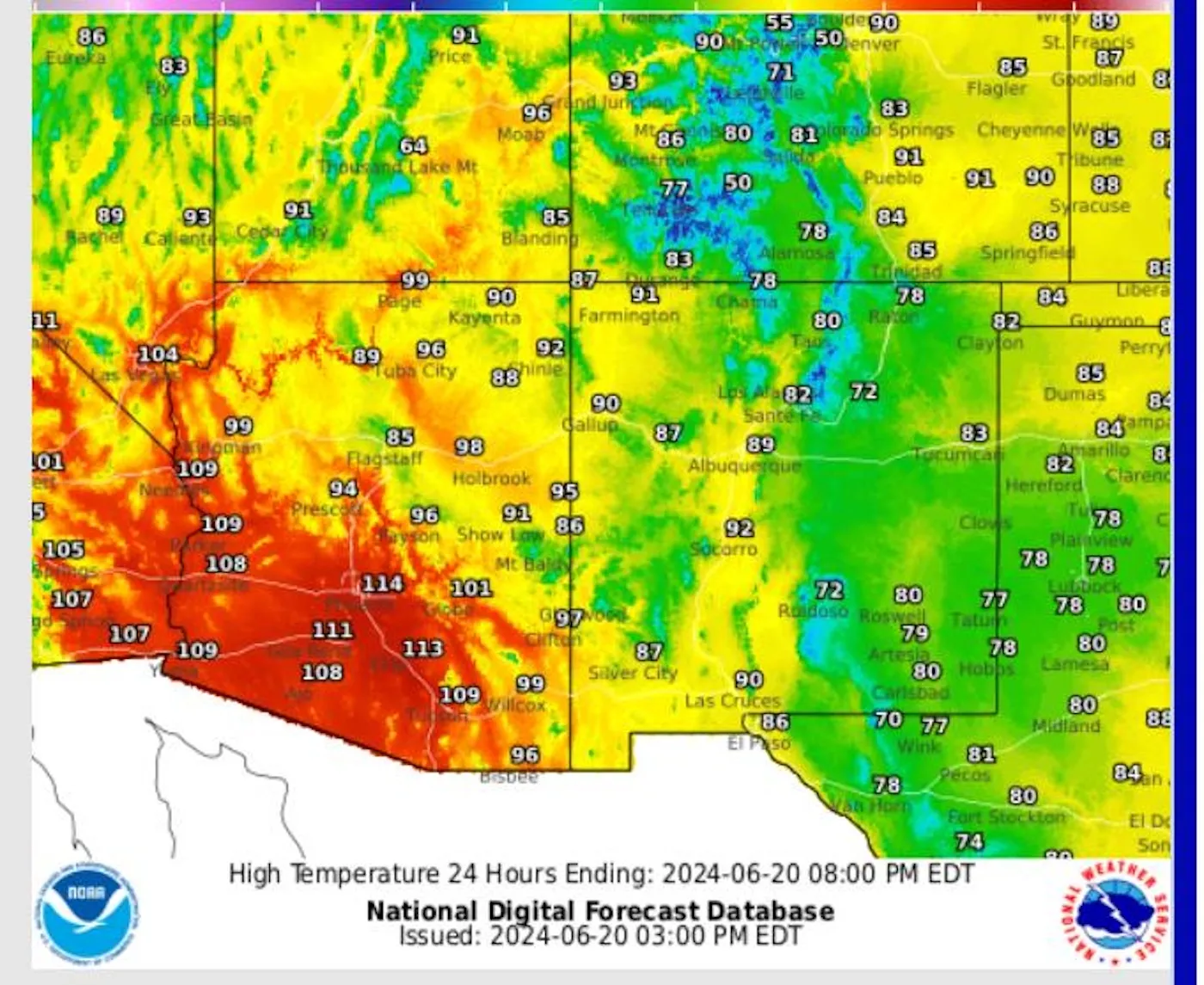
Portions of Arizona have been placed under an excessive heat warning through Friday as temperatures soar country wide.
According to an alert from the National Weather Service (NWS), portions of south, southwestern and central Arizona could experience "dangerous hot conditions" through the end of the week, with afternoon temperatures reaching up to 107-115 degrees.
Read more: What Is a Health Savings Account?
Read More on U.S.
Forecasters warned that the risk for heat-related illnesses will increase "significantly" during the excess heat warning, which ends at 8 p.m. MST on Friday. Early signs of illness can include thirst and muscle cramps. In some cases, residents may experience heat exhaustion, which can include pale skin, headaches, dizziness, weakness or exhaustion and nausea.
The most serious heat-related illness is heat stroke, which may include vomiting, confusion, a throbbing headache, decreased alertness or loss of consciousness, a body temperature of 105 degrees or higher, hot and dry skin, a rapid pulse and rapid breathing. If left untreated, heat stroke can cause serious health complications or lead to death.
...
"Heat stroke can be DEADLY," read the NWS alert. In the case of a heat stroke, forecasters said to treat it "as an emergency and call 911."
Read more: Discover the Right Bank for Emergency Funds
As Newsweek previously reported, roughly 1,300 people die from heatstroke in the United States every year, a higher total than those killed by tornadoes, hurricanes and floods combined. The age groups most at risk from heat-related illness are children and the elderly, although anyone with prolonged exposure outside during high temperatures could be affected.
The NWS advises residents during periods of high temperatures to lock their vehicles even when they are parked at home to prevent children from wandering inside and getting trapped. Forecasters also says to wear loose-fitting clothing, drink plenty of water and take frequent breaks if working outside.
Read more: Compare the Top Health Savings Account (HSA) Providers
Portions of the Midwest and Northeast are experiencing their first heat wave of the summer season this week. Temperatures soared into the triple digits Wednesday and Thursday from Ohio to the state of New York. The city of Boston broke its 100-year heat record on June 19 with a high of 98 degrees.
Bryan Jackson, the acting warning coordination meteorologist through at NWS, previously told Newsweek that the "core of the heat wave is focused over the eastern Great Lakes and New England through Thursday." Parts of New England will start to feel relief by Friday. Temperatures in the Midwest and rest of the Northeast will start to drop between Sunday and Monday, Jackson added.
The southwestern U.S. has been hit with periods of excessive heat throughout the month. Several daily heat records were set throughout California, Arizona and New Mexico on during the first week of June.
View 0 Comments
Submit Correction
View Editorial & AI Guidelines