...

By Giulia Carbonaro
Senior Reporter
0
Share
Newsweek is a Trust Project member
See more of our trusted coverage when you search.Prefer Newsweek on Googleto see more of our trusted coverage when you search.
The U.S. is in the midst of a "romantic recession," researchers have declared, as fewer Americans are coupling up and marriage rates have steadily dropped with each new decade.
However, a new study by StorageCafe found that love is still blooming in the parts of the country where young couples can afford to start their life together without being smothered by high rent, rising housing costs and long commutes to work.
Fewer Americans Are Coupling Up and Starting a Family
A 2021 analysis by the Pew Research Center found that a rising number of U.S. adults are not living with a romantic partner. In 2019, 38 percent of Americans aged between 25 and 54 were "unpartnered," up from 29 percent in 1990. Fewer Americans are having kids as well, with the U.S. fertility rate falling from 2.1 children per woman to 1.6 in the past decade.
Read More on News
The decline in the number of Americans who are coupled up and starting a family has been attributed to several factors, including economic outcomes, a cultural pivot around the way we view marriage and shifting expectations—especially among now more independent women.
From high housing and child care costs to the difficulties of finding the right partner, there is no shortage of reasons why a growing number of Americans are single. But the StorageCafe study found that some locations across the country might be more relationship-friendly than others—creating the right environment for individuals to come and stay together.
Younger Couples Are Happier in 'Goldilocks' Cities
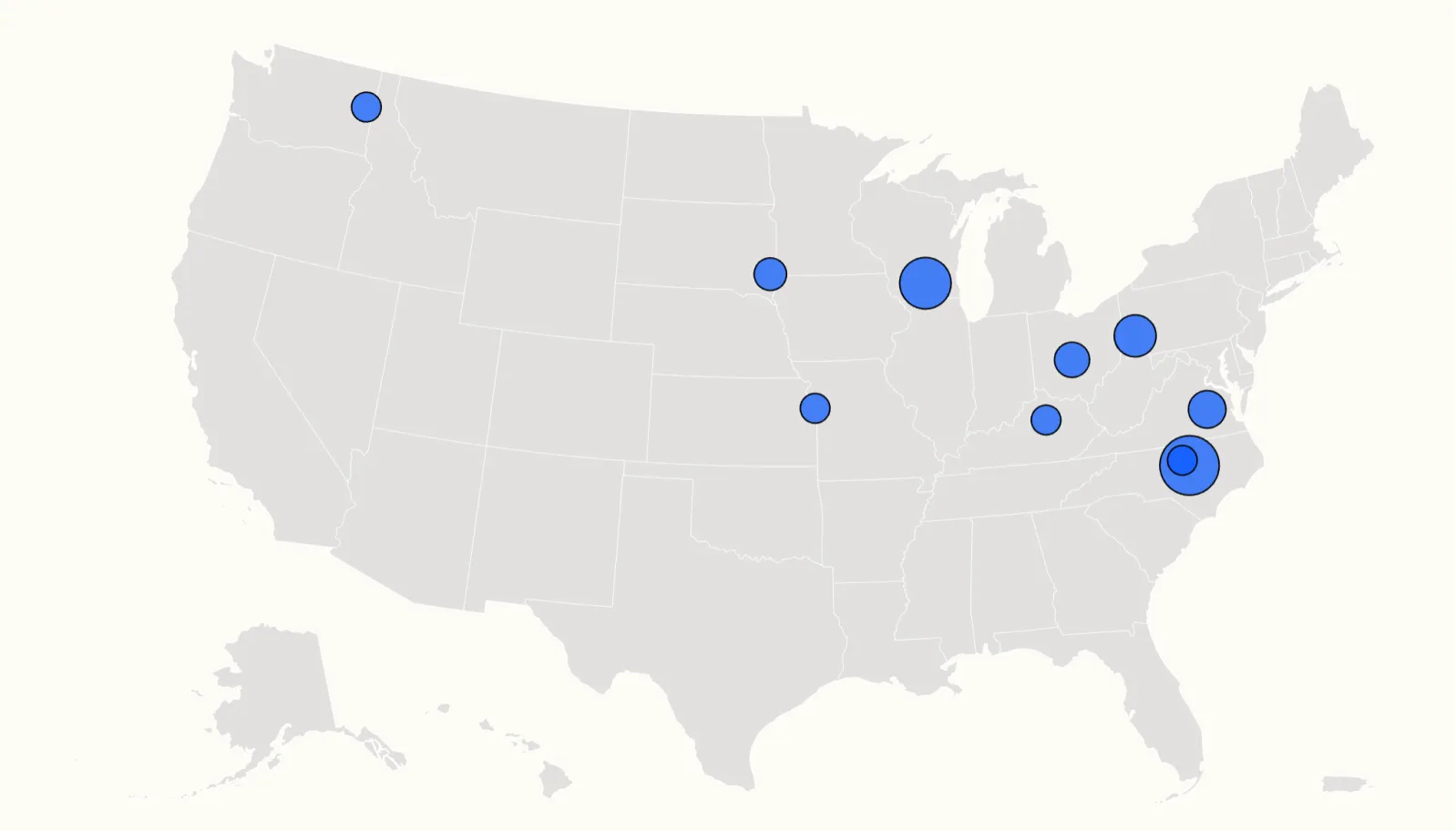
StorageCafe, which provides listings for self-storage facilities across the U.S., ranked 130 American cities on several factors that are relevant to young couples, including affordability, living space at home—which can become the subject of heated discussions when moving in together—and the everyday social and entertainment scene.
The study shows that midsize metropolitan areas, the so-called Goldilocks cities, are the best overall for young couples, as they are "large enough to offer strong job markets and vibrant going-out scenes, yet not so expensive or exhausting that couple life turns into a constant compromise," the company said in a news release.
It found that the former pandemic boomtown of Raleigh, North Carolina, was the best in the country for young couples for its strong young-household income, relatively steady and affordable housing costs and good lifestyle amenities.
The city also has a high share of cohabiting couples (5 percent of all households, more than 24,000 young couples), which creates "a built-in peer network of people in similar life stages, making it easier to form social connections," the company said in its analysis.
Almost 22 percent of residents in Raleigh work remotely, giving young couples more time to spend together.
Madison, Wisconsin, came second with one of the highest shares of cohabiting couples in the nation—also 5 percent of all households—a relatively high median household income for young people, a good work-life balance thanks to widespread work flexibility and plenty of opportunities to enjoy a date with a loved one.
"Love thrives where everyday life feels manageable. These cities make it possible, especially for young couples," StorageCafe wrote in its report.
"Raleigh and Madison sit at the top of the list because they combine what young couples need most: strong communities of cohabiting partners, real time away from work, and plenty of ways to turn an average evening into a date," it continued.
"Just behind them, cities like Pittsburgh, Richmond, Columbus, Sioux Falls, Durham, Overland Park, Minneapolis, and Spokane—and high‑earning hubs such as Fremont, San Francisco, Seattle, San Jose and Jersey City—offer different blends of high incomes, low housing burdens, short commutes, green space, and rich 'going‑out' scenes, giving couples multiple viable blueprints for building a shared life in 2026," the researchers said.
In big cities like New York and Los Angeles, a high rent burden runs the risk of leaving young couples too burned out for their next step, the company found, and long commutes might leave partners with little quality time to spend with each other.
In a polarized era, the center is dismissed as bland. At Newsweek, ours is different: The Courageous Center—it's not "both sides," it's sharp, challenging and alive with ideas. We follow facts, not factions. If that sounds like the kind of journalism you want to see thrive, we need you.
When you become a Newsweek Member, you support a mission to keep the center strong and vibrant. Members enjoy: Ad-free browsing, exclusive content and editor conversations. Help keep the center courageous. Join today.


View 0 Comments
Submit Correction
View Editorial & AI Guidelines