...

By Anna Skinner
Associate News Editor
0
Share
Newsweek is a Trust Project member
See more of our trusted coverage when you search.Prefer Newsweek on Googleto see more of our trusted coverage when you search.
Four years after the U.S. Supreme Court eliminated the constitutional right to abortion, data shows the number of procedures has not fallen as many lawmakers and advocates expected. Instead, it has climbed, and abortions are still happening even in states with the strictest bans.
Recent estimates indicate that more than 1.12 million abortions were provided by U.S. clinicians in 2025, a level that has remained relatively stable in the past two years but represents a sharp rise—about 21 percent higher than in 2020, according to a Guttmacher report published in March of this year. 2020, the last full year of national data before the court’s ruling, reshaped access across the country.
That increase has come despite sweeping restrictions and outright bans enacted in many states following the historic decision.
Read More on U.S.
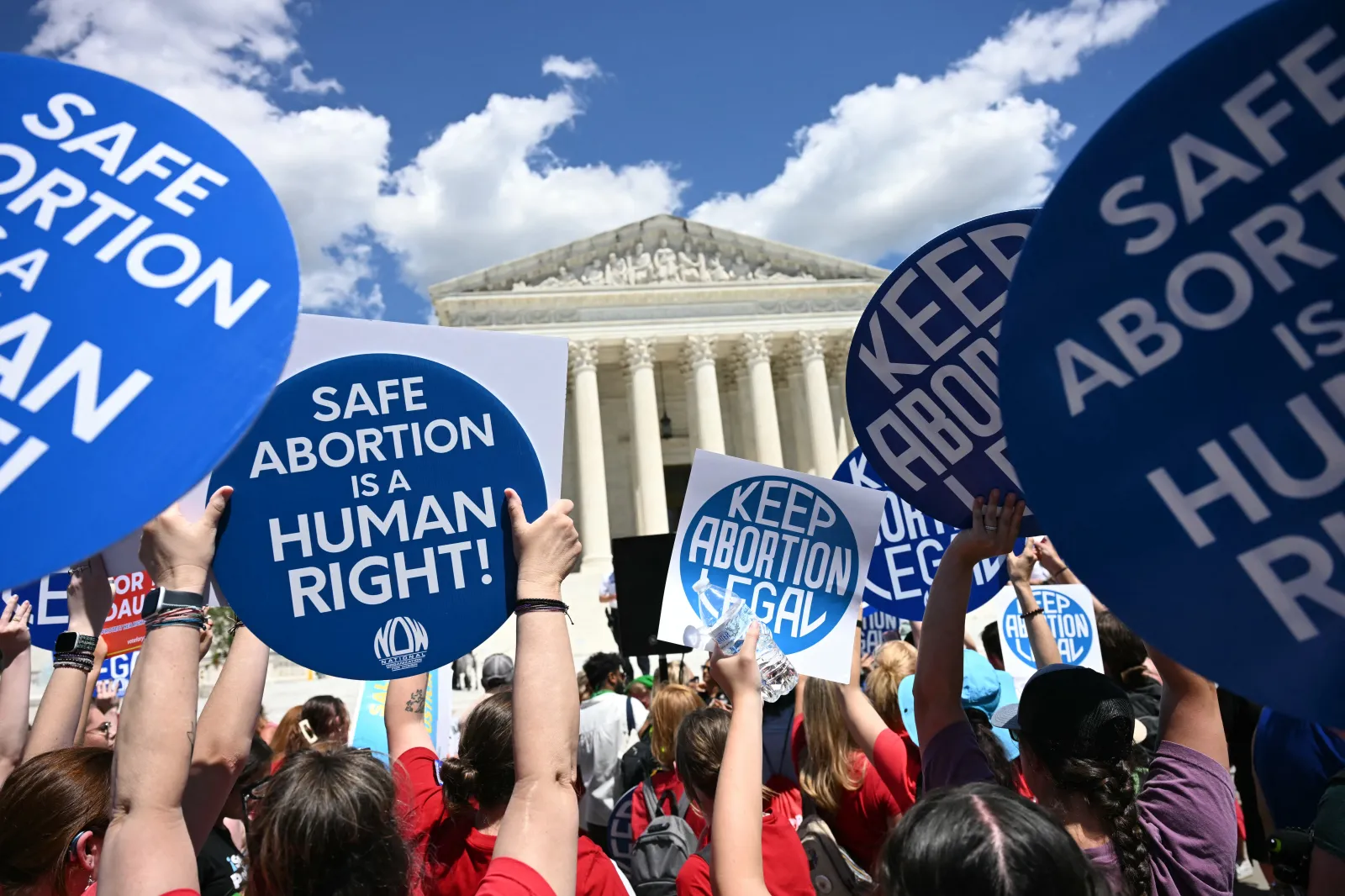
The turning point came on June 24, 2022, when the Supreme Court issued its ruling in Dobbs v. Jackson Women’s Health Organization, overturning Roe v. Wade, the landmark 1973 decision that had guaranteed a federal constitutional right to abortion for nearly five decades. The Dobbs ruling removed that protection and returned the authority to regulate abortion to individual states, creating a patchwork of laws that vary widely across the country—from near-total bans in some states to expanded protections in others.
...
How Many Abortions Happen Per State?
Since the Dobbs ruling, abortions still happen in every single U.S. state, according to data from the Society of Family Planning's WeCount project, an effort that aims to capture national shifts in abortion volume since Dobbs, even in those with the strictest abortion bans.
In the states with the strictest bans, most abortions were provided via telehealth services, the Society of Family Planning's data showed.
"Counts are likely an underrepresentation of all abortions in the US. #WeCount has a comprehensive count of abortions provided by licensed clinicians, with more than 81% of all abortions reported and about 19% imputed," the report said. "Abortions provided by individual hospitals and private practice clinicians may be underreported. These counts also do not include abortions that take place in the US outside of the formal healthcare system."
In the immediate aftermath of Dobbs, many policymakers and analysts predicted the number of abortions would decline nationwide, given that multiple states moved quickly to enact strict bans or limits. But emerging data suggest that prediction has not borne out. Instead, the trend has shifted in the opposite direction.
After Dobbs, abortions are still happening even in states with some of the strictest laws. In some cases, women who were planning on carrying their pregnancy to term encountered a dangerous medical condition, only for delays in care to worsen the situation.
For example, in 2022, Amanda Zurawski, married and 18 weeks pregnant in Texas, suffered a preterm pre-labor rupture of membranes only a week after strict abortion bans were enacted. Her doctor told her with complete certainty that she would lose the baby, and that there was nothing the medical team could do to preserve the baby's life. Before Dobbs, labor would be induced, but that was no longer an option for Zurawski with the strict abortion bans in place. She was told it would have to wait until the baby's heart stopped beating or she needed life-saving medical care.
"I was essentially waiting for either my baby's demise or my own," Zurawski told Newsweek.
Three days later, she went into septic shock and abortion care was provided. She spent a week in the ICU.
"As a result of that [delay], my reproductive organs are permanently damaged and I cannot carry children," she also told Newsweek, adding that she was devastated by the loss.
What's Driving the Rise in Abortions?
Experts point to several overlapping factors driving the unexpected rise.
One major contributor is the rapid expansion of telehealth and medication abortion, KFF data showed, which has transformed how patients access care. The ability to consult providers remotely and receive abortion pills by mail—including across state lines—has significantly lowered barriers for many people, particularly those living in states with strict bans. Online clinics and telemedicine providers now account for a growing share of abortions nationwide, reflecting a broader shift toward virtual care models.
“Both in Wisconsin and when I was working in rural Minnesota, we’ve really come to rely on telemedicine abortion … because it’s just so much more accessible for our patients, not just for abortion care but also miscarriage management," Dr. Kristin Lyerly, OBGYN from Wisconsin, told Newsweek.
At the same time, some states have moved in the opposite direction of restrictive policies, passing laws to protect abortion access and, in some cases, subsidize or expand services for both residents and out-of-state patients. These policy differences have created new regional hubs for care, with states such as Illinois, North Carolina, Kansas and New Mexico seeing increased patient volumes, including those traveling from states with bans, the KFF data showed.
In addition to formal health care channels, evidence suggests that self-managed abortions—particularly through medications obtained outside traditional clinical settings—may also be rising, though these cases are harder to track in national totals.
Taken together, these shifts underscore how access to abortion has not disappeared but rather adapted in response to legal changes.
Where Are Abortions on the Rise?
Still, the national increase masks significant regional disparities.
In states with strict bans, access has become far more limited or effectively unavailable, forcing patients to travel long distances, navigate complex legal risks, or seek alternative methods.
Meanwhile, providers in states where abortion remains legal have reported increased demand and strain on resources as they absorb patients from across the country.
4 Years Later
Many lawmakers and advocacy groups took to social media to note how long it has been since the reversal of Roe v. Wade, with some calling the reversal a failure for different reasons.
On Wednesday, Susan B. Anthony (SBA) Pro-Life America issued a press release calling the "states-only" strategy a failure and urging legislators to pass stricter laws.
"In 2022, the Supreme Court struck down Roe v. Wade and determined that the people’s representatives at all levels of government may now pass legislation to protect the unborn," the press release said. "This includes our national leaders. In the four years since that decision, half of the states have enacted pro-life laws—yet abortions have gone UP and not down in the United States. A 'states-only' strategy on abortion doesn’t just fail, it is unjust. Where our people live does not determine whether or not they have the right to live."
Newsweek reached out to SBA Pro-Life America by email for comment.
Representative and Democrat Jared Moskowitz posted on X, "Four years ago, the Supreme Court ruled for Dobbs against nearly 50 years of settled law and constitutional protection. Overnight, millions of women lost access to lifesaving healthcare and the right to make decisions about their own bodies. This is a moral failure. We must not accept this as the new normal. We have an obligation to fight for the women of Florida and every state stripped of these protections and work together to restore what was taken."
U.S. Representative and Republican Addison McDowell posted on X, "Today marks four years since the Dobbs decision overturned Roe v. Wade and restored the right to protect unborn life. Life is a gift, and I’ll continue fighting to defend it and support mothers and families every step of the way."
What Happens Next
Four years on, the data suggest that the Dobbs ruling has fundamentally altered how abortion is accessed in the United States—but not necessarily how often it occurs. Instead of producing the expected decline, the decision has set off a complex reconfiguration of care, shaped by technology, interstate movement, and diverging state policies.
As the legal and political battles over abortion continue, the emerging evidence highlights a central paradox of the post-Dobbs era: restricting access in some places has not reduced demand nationwide—only changed where and how people obtain care.
Contact Newsweek editors on this story: Jason Lemon, Gray R. Thomas, Edward Cummins.
View 0 Comments
Submit Correction
View Editorial & AI Guidelines