...

By Giulia Carbonaro
Senior Reporter
0
Share
Newsweek is a Trust Project member
See more of our trusted coverage when you search.Prefer Newsweek on Googleto see more of our trusted coverage when you search.
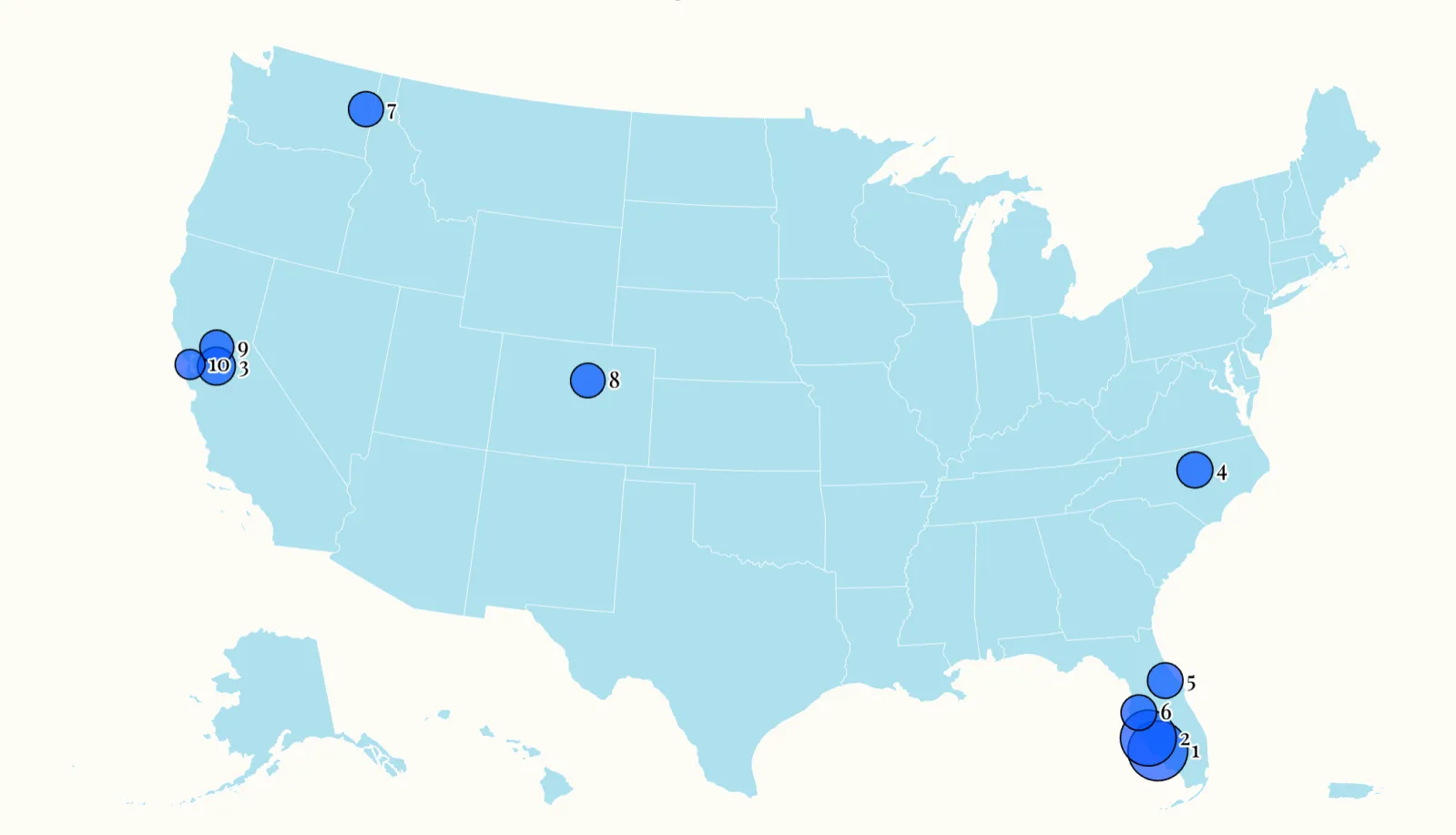
Among the top ten U.S. metropolitan areas where home prices are expected to fall the fastest in 2026, four are in Florida and three are in California, according to new analysis by Realtor.com.
While at the national level home prices are expected to continue rising by 2.2 percent year-over-year by the end of 2026, prices in 22 cities are forecast to fall, the report revealed.
Why It Matters
Some markets will experience starker price corrections next year, especially those that became overheated during the pandemic homebuying frenzy, including many in the Sun Belt, experts say. Meanwhile, the Northeast will continue seeing high prices due to a more acute shortage in inventory.
Read More on News
Experts are expecting next year to bring a slight improvement in housing affordability thanks to incomes rising faster than home prices for a prolonged period of time, according to Redfin. This will help bring some buyers pushed to the sidelines by ongoing affordability issues back into the market, boosting sales.
What To Know
The U.S. metropolitan areas set to face the sharpest price declines next year include:
- Cape Coral, Florida: -10.2%
- North Port, Florida: -8.9%
- Stockton, California: -4.1%
- Raleigh, North Carolina: -3.7%
- Deltona, Florida: -3.6%
- Tampa, Florida: -3.6%
- Spokane, Washington: -3.5%
- Denver, Colorado: -3.4%
- Sacramento, California: -3.3%
- San Francisco, California: -2.5%
Cape Coral is the only city facing a double-digit price plunge next year, according to Realtor.com. This prediction is based on a recent report by Cotality, which found that the city registered the Sunshine State’s largest annual home price decline in September and the second-largest nationwide, falling seven percent from a year earlier.
Florida in general has experienced a stark price correction since the end of the pandemic as domestic migration to the state has slowed down, and rising housing costs have priced many locals out of the market.
Coastal markets in Florida, which are particularly prone to natural disasters such as hurricanes and flooding, have also been hit by sharp increases in homeowner insurance premiums, and a rise in homeowners association (HOA) fees in the condo market due to new building safety legislation. These, in turn, have discouraged many potential homebuyers in the area.
The three California markets expected to face steep price declines are Stockton, Sacramento, and San Francisco. According to Realtor.com senior economic research analyst Hannah Jones, these metros are facing a stark correction after years of rapid price appreciation.
"High prices and the drag of high mortgage rates continue to eat into demand, which could cause home prices to soften," Jones said in the report.
The case of Denver is slightly different: prices are expected to fall thanks to the proliferation of multi-family housing in the city.
"Since multifamily properties typically carry lower price points, they pull the median price downward even when overall values remain stable," Heather O'Leary, a real estate agent at eXp Realtor, told Realtor.com.
Despite this, renting remains more affordable than buying an entry-level home in the city, contributing to dwindling demand and declining home prices.
What People Are Saying
Jones said of the Florida cities facing the fastest price declines next year: "These metros have already seen prices slip from their pandemic-era highs, and that downward momentum is likely to persist as elevated home prices, rising insurance premiums, and other carrying costs continue to weigh on demand."
What Happens Next
The markets that will see the sharpest price declines will give many—especially first-time buyers—better opportunities to step onto the property ladder, experts say.
"For buyers, these cooling markets offer more leverage: greater negotiating power, more inventory to choose from, and more sellers willing to offer concessions," Jones said.
"For sellers, realistic pricing is essential. Listing too high risks prolonged time on market and deeper price cuts later, especially in metros where conditions continue to soften."
View 0 Comments
Submit Correction
View Editorial & AI Guidelines