...

By Sam Stevenson
Associate News Editor
0
Share
Newsweek is a Trust Project member
See more of our trusted coverage when you search.Prefer Newsweek on Googleto see more of our trusted coverage when you search.
The U.S. Supreme Court has handed President Donald Trump a sweeping legal victory on immigration, paving the way for deportations and new restrictions that could ultimately impact more than one million migrants already living in the country or seeking entry.
The Supreme Court ruled 6-3 on June 25 that the Trump administration can end Temporary Protected Status (TPS) and revive limits on asylum claims at the southern border.
Roughly 1.3 million people are currently covered by TPS across 17 countries, many of whom could be affected by broader policy changes.
Read More on News
The decision removes key legal barriers to deportations and sharply limits the role courts can play in reviewing immigration policy.
Migrants from more than a dozen countries face losing work permits, legal protections and, in some cases, the ability to seek asylum at the border.
Key Points
- Supreme Court backs Trump’s authority to end immigration protections
- Courts largely barred from reviewing TPS decisions
- Hundreds of thousands could lose legal status in coming months
- Separate ruling allows officials to turn away asylum seekers
- Decision could reshape U.S. immigration policy for years
Why It Matters
The rulings cement a broader shift toward executive control over immigration, reducing judicial oversight while expanding the administration’s ability to act quickly.
They also arrive as immigration remains a defining political issue ahead of further legal battles, including a pending case on birthright citizenship.
...
Supreme Court Expands Executive Power Over Immigration
At the center of the decision is Mullin v. Doe, where the court ruled that federal law largely prevents judges from reviewing how the government decides to grant or terminate TPS.
TPS, created by Congress in 1990, allows migrants from countries facing war, disaster, or instability to live and work legally in the United States temporarily.

...
Writing for the conservative majority, Justice Samuel Alito said the statute gives the executive branch wide discretion over the program.
“The Secretary’s (the Department of Homeland Security's Markwayne Mullin) TPS designation decisions are not subject to judicial review,” Alito wrote. “There is no judicial review of any determination…with respect to the designation, or termination or extension of a designation, of a foreign state.”
That interpretation clears the way for the administration to move ahead with ending protections that had been stalled in lower courts.
Hundreds Of Thousands Face Loss Of Legal Status
The immediate impact falls most heavily on roughly 350,000 Haitians and about 6,000 Syrians whose protections were directly at issue in the case.
Once those protections expire, affected individuals are expected to lose their work authorization and legal status, leaving them to seek alternative pathways to remain in the United States or face removal.
The ruling also carries broader consequences. By sharply limiting judicial oversight, it makes it significantly harder to challenge future TPS terminations for other countries.

...
Liberal Justice Elena Kagan, joined by Justices Sonia Sotomayor and Ketanji Brown Jackson, warned that the decision could expose vulnerable communities to sweeping policy changes without meaningful review.
“The majority’s ruling flips traditional administrative accountability on its head,” Kagan wrote, adding that it grants “total immunity from basic judicial oversight” while putting hundreds of thousands at risk of removal.
Court Also Clears Path For Stricter Border Enforcement
In a separate 6-3 ruling, the court upheld the legality of a policy known as “metering,” allowing U.S. officials to turn away asylum seekers at the southern border if they have not yet stepped onto U.S. soil.
That means migrants waiting at ports of entry may be denied the chance to formally apply for asylum, tightening access to protection even before individuals enter the country.
DHS welcomed the decisions, with general counsel James Percival posting on X that the rulings “vindicate” the agency’s approach, arguing that TPS had drifted beyond its temporary purpose.
Analysts say the implications could extend far beyond the current cases. Adam Klein, a former DHS official, said the decision reflects a deeper shift in how immigration policy is shaped.
“The decision…reinforces a larger reality: immigration policy is increasingly being shaped by executive action and judicial deference rather than by Congress,” Klein said, warning that migrants’ futures may increasingly depend on changes in administration rather than stable legislation.
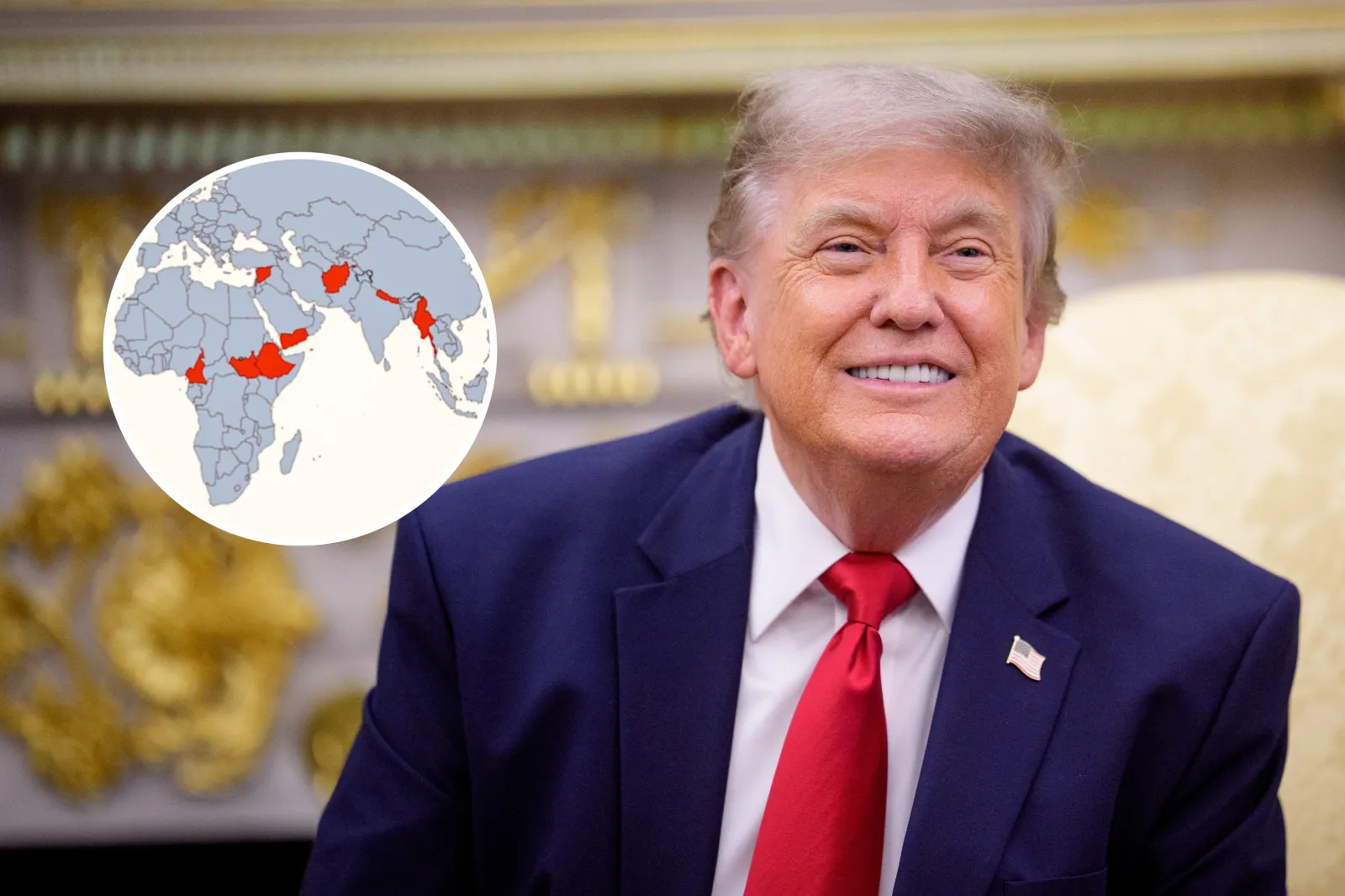
Full List Of Countries Targeted By TPS Rollbacks
The Trump administration has moved to end TPS protections for 13 of the 17 countries currently covered by the program, though many of those efforts were previously blocked in court.
- Haiti
- Syria
- Venezuela
- Honduras
- Afghanistan
- Nepal
- Cameroon
- Myanmar (Burma)
- Ethiopia
- Somalia
- South Sudan
- Yemen
- Nicaragua
What Happens Next
By allowing TPS rollbacks and endorsing tighter border controls, the rulings reshape both who can remain in the United States and who can enter—setting the stage for further legal battles and political fallout in the months ahead.
View 0 Comments
Submit Correction
View Editorial & AI Guidelines