10
Loading video...


By Hollie Silverman and Dan Gooding
0
Share
Newsweek is a Trust Project member
See more of our trusted coverage when you search.Prefer Newsweek on Googleto see more of our trusted coverage when you search.
An Ebola outbreak with a case-fatality rate approaching 50 percent has spread to Kenya, where health authorities confirmed a second infection Wednesday linked to the deadly outbreak centered in the Democratic Republic of the Congo.
The second patient, a 39-year-old close relative of the country's first confirmed patient, developed symptoms Tuesday while already in quarantine, Kenya's Health Ministry said in a statement issued Wednesday on X. Officials said the two infections are linked and that there was "no evidence of spread in the community."
The development comes as authorities battle what the Centers for Disease Control and Prevention (CDC) describes as the second-largest Ebola outbreak on record.
Read More on World
The latest international surveillance data show 9,144 confirmed cases and 4,410 related deaths in the Democratic Republic of the Congo through October 12, putting the case-fatality rate at about 48 percent.
The detection of Ebola in Kenya underscores the potential for cross-border transmission as health authorities work to contain an outbreak that the CDC says is spreading substantially faster than previous Ebola outbreaks.
Kenya is not the only country to detect cases connected to the outbreak. Uganda reported cases earlier this year, while France reported an imported case in June involving a person who had returned from the Democratic Republic of the Congo.
The CDC says Uganda recorded 21 confirmed and probable cases and three deaths.
The outbreak surpassed 1,000 confirmed cases within 40 days of the response being activated, compared with approximately 235 days for the 2018 outbreak in the Democratic Republic of the Congo to exceed the same threshold, according to the CDC.
For the United States, however, the CDC says no cases associated with the outbreak have been reported and considers the likelihood of Ebola spreading to the country "very low."
Newsweek reached out to the CDC and the Africa CDC via email for comment.
In a post on X, Dr. Tedros Adhanom Ghebreyesus, director-general of the World Health Organization (WHO), said the Kenyan Ministry of Health "identified a second case of #Ebola caused by Bundibugyo virus, a close contact of the first patient, who has already been in quarantine."
"This shows that surveillance and contact tracing efforts are working. He has been receiving supportive clinical care since the onset of the symptoms," he wrote, adding, "Since the outbreak began in the #DRC in May 2026, @WHO has worked closely with Kenya and other countries across the region to prepare for potential imported cases of Ebola, including on disease surveillance, contact tracing and clinical management."
...
Kenya Cases
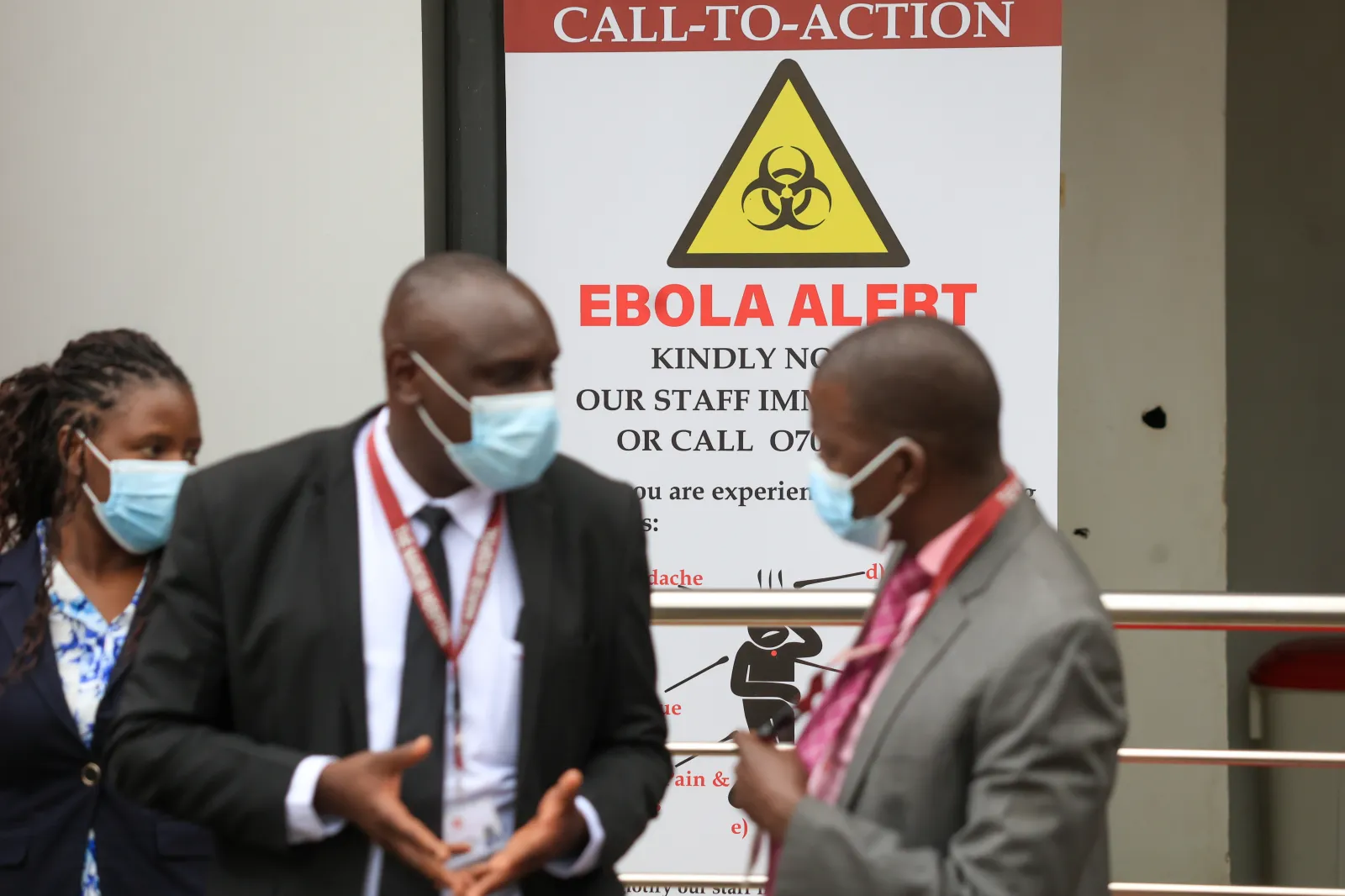
Kenya's Health Ministry confirmed the country's second Ebola case Wednesday.
The 39-year-old patient is a close relative of the country's first confirmed patient and developed symptoms while already in quarantine. The first patient was a 40-year-old Kenyan who had been living in the Democratic Republic of the Congo, where he became ill and received treatment at two health facilities.
He traveled from Congo into neighboring Uganda before flying to Kenya, where he was hospitalized, tested positive for Ebola and died on October 5.
Health authorities identified about 128 contacts linked to the first patient. Of those, authorities placed 108 in quarantine in Kenya, while five were outside the country and authorities there were notified. The second patient was among those already in quarantine.
The Kenyan Ministry of Health said early detection "improves his chances of recovery." Officials said the country's two confirmed cases were linked and that, at the time of the announcement, there was no evidence of community spread.
Kenya has also tightened screening at airports and border crossings since detecting its first Ebola case.
Congo Outbreak
The Democratic Republic of the Congo remains at the center of the epidemic, which the CDC says is the country's 17th Ebola outbreak and the second-largest Ebola outbreak on record.
As of October 12, the country had recorded 9,144 confirmed cases and 4,410 related deaths, according to the latest international surveillance data, putting the case-fatality rate at approximately 48 percent, according to the European Center for Disease Prevention and Control.
The outbreak is caused by the Bundibugyo virus, a type of Ebola virus, according to the CDC. Cases have been confirmed in seven provinces: Bas-Uele, Haut-Uele, Ituri, North Kivu, South Kivu, South Ubangi and Tshopo.
WHO reported earlier in October that transmission remained intense nationally, although the burden varied by location. As of October 6, the organization reported a crude case-fatality ratio of 48.2 percent.
The CDC says the current outbreak has expanded substantially faster than previous Ebola outbreaks. It exceeded 1,000 confirmed cases within 40 days of response activation, versus roughly 235 days during the 2018 outbreak.
...
What Happens Next
Health authorities in Kenya continue contact tracing and monitoring after confirming the country's second case. As of October 13, 108 contacts were in quarantine and undergoing daily clinical and temperature checks for 21 days after their last potential exposure, according to reporting that cited the Kenyan Ministry of Health. Authorities were still working to trace 15 additional contacts.
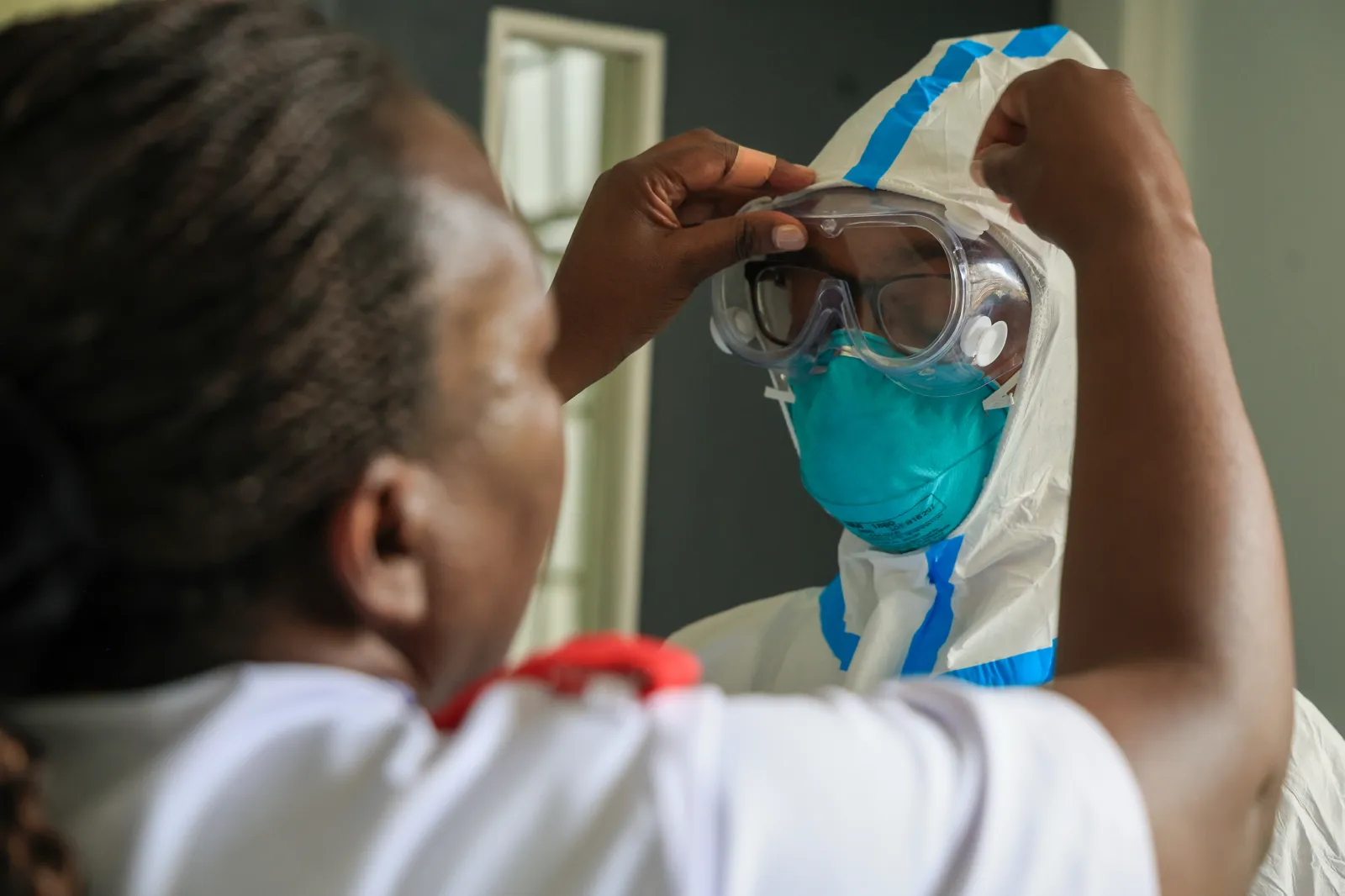
Officials are also assessing people who interacted with the second patient after he developed symptoms, including quarantine personnel and health workers. The ministry said contacts who develop symptoms will be isolated and tested, while infection-control measures have been reinforced at quarantine and treatment sites.
In the Democratic Republic of the Congo, the World Health Organization says the response includes strengthening surveillance, contact tracing, clinical preparedness and management, delivery of supplies, community engagement and cross-border preparedness.
The Bundibugyo virus presents an additional challenge. WHO says there is currently no licensed vaccine or specific treatment for the Bundibugyo species involved in the outbreak, although work is underway to test potential candidates.
Meanwhile, the CDC continues to consider the likelihood of the outbreak spreading to the United States very low, with no U.S. cases associated with the outbreak reported as of its October 13 update.
Newsweek’s reporters and editors used Martyn, our AI assistant, to produce this story. Learn more about Martyn here.
Contact Newsweek editors on this story: Jason Lemon, Gray R. Thomas, Sam Wilson.
View 0 Comments
Submit Correction
View Editorial & AI Guidelines