...

By Lucy Notarantonio
Senior Reporter
0
Share
Newsweek is a Trust Project member
See more of our trusted coverage when you search.Prefer Newsweek on Googleto see more of our trusted coverage when you search.
A Reddit post showing a man’s fingers holding a tick has gone viral, earning more than 40,000 upvotes in less than 24 hours.
The parasite, which was pulled off u/9274729373837's dog, caught people’s attention because it appeared to have “a tick in it,” sparking more than 2,000 comments since it was shared on October 22.
“They are making babies. The smaller tick is the male,” one user wrote. Another added: “They are actually mating. They do it while the female is feeding. Gross stuff.”
Read More on Pets
pulled this tick off my dog that has a tick in it
r/interestingasfuck
How Ticks Reproduce
Ticks, like most animals, reproduce to keep their species alive. The smaller male attaches to a feeding female and transfers sperm while she feeds on a host. Males also need a small blood meal for their sperm to mature but don’t engorge like females.
After mating, the male often stays attached to guard the female until she finishes feeding and detaches. Once engorged, the female drops to the ground, rests for about five to twenty days while her eggs mature, then lays a single large batch of 2,000 to 8,000 eggs before dying.
“This literally happened to me last night — I pulled ticks off my cat and two different small ones were riding along. I was horrified,” another Redditor shared. Someone else simply commented, “We are doomed.”
How to Safely Remove a Tick From Your Dog
...
Dr. Laura Goodman, an assistant professor at Cornell University’s Department of Public & Ecosystem Health, previously told Newsweek how to safely remove ticks from dogs. She recommends checking your pet after a walk or trip to the dog park, especially in wooded areas or tall grass.
Before removing a tick, gather supplies: gloves, tweezers or a tick removal tool, a small sealable container, isopropyl alcohol, antiseptic, antibiotic ointment, and a magnifying glass.
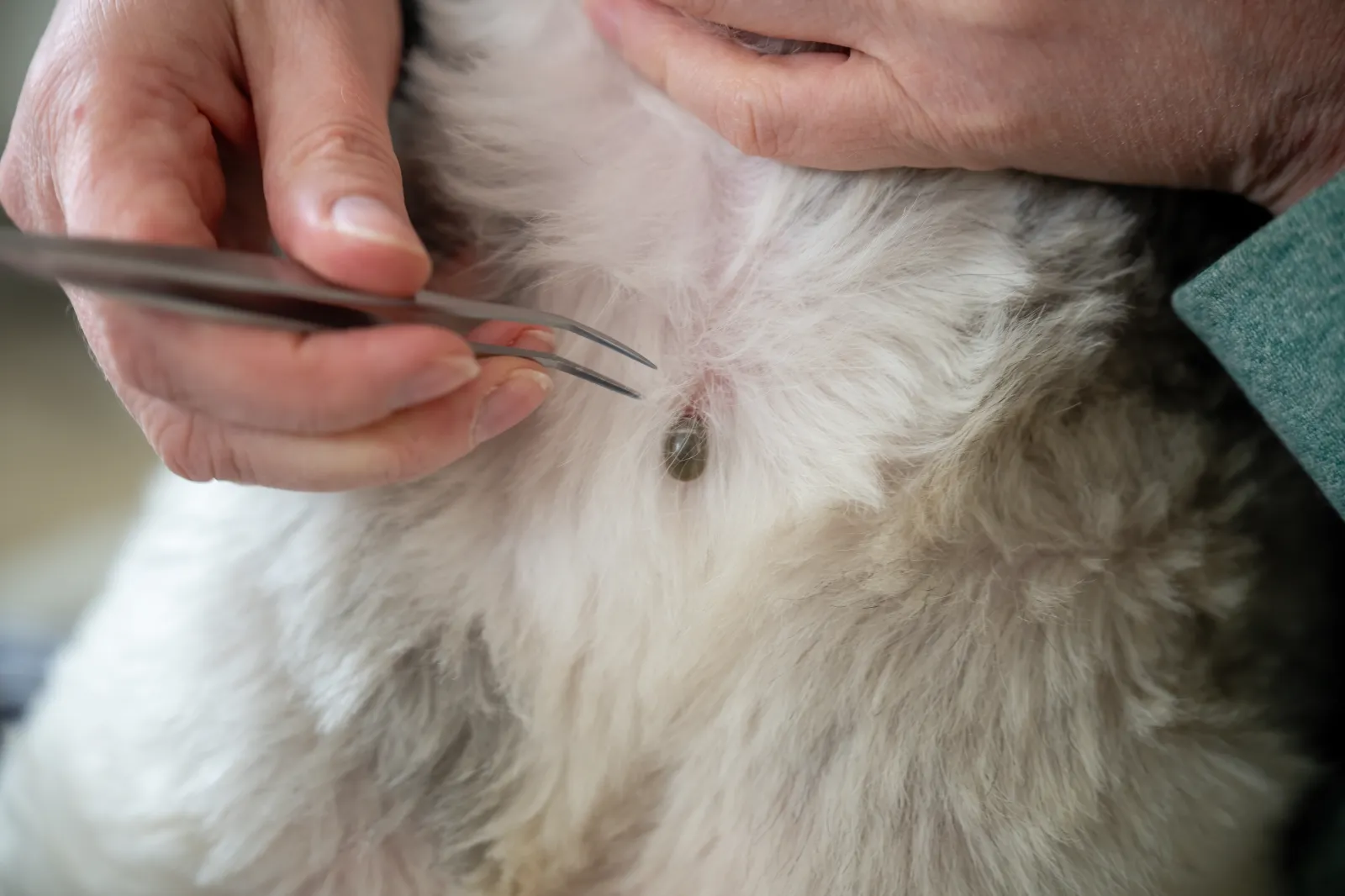
If you’re using a removal tool, slide it gently along the skin until the tick’s head sits in the notch, then twist carefully until it detaches. Avoid pulling unless the instructions say to. With tweezers, grasp the tick close to your dog’s skin and pull straight out with steady pressure—never twist or jerk, as this can leave parts behind.
What to Do After Removing the Tick
Once removed, place the tick in a small container with isopropyl alcohol to kill and preserve it in case your vet wants to test it. Use a bright light to check your dog’s skin and make sure no tick parts remain. If you notice dark specks or splinters, contact your veterinarian instead of trying to remove them yourself.
Clean the area with soap and water or a non-stinging antiseptic, then apply antibiotic ointment to prevent infection.
Watch for Signs of Tick-Borne Illness
For the next three weeks, keep an eye on your dog for signs of illness. Dogs can contract the same tick-borne diseases as humans, including Lyme disease, though they don’t develop the telltale bullseye rash.
Watch for fever, limping, swollen joints, tiredness, or loss of appetite. If your dog’s behavior changes or they seem unwell, Dr. Goodman advises contacting your vet right away.
Newsweek reached out to u//9274729373837 for comment. We could not verify the details of the case.
References
The Life Cycle of Hard Bodied Ticks | TickSafety.Com. 13 Apr. 2017, https://ticksafety.com/about-ticks/tick-life-cycle/.
View 0 Comments
Submit Correction
View Editorial & AI Guidelines