
By Sean Duke
Science Editor
0
Share
Newsweek is a Trust Project member
See more of our trusted coverage when you search.Prefer Newsweek on Googleto see more of our trusted coverage when you search.
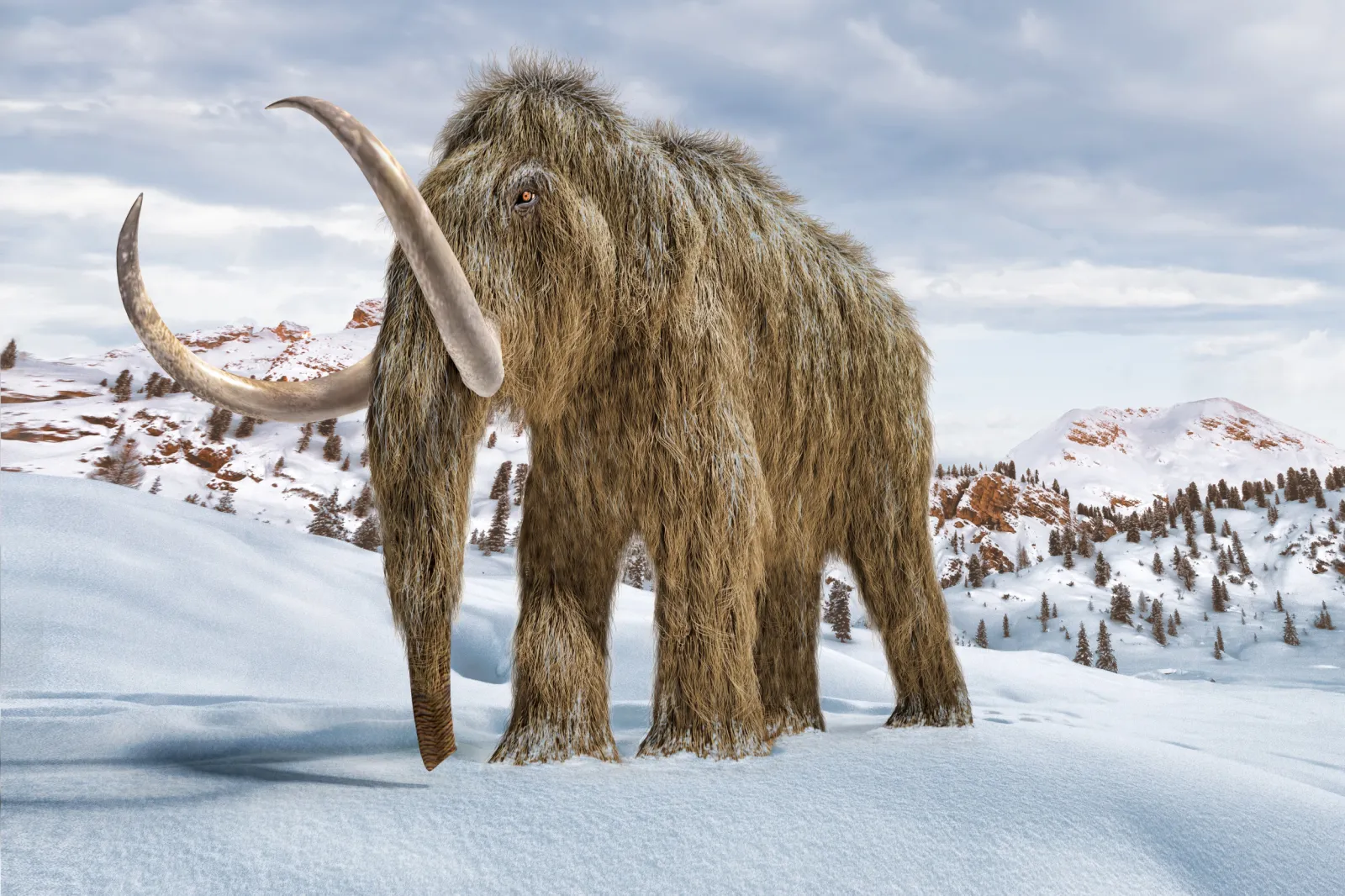
Colossal Biosciences, the US company aiming to bring back extinct species, says that it expects its first woolly mammoth calves will be born during the next three years.
"Within the next two years, we will see our first mammal born fully ex utero, grown completely from an embryo to a living, breathing functional animal," says Ben Lamm, co-founder and CEO of Colossal, told Newsweek.
The goal is to start with the birthing of small mammals' ex utero - outside the womb - and to work up to the birthing of elephants by this method, which will pave the way for mammoth births.
Read More on Science
Developing artificial wombs
In another significant development, The Colossal Foundation, the arm of Colossal Biosciences which is focused on scientific solutions for conservation and biodiversity today announced a $1.5 million donation to Dr George Church's lab at the Wyss Institute for Biologically Inspired Engineering at Harvard University.
The collaboration between the Colossal Foundation and Dr Church aims to explore the use of artificial wombs to safeguard the future of species facing extinction.
An artificial womb would provide a means to grow healthy embryos outside of a natural womb, making it possible for endangered species to be born in safe and controllable environments without the use of a surrogate.
"Artificial wombs are both a technological marvel and a conservation imperative," said Matt James, Executive Director of the Colossal Foundation said in a statement.
"By eliminating the need for surrogate mothers, these technologies could dramatically accelerate the rate at which threatened species can be restored and threatened habitats can be revitalized."
Colossal does not work on human applications for the artificial womb but acknowledges the potential of the technology for use in IVF clinics.
...
Re-birth of iconic species
The company also plans to bring a number of iconic extinct species back to life. "The woolly mammoth, the Tasmanian tiger and the dodo are all on track or ahead of schedule," said Lamm.
"The Tasmanian tiger project is ahead of schedule, with significant progress made in genetic engineering and cell line immortalization."
"The dodo project is more challenging due to the need to reach primordial germ cells in pigeons first," said Lamm.
These germ cells are specialized cells that produce an animal's reproductive cells. Colossal says that it could de-extinct additional species before 2028 if current progress continues.
They also work on artificial wombs and have collaborations with 17 universities globally. Despite criticism from some about the wisdom of reintroducing extinct species, Colossal says it has received mostly positive feedback for its work and aims to biobank and protect endangered species.
The benefits of de-extinction
Many species are being lost to anthropogenic effects, such as overhunting and invasive species. For example, the woolly mammoth, the Tasmanian tiger and the dodo were driven to extinction by human activities.
There are benefits to rewilding, says Lamm. For example, the reintroduction of giant tortoises in Mauritius, led to the re-emergence of certain plant species.
There is also value in studying these species for the insights it can bring into human health and ecology, even if they can't be brought back to their original states.
The re-introduction process will start with human-managed care and gradually move to larger ecological preserves and eventually the wild.
In future, Colossal envisions working with governments worldwide to biobank and protect species, producing more critically endangered species.
"Our long-term goal is to work with countries all over the world, not just on extinct species, but endangered species, and almost be like, how do we back up these species that exist, and how do we produce more than are critically endangered," said Lamm.
Do you have a tip on a science story that Newsweek should be covering? Do you have a question about biotechnology? Let us know via science@newsweek.com.
Correction 1/13/25 12:30 a.m. ET: The headline of this story was amended to correct the spelling of woolly.
View 0 Comments
Submit Correction
View Editorial & AI Guidelines