...

By Giulia Carbonaro
Senior Reporter
0
Share
Newsweek is a Trust Project member
See more of our trusted coverage when you search.Prefer Newsweek on Googleto see more of our trusted coverage when you search.
A proposed pied-à-terre tax in New York City and promises of further tax hikes on the local ultrawealthy are keeping South Florida real estate agents and developers confident that rich New Yorkers will increasingly flock to the region, they told Newsweek.
MAST Capital, a Miami-based owner-operator developer, built Avara Miami Beach last year as a beachfront luxury rental, with penthouses at nearly $14,000 a month, on the basis of a bet: that New York’s tax trajectory would create a new type of renter in the city. Rich New Yorkers would try to get a foothold in Florida without committing to buying a home, as they wait to see how things back home will play out, the company believed.
The luxury apartments started leasing earlier this year, and the bet they were built on is already paying off, Jordan Kornberg, chief investment officer at MAST Capital, told Newsweek.
Read More on News
“A significant amount of the demand that we’re getting is coming from New York, and I think some of those are people who are moving from New York, others are people who still have some ties to New York and are choosing to also have a place in Florida,” he said.
...
“There’s certainly people that are kind of looking at the low-tax environment in Florida and the business-friendly environment in Florida and are choosing to relocate here based on those things. There’s certainly been sort of a wave in momentum of people for our market.”
Billionaire Ken Griffin, a particular vocal opponent of Mamdani’s tax agenda, is backing Florida real estate agents and developers’ optimism.
“Mamdani is making it really clear: New York doesn’t welcome success,” Griffin said on Tuesday at the Milken Institute Global Conference in Beverly Hills, California, as reported by the Wall Street Journal.
On the sidelines of the conference, he told CNBC about a video of Mamdani outside of Griffin’s $238 million Manhattan penthouse announcing a tax on luxury second homes in the city: “We will add far more jobs in Miami over the next decade as an immediate and direct consequence of the mayor’s poor decision.”
What Has Been Proposed in New York
Mamdani’s goal, as stated during his campaign, is to increase income taxes for the top earners in New York City and raise the corporate tax rate. These policies would help fund his other campaign promises—from free buses to universal childcare—and fix the city's massive budget gap.
But Governor Kathy Hochul has so far been reluctant to increase taxes on the state’s ultrawealthy, citing the same concerns that Governor Gavin Newsom has voiced in California—that the rich would leave, and the local economy would suffer from the loss in investment.
So Hochul and Mamdani have come to something of “a compromise between what the mayor wanted, which was a higher income tax on the wealthy” and the governor’s refusal to introduce it, as Travis Terry, CEO and founder of Immortal Strategies, called it.
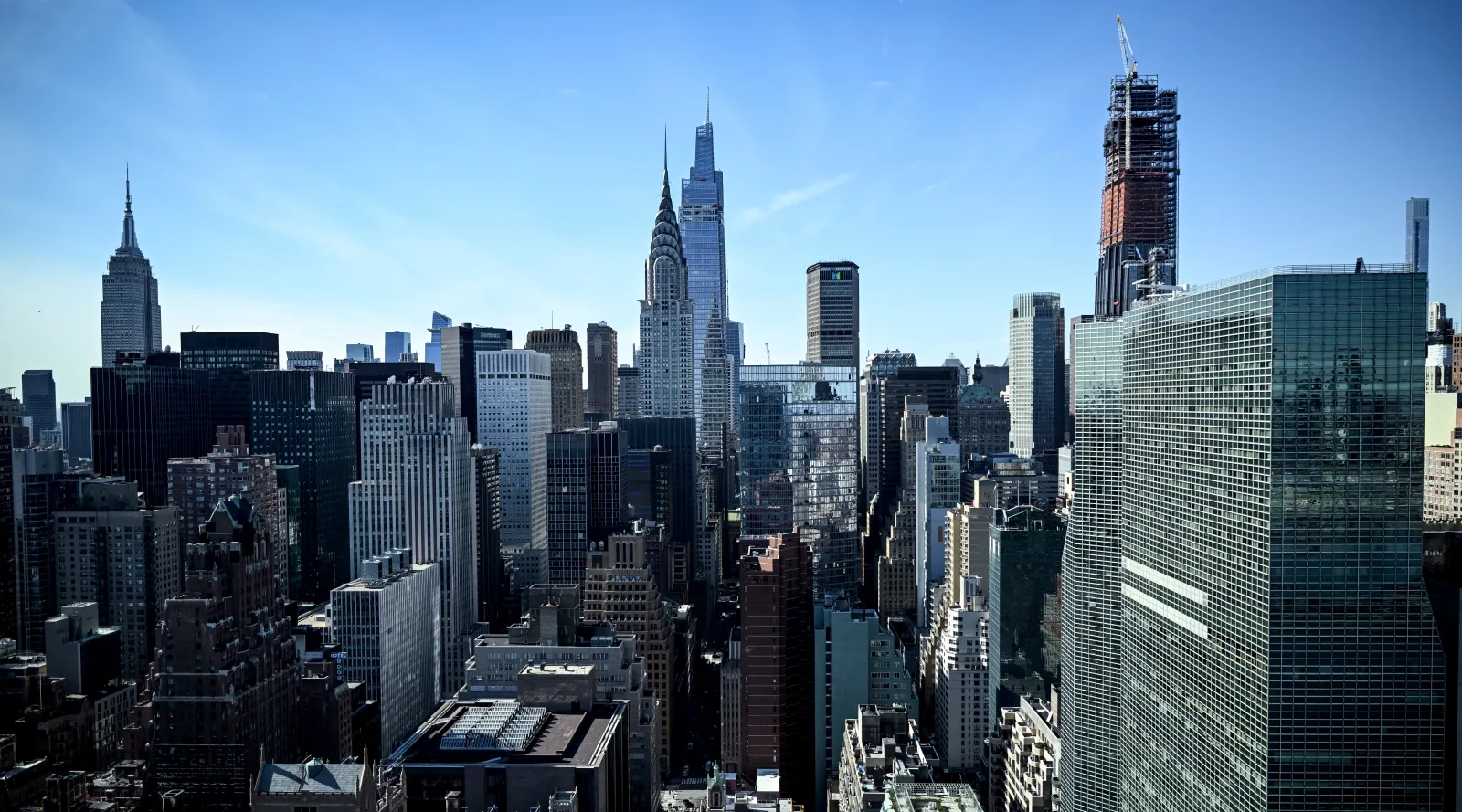
The compromise is a pied-à-terre tax, an additional tax on New York City homeowners with second homes worth $5 million or more, which Hochul agreed to include in the still-to-be-approved state budget.
...
“The pied-à-terre tax has been proposed before as a sort of standalone policy," Terry said. "This time it’s being proposed within the context of the entire state budget, and so state Legislature legislators are going to vote on the budget, not just the specific tax. That makes it probably more likely to get done.”
The proposal is “politically convenient” for both the governor, who is running for reelection this year, and for the mayor, who is getting “a sort of first crack at taxing the rich,” Terry said.
The details of the tax are pending, but the proposal alone has revived a heated debate about whether New York’s ultrawealthy would abandon the city because of Mamdani’s taxes.
What Florida Stands to Gain From It
Last year, when Mamdani was elected on the back of his “tax the rich” campaign promise, Florida real estate insiders predicted that New York City’s millionaires and billionaires would be scared off by the new mayor’s policies and flee straight to Miami.
After Mamdani took office, a massive exodus of ultrawealthy New Yorkers to Florida failed to materialize, but interest in property in Miami has accelerated in recent months, local real estate agents and developers say, and it is here to stay.
“It’s more like a planned exodus, a planned act—meaning this is something that people have been thinking for a long time, and they may be testing the waters,” Peggy Olin, CEO of Miami-based luxury real estate company OneWorld Properties, told Newsweek.
“It’s not only solely due to the political environment. I think it’s the political environment is another factor of why their decisions become easier, and the whole pied-à-terre tax is just another reason why they continue to look at this place.”
The more high-net-worth individuals and companies move to Miami, the more it becomes a “no-brainer” for more wealthy people to move to the city, Olin said.
“If they do this pied-à-terre tax, it is definitely going to accelerate more of those affluent buyers who already didn’t need more reasons to move to Florida, right?" she said. "The city continues to give them reasons too. And for some of the international purchasers, it becomes part of the larger calculation on how to allocate capital and establish residency long-term. Miami offers all those benefits and so many advantages on the global luxury lifestyle.”
For the Sunshine State, this would mean more investment and, if the ultrawealthy move their companies to Florida, more employment and potentially a new domestic migration boom. This, at least, is the best-outcome scenario.
Kornberg said that Florida developers and real estate agents do not predict or rely on “big waves” of New Yorkers moving to the state.
“But at the end of the day, we just look at the long-term trends and I think these are very positive, and we don’t see that changing anytime soon,” he said.
“We feel very, very bullish on the future of the luxury market in Florida and South Florida specifically,” added Kornberg, who made the move from New York City to Miami six years ago.
Would the Ultrawealthy Leave or Stay?
While there are vocal critics of Mamdani’s tax agenda, like Griffin, other wealthy New Yorkers are less hostile to the idea of paying higher taxes.
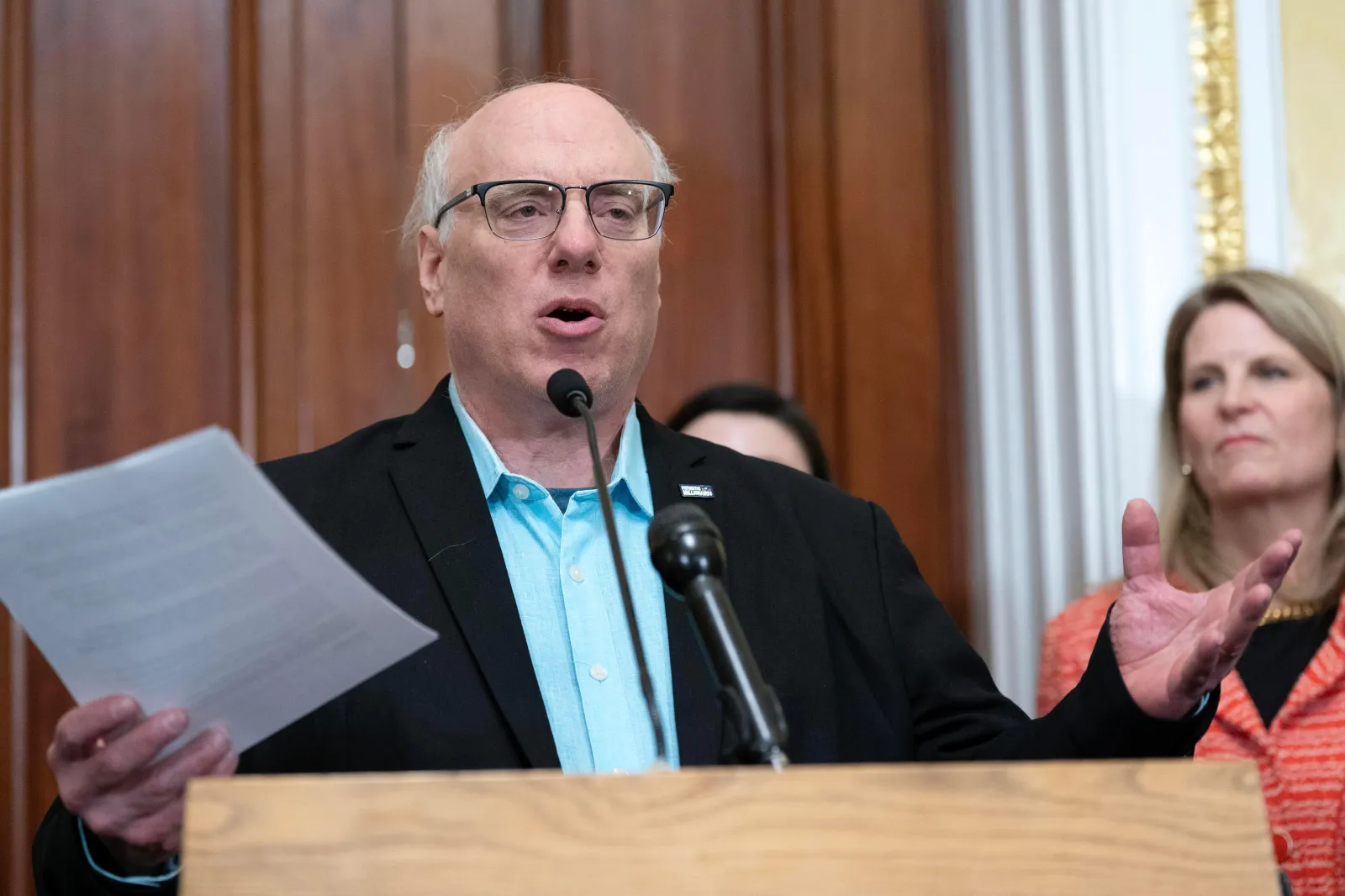
Morris Pearl, a former BlackRock managing director, is now chair of Patriotic Millionaires, a group pushing back on billionaires’ backlash to Mamdani’s tax proposals.
“People don’t want to live in Florida. They don’t have the kinds of schools and things that we have here in New York and in Chicago,” Pearl, who was born in upstate New York and now lives in New York City's Upper East Side, told Newsweek.
“So, I honestly don’t think that that’s the problem. The people we’re losing are people who suddenly get pregnant and realize they can’t pay for childcare for their kids that cost $50,000 a year here in New York. All of the people we are losing are middle class.”
...
Pearl said he is willing to pay more taxes to keep the city livable for all of its residents.
“It’s not that I want to pay more taxes, it’s that I want to live in a city where the doorman that I depend on, where the waiters who serve the food in the restaurant, where the guys who drive the cars can afford to live here too, because I depend on those people,” he said.
“I don’t particularly want to take more taxes. But I want live in city where all the people that I need to make it the city where I want to live can afford to live and raise their families. That’s what I want.”
Pearl said he is not a lone voice in the New York City landscape.
“Among people I talk to, yes, people understand that we need to have more revenue for the city to pay for all the things that we think are important,” he said.
What Could Happen to New York
The proposed tax on second luxury homes in New York City is still to be detailed, and it needs to be passed by the state Legislature to become law.
What it could do for the city and its budget remains to be seen. Emily Eisner, acting executive director and chief economist at the Fiscal Policy Institute, said that there are concerns over the implementation of the pied-à-terre tax, as she said that right now assessment of home prices is severely undervalued in the city.
“They will need to establish a better system for assessing the market value of these pied-à-terre to be able to actually implement this well," Eisner said. "They can do that if they want, but it will take sort of will and work on their part to do it.”
“They need to make sure the assessments of the apartments reflect the true market value of these apartments. Currently, many apartments that are worth over $5 million are assessed at something like, like less than a million dollars, like maybe like $300,000.
"The assessment process right now is really not aligned with the value on the market of these apartments. And so the biggest project for the city and the Department of Finance is to figure out how to capture the correct apartments that are worth over $5 million."
It is unclear how many properties will fall under the new proposed tax.
Eisner thinks that the pied-à-terre tax is “a step in the right direction,” though not the solution to fix all of New York City’s problems.
“We’re looking at a moment in time where Wall Street and oil companies are making record profits while many people are facing a difficult job market, really high inflation over the last five years, and housing costs that are exorbitant,” she said.
“I think trying to tax those extremely high-earning, high-wealth individuals is appropriate and worth doing. But it will raise roughly $500 million for the city at most, and that’s about a tenth of the budget gap we are seeing.”
View 0 Comments
Submit Correction
View Editorial & AI Guidelines