
Photo-illustration by Newsweek/Getty

By Jesus Mesa
Reporter
0
Share
Newsweek is a Trust Project member
See more of our trusted coverage when you search.Prefer Newsweek on Googleto see more of our trusted coverage when you search.
There was one word everywhere in the back half of 2025: affordability. It appeared on campaign signs, in stump speeches, in viral clips and focus groups. Democrats leaned into it to flip elections and reframe the economic debate.
As the calendar turned to 2026 early Thursday, the buzzword surfaced in two very different moments. Zohran Mamdani was sworn in as New York City mayor while enhanced Obamacare subsidies lapsed across the country at midnight. The events were not directly connected, but they pressed on the same nerve: the cost of living and who is positioned to do something about it — or lose their mandate trying.
Mamdani, 34, rode the affordability message to a near ten-point victory in the highest-turnout mayoral election New York has seen in decades. His slogan, “a city we can afford,” has since become shorthand for a broader Democratic strategy that would have seemed unlikely just months earlier after the party’s disorienting loss in 2024.
Read More on Politics
At first, Democrats resisted the framing. But as Mamdani surged, backed by renters, commuters and working-class voters priced out of urban life, affordability quickly eclipsed “inflation” and “economic fairness” on the campaign trail. The same cost-of-living pressures that helped Donald Trump win the presidency in 2024 were now being claimed by Democrats, displacing the Biden-era emphasis on macroeconomic metrics and the more recent — and adjacent — messages of abundance promoted by figures on the center-left like Ezra Klein and Derek Thompson.

...
“It’s not just about inflation anymore,” Todd Belt, director of the Political Management Program at George Washington University, told Newsweek. “Prices are still high and people don’t feel their earnings keeping up. You can’t out-message what people are feeling in their pocketbooks.”
Mamdani did more than capitalize on the language. He forced a reckoning inside the party. By August, Sen. Elizabeth Warren was calling affordability “the central issue, the central reason to be a Democrat.” Governors and mayors from California to Minnesota soon followed, weaving the term into agendas on housing, health care and child care.
The shift showed up in the data. Analysts tracking congressional emails and speeches recorded a sharp rise in references to affordability in late 2025, a spike that traced directly to Mamdani’s victory. “All politics is affordability now,” analyst G. Elliott Morris wrote on X, noting that even Republican strategists were scrambling to adapt.
“Affordability can’t be a slogan,” Mamdani said during a runoff debate, an underhanded swipe at Democratic leadership that so reluctantly jumped on his ship as his win became imminent in November. On the trail, he questioned whether national Democrats were serious about lowering costs or merely adopting the rhetoric without changing policy.
Turning Affordability Into Policy
Mamdani didn't just campaign on a message. He built his improbable run around three concrete promises: freezing rent, making buses free and delivering universal child care. On election night, supporters chanted them back to him in unison.
Voters appear to agree with the message, even if they are split on which party or figure is capable of delivering it. A December Ipsos and Reuters poll found that 67 percent of Democratic voters want affordability to be the party’s central focus, but only 38 percent believe the party's national leaders have a clear plan.
“Democrats entered 2025 depressed, powerless, and directionless. Mamdani’s win provided a much-needed boost of optimism and hope," Doug Gordon, a Democratic strategist, told Newsweek. "But more importantly, he gave Democrats a roadmap for how to run—and win—on the most important issue to voters: affordability."
The concern over affordability extends beyond Democrats. Among independents, it ranked as the top economic issue, yet fewer than one in three said they trust either party to improve the cost of living. In a late-December Harris Poll, a majority of independents—about 54 percent—said their financial security was worsening, and 58 percent believed the U.S. was in a recession.
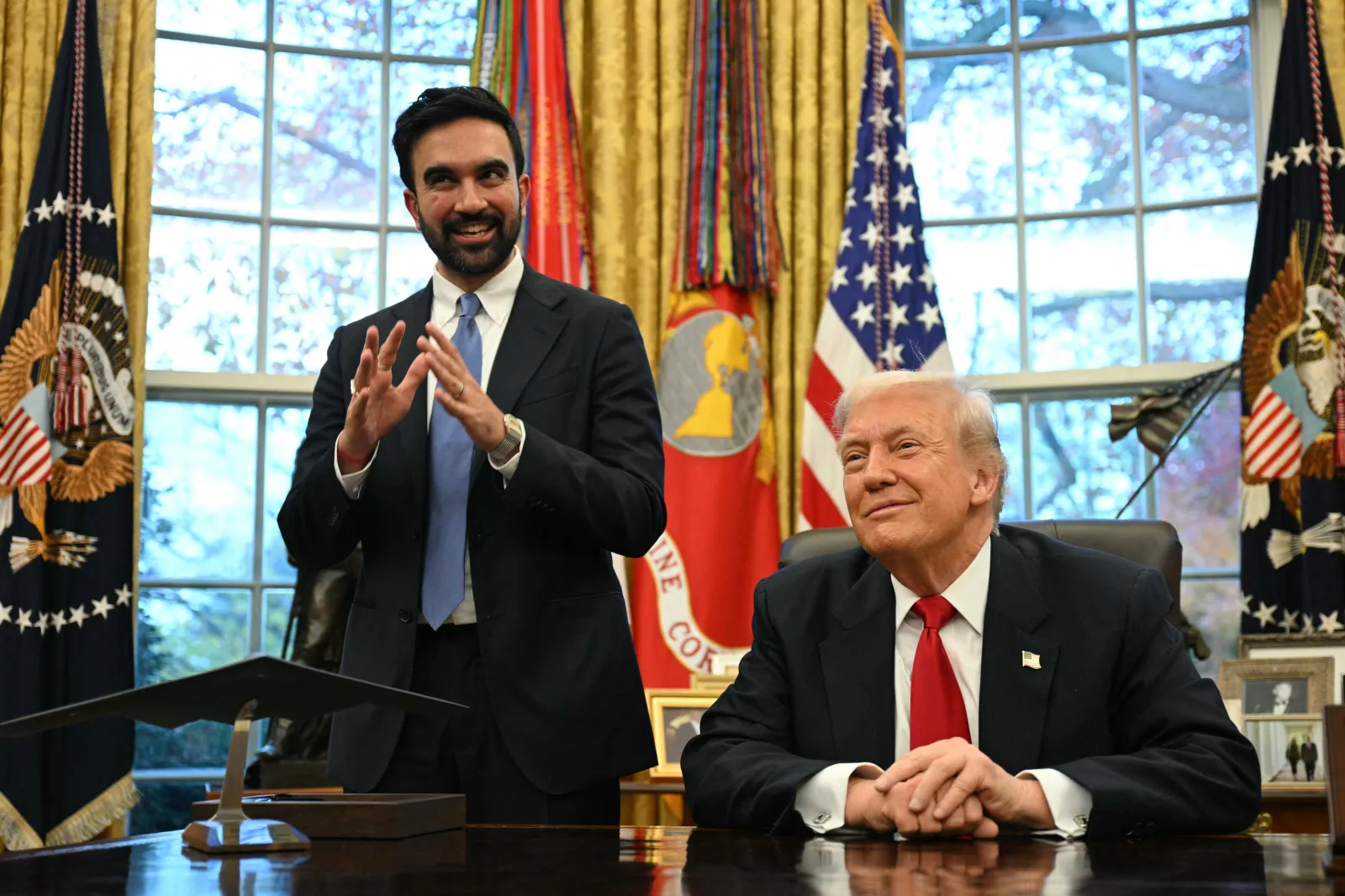
Those pressures have pushed affordability to the center of even unlikely conversations. In November, Trump met with Mamdani at the White House after months of sharp campaign attacks between the two. The remarkably friendly meeting, widely expected to be confrontational, instead focused on cost-of-living issues. Mamdani said afterward that the discussion largely avoided their disagreements.
...
“What I really appreciate about the president is that the meeting that we had focused not on places of disagreement, which there are many, and also focused on the shared purpose that we have in serving New Yorkers,” Mamdani said. Trump described the overlap more bluntly, saying they discussed housing affordability and everyday costs and adding, “Some of his ideas are really the same ideas that I have.”
While Mamdani might not have final authority to deliver his promises independently, especially regarding taxation, he comes into office with the wind at his back, other political analysts told Newsweek.
“[New York Gov. Kathy Hochul] has come out in favor of the most expensive of Mamdani’s proposals, which is the universal child care initiative,” said Laura Tamman, clinical assistant professor of political science at Pace University. “That’s the one that has the biggest price tag and she has said that they’re in agreement on funding that.”
Obamacare Subsidies Lapse, Triggering a New Political Battle
If 2025 was the year affordability became the defining word in politics, 2026 is shaping up to test who can own it. Just as Mamdani took office in a long-abandoned subway station in the bowels of Lower Manhattan on a promise to make life more affordable, a stark reminder of Washington’s limits arrived: enhanced Obamacare subsidies expired at midnight, leaving more than 20 million Americans without expanded coverage and threatening a national sticker shock as plans are repriced without the subsidies in place that enrollees have come to depend on.
The lapse comes after a 43-day government shutdown that revealed a stark divide. Democrats refused to extend government funding without renewing the healthcare subsidies. Republicans offered an alternative built around tax credits and health savings accounts. Neither side blinked and by the time the shutdown ended just before the holidays, the subsidies' fate was all but sealed.
For unmoored Democrats still struggling in the aftermath of last November, it become an immediate campaign theme: the so-called party of affordability left voters high and dry, they say. And they’re already putting it to use. In November’s off-year elections, Democrats overperformed, flipping governorships in New Jersey and Virginia and pulling off surprise wins in suburban districts, all while hammering Trump and the GOP on the cost of living. Post-election polls showed it: “affordability” now outpaced “inflation” as the top concern for swing voters and Democrats owned it.
Trump, for his part, has grown visibly agitated by how the word slipped away from him. “We are the ones that have done a great job on affordability, not the Democrats,” he said in November. But the president goes into the new year with his own levers to pull.
Behind the scenes, his team has launched what insiders are calling an “affordability offensive.” The 2024 tax cuts kicked in this month, delivering an uptick in disposable income just as campaign season begins. He’s also been touting deals with drugmakers and blasting out videos of falling prices for groceries and gas, even as inflation persists in key categories like housing and electricity.
And perhaps most consequential: Trump is preparing to name a new Federal Reserve chair. His feud with Jerome Powell has gone from public heckling to a calculated power play. After branding Powell “Too Late” for refusing to slash interest rates, Trump is expected to replace him when his term ends in the spring. The pick could shape the path of borrowing costs and by extension the affordability narrative for the rest of his term.
Lower rates, rising paychecks, a new Fed chair and the promise of a cheaper America. That's the bet the White House is making ahead of the midterms as Trump attempts to reclaim the word Democrats used to beat him. But unlike inflation, Belt, the George Washington professor, said, affordability isn’t a metric you can chart. “It’s not a line on a graph. It’s a feeling. And that makes it harder to control and easier to lose.”
Yet, the data complicates the pitch. While the economy grew at a swift 4.3 percent annual rate in the third quarter, one of its fastest expansions in two years, that growth has not yet translated into broad relief for price-weary consumers. Inflation has risen to 3 percent since spring, a trend many economists have attributed largely to new tariffs. Electricity and grocery prices remain elevated and job growth has slowed sharply year over year, with monthly hiring averaging just 51,000.
Polling reflects the disconnect. According to the latest Economist/YouGov tracking survey, 60 percent of independents now say the economy is “getting worse,” even as GDP and the stock market continue to climb, one of the highest levels of pessimism since 2022.
“Trump now finds himself defending elevated prices while simultaneously arguing that conditions are improving,” Lawrence J. White, an economist at NYU’s Stern School of Business, told Newsweek. “That’s a difficult position to maintain.”
View 0 Comments
Submit Correction
View Editorial & AI Guidelines