...

By Andrew Stanton
Reporter
0
Share
Newsweek is a Trust Project member
See more of our trusted coverage when you search.Prefer Newsweek on Googleto see more of our trusted coverage when you search.
Two new polls of Democrats’ U.S. Senate primary in Michigan revealed dueling narratives about where the race stands, as other surveys point to a competitive general election in the battleground state.
Why It Matters
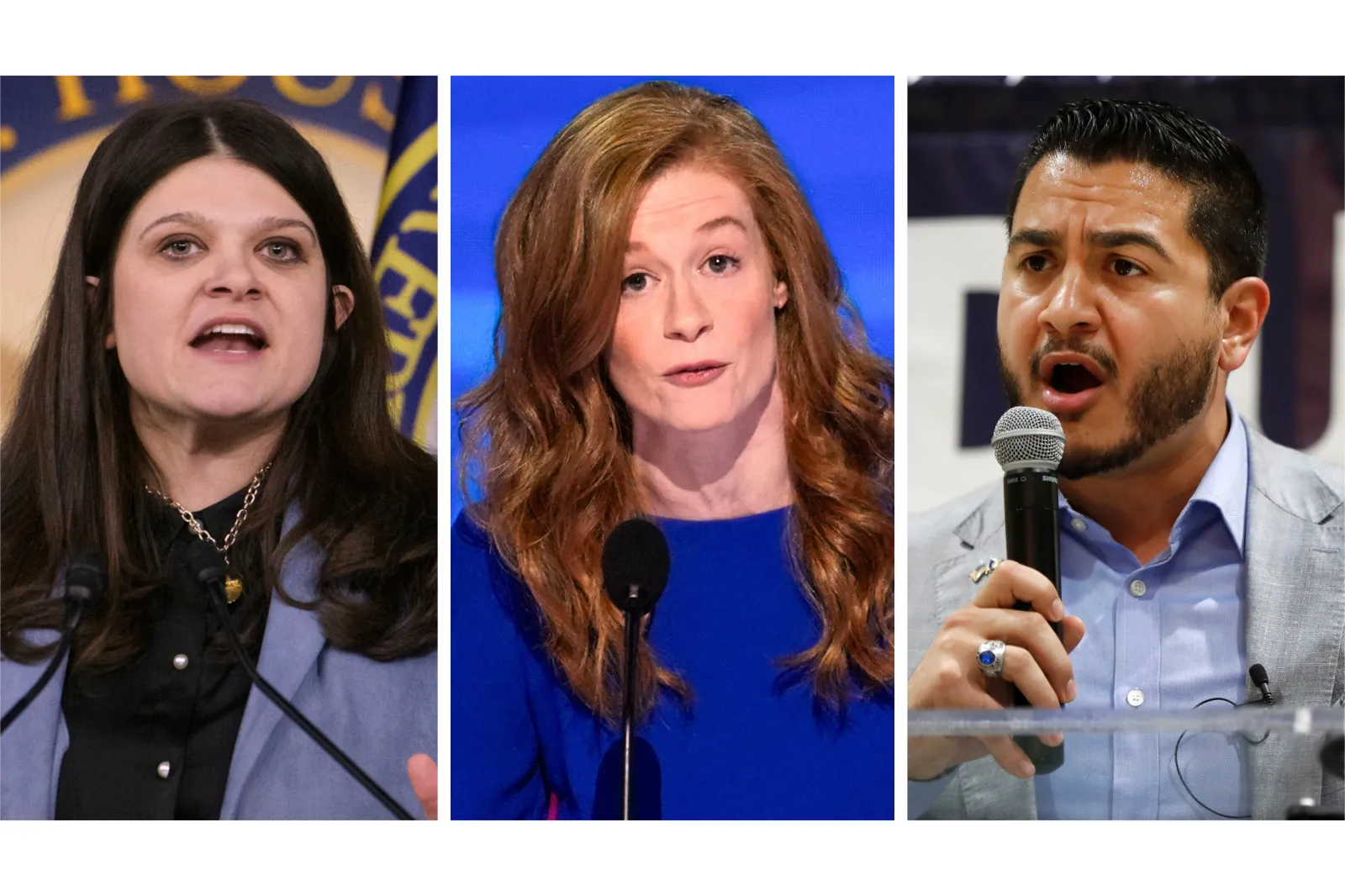
Michigan’s Senate race is expected to be one of the closest of the 2026 midterm elections, but lines are still being drawn in the three-way Democratic primary. Haley Stevens has received support from the party’s establishment and centrist wing, while Mallory McMorrow and Abdul El-Sayed, a former Wayne County health director, are running in the more progressive lane.
Read More on Politics
On the Republican side, Mike Rogers is viewed as the front-runner for the nomination.
The contours of the general election largely depend on the outcome of the primary, and the new survey from Global Strategy Group, reported by Politico to be an internal from McMorrow’s campaign, provides the latest glimpse of where that primary race stands. Michigan’s race is viewed as a pure toss-up by forecasters, meaning Democrats and Republicans are both viewed as having a chance to win.
They are running to replace Senator Gary Peters, a Democrat who opted against running for another term. Historically, the party in the White Houses loses seats in the midterms, so Democrats are hopeful President Donald Trump's declining approval rating will give them a boost in states like Michigan.
...
Michigan’s Senate Primary: What New Polls Show About Democratic Field
The Global Strategy Group survey showed McMorrow leading with 30 percent support, compared to El-Sayed’s 25 percent and Stevens’ 23 percent. Many voters—21 percent—were still undecided. The undecided voters will be crucial to each candidate over the coming months. Given the slim margin in the poll, they could determine the outcome.
In June 2025, a Global Strategy Group poll showed Stevens leading with 24 percent, while McMorrow and El-Sayed trailed at 20 percent and 15 percent, respectively.
Stevens still held a name ID advantage—54 percent of respondents were familiar with the congresswoman, while 52 percent of respondents said they know of El-Sayed. Only 49 percent said they recognized McMorrow's name, according to the poll.
The poll surveyed 800 likely primary voters from March 19 to 22 and had a margin of error of plus or minus 3.5 percentage points. It is not an independent poll, which are generally viewed as more reliable than internals, which can be selectively released.
However, an Impact Research poll, a Stevens internal, showed her leading with 28 percent support, compared to El-Sayed’s 26 percent and McMorrow’s 25 percent. Twenty-one percent were undecided. The poll surveyed 800 likely primary voters from February 10 to 16 and had a margin of error of plus or minus 3.5 percentage points.
“Democratic primary voters are looking for an effective legislator who knows how to win tough fights—and they see that in Haley Stevens. Stevens’ legislative effectiveness and experience in government differentiate her from McMorrow and El-Sayed. The issues she fights for align with voters’ priorities, reinforcing her credibility and strengthening trust,” the polling memo read.
How McMorrow, Stevens and El-Sayed General Election Polls Compare
Recent polls show a competitive race in Michigan regardless of who secures the Democratic nomination. Michigan remains a battleground roughly evenly divided between Democrats and Republicans.
An Emerson College poll in January showed that Stevens held the strongest lead in a general election against Rogers, leading by nearly 6 points (47.3 percent to 41.6 percent). McMorrow also held a slight advantage over Rogers (45.7 percent to 42.6 percent). Voters were roughly split between El-Sayed and Rogers, giving El-Sayed 42.5 percent support and Rogers 42.8 percent.
The poll surveyed 1,000 likely voters from January 24 to 25 and had a margin of error of plus or minus 3 percentage points.
The Emerson College poll found that in the primary, McMorrow led with 22 percent support to Stevens’ 17 percent and El-Sayed’s 16 percent. Thirty-eight percent were still undecided.
A Glengariff Group poll similarly showed Stevens in a stronger position for the general election, with Rogers leading Stevens by less than a percentage point (44.1 percent to 43.7 percent) but with larger leads over McMorrow (45.7 percent to 42.4 percent) and El-Sayed (48 percent to 41.6 percent).
The poll surveyed 600 likely voters from January 2 to 6 and had a margin of error of plus or minus 4 percentage points.
What People Are Saying
The McMorrow campaign wrote in a statement to Newsweek: "Both of these polls show a clear trendline – the more voters get to know the candidates, the more they support Mallory.""
Haley Stevens spokesperson Arik Wolk, in a statement to Newsweek: “This is going to be a very close primary, and we plan to fight for every single vote, but poll after poll tells the same story: Haley is consistently the strongest Democrat in a general election matchup. In fact, she is the only Democrat who is even remotely competitive with Mike Rogers, especially among independent voters, who decide elections in Michigan. Pollsters have said Haley has a ‘unique appeal’ and ‘magic’ with independents, and that’s why she is the strongest Democrat to go up against Mike Rogers.”
Sophie Pollock, spokesperson for El-Sayed, wrote in a statement to Newsweek: “Abdul’s favorability in the state speaks to the kind of message that is resonating with voters here. He is meeting Michiganders in every corner of the state to share his vision for what government can do when we take on corporate power and recenter the needs of working people. That kind of vision is energizing voters and reengaging folks in the party to win in key states like Michigan.”
The Global Strategy Group polling memo: “The contours of the Democratic Senate primary in Michigan have changed dramatically since last June. As the three candidates have become better known, both Mallory McMorrow and Abdul El-Sayed have become more popular. Conversely, Haley Stevens has seen her unfavorable rating triple while her favorable rating has remained stagnant.”
What Happens Next
Both the Cook Political Report and Sabato’s Crystal Ball classify the race as a toss-up. Michigan’s primary is set for August 4.
Update 3/25/26, 12:06 p.m. ET: This article was updated with a statement from El-Sayed's spokesperson.
Update 3/26/26 9:03 a.m. ET: This article was updated with a statement from McMorrow's campaign.
In a polarized era, the center is dismissed as bland. At Newsweek, ours is different: The Courageous Center—it's not "both sides," it's sharp, challenging and alive with ideas. We follow facts, not factions. If that sounds like the kind of journalism you want to see thrive, we need you.
When you become a Newsweek Member, you support a mission to keep the center strong and vibrant. Members enjoy: Ad-free browsing, exclusive content and editor conversations. Help keep the center courageous. Join today.


View 0 Comments
Submit Correction
View Editorial & AI Guidelines