...

By Andrew Stanton
Reporter
0
Share
Newsweek is a Trust Project member
See more of our trusted coverage when you search.Prefer Newsweek on Googleto see more of our trusted coverage when you search.
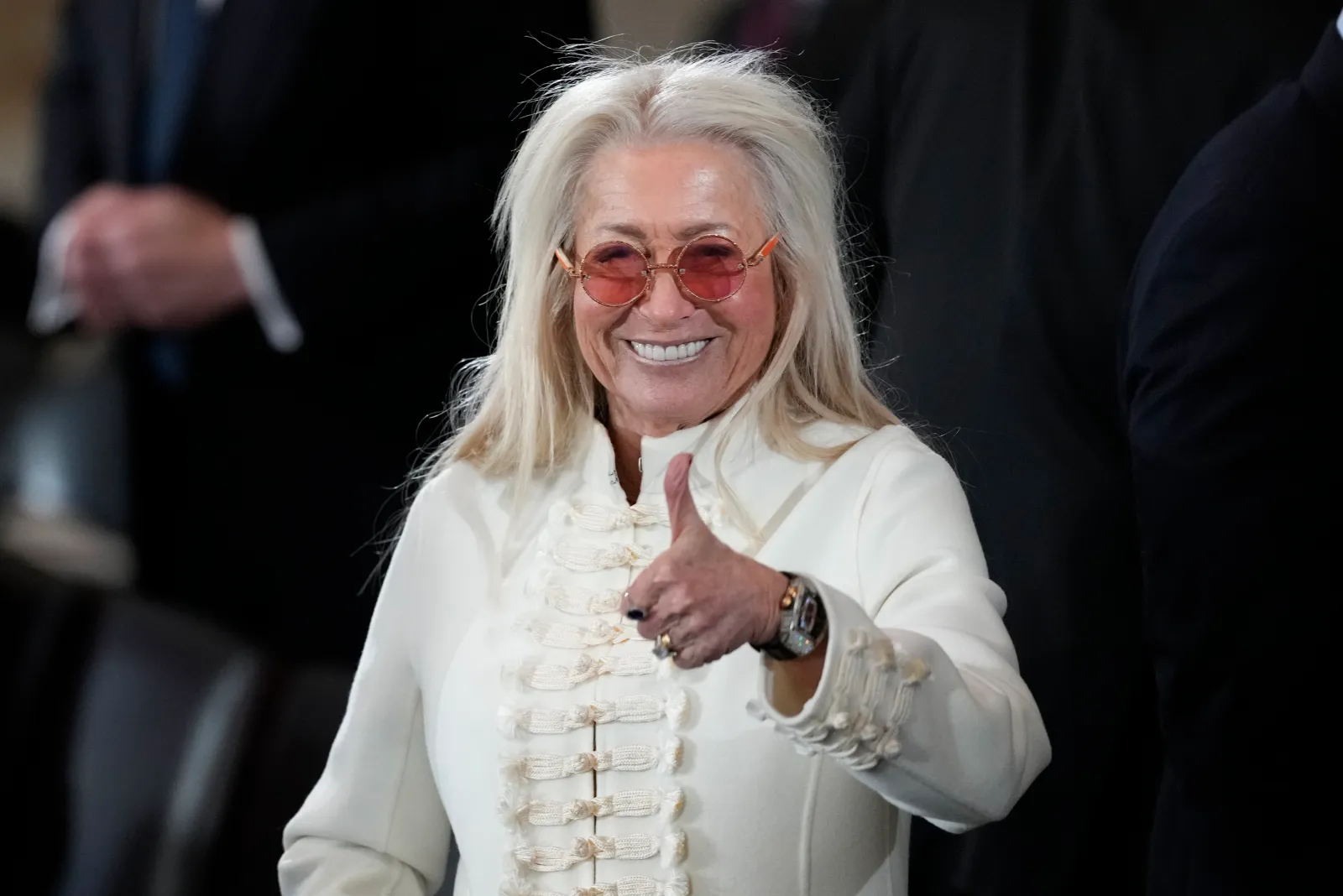
A new proposal introduced by Republican Senator Bernie Moreno of Ohio would impact one of President Donald Trump’s biggest political donors, Miriam Adelson.
Newsweek reached out to the Adelson Family Foundation for comment via email.
Why It Matters
Moreno, an Ohio Republican, has introduced a bill that would prohibit Americans from holding dual citizenship.
Read More on Politics
The bill would require dual nationals to renounce their foreign citizenship or risk losing their status as American citizens. Such legislation could face political and constitutional questions, but if it becomes law, could have implications for millions of Americans holding dual citizenship.
What To Know
The legislation, titled the Exclusive Citizenship Act of 2025, states that "citizens of the United States shall owe sole and exclusive allegiance to the United States." It states that an individual "may not be a be a citizen or national of the United States while simultaneously possessing any foreign citizenship."
Any Americans holding dual citizenship would either have to renounce their non-U.S. citizenship or their American citizenship within one year of it becoming law.
...
Adelson, who holds dual citizenship with Israel, could be among the Americans affected by the bill if it were to become law. Adelson is a Republican megadonor who donated $100 million to a pro-Trump Preserve America super PAC in the 2024 presidential campaign, according to Federal Election Commission (FEC) contribution records reviewed by Newsweek.
She also contributed $3,300 to Moreno’s campaign and $5 million to the Senate Leadership Fund ahead of the 2024 midterms, according to those FEC filings. Earlier this year, she also donated more than $400,000 to the Republican National Committee, FEC records show.
She was born in Israel and was married to Sheldon Adelson, a businessman, who died in 2021.
Moreno, who immigrated from Colombia and became a U.S. citizen at 18, wrote in a statement announcing the bill that becoming an American citizen was "one of the greatest honors of my life."
The bill could also have implications for first lady Melania Trump, who holds dual citizenship with Slovenia.
Peter Spiro, a law professor at Temple University, who has written a book dealing with dual citizenship, told Newsweek that if the bill were enacted, the Supreme Court "would almost certainly strike it down as unconstitutional."
He pointed to the cases where the court "severely limited" the government's power to terminate citizenship unless an individual willingly surrenders it.
In Afroyim v. Rusk, the court held that Congress does not have the power under the Constitution to divest a person of citizenship without voluntary renunciation. In Vance v. Terrazas, the court "held that the government can only terminate an individual's citizenship for a so-called expatriating act (for example, naturalizing in another country) where the individual specifically intends to relinquish citizenship as a result of that conduct," Spiro said.
What People Are Saying
Senator Bernie Moreno wrote in a statement: "It was an honor to pledge an Oath of Allegiance to the United States of America and ONLY to the United States of America! Being an American citizen is an honor and a privilege—and if you want to be an American, it’s all or nothing. It’s time to end dual citizenship for good."
Michael Wildes, a lawyer for first lady Melania Trump, previously told Newsweek: "The United States is one of many countries that permits its citizens to hold dual nationality, whether acquired by the wonderful choice to naturalize or by virtue of birth."
What Happens Next
The bill could face huge difficulties in passing through Congress.
Because of the Senator filibuster, which requires at least 60 votes to advance a bill, it would need some Democratic support—and it’s not clear that any Democrats would be willing to sign onto such legislation.
It could also face legal challenges, as the U.S. Supreme Court has affirmed dual citizenship in the past.
View 0 Comments
Submit Correction
View Editorial & AI Guidelines