10
Loading video...

By Jennifer Radcliffe
0
Share
Newsweek is a Trust Project member
See more of our trusted coverage when you search.Prefer Newsweek on Googleto see more of our trusted coverage when you search.
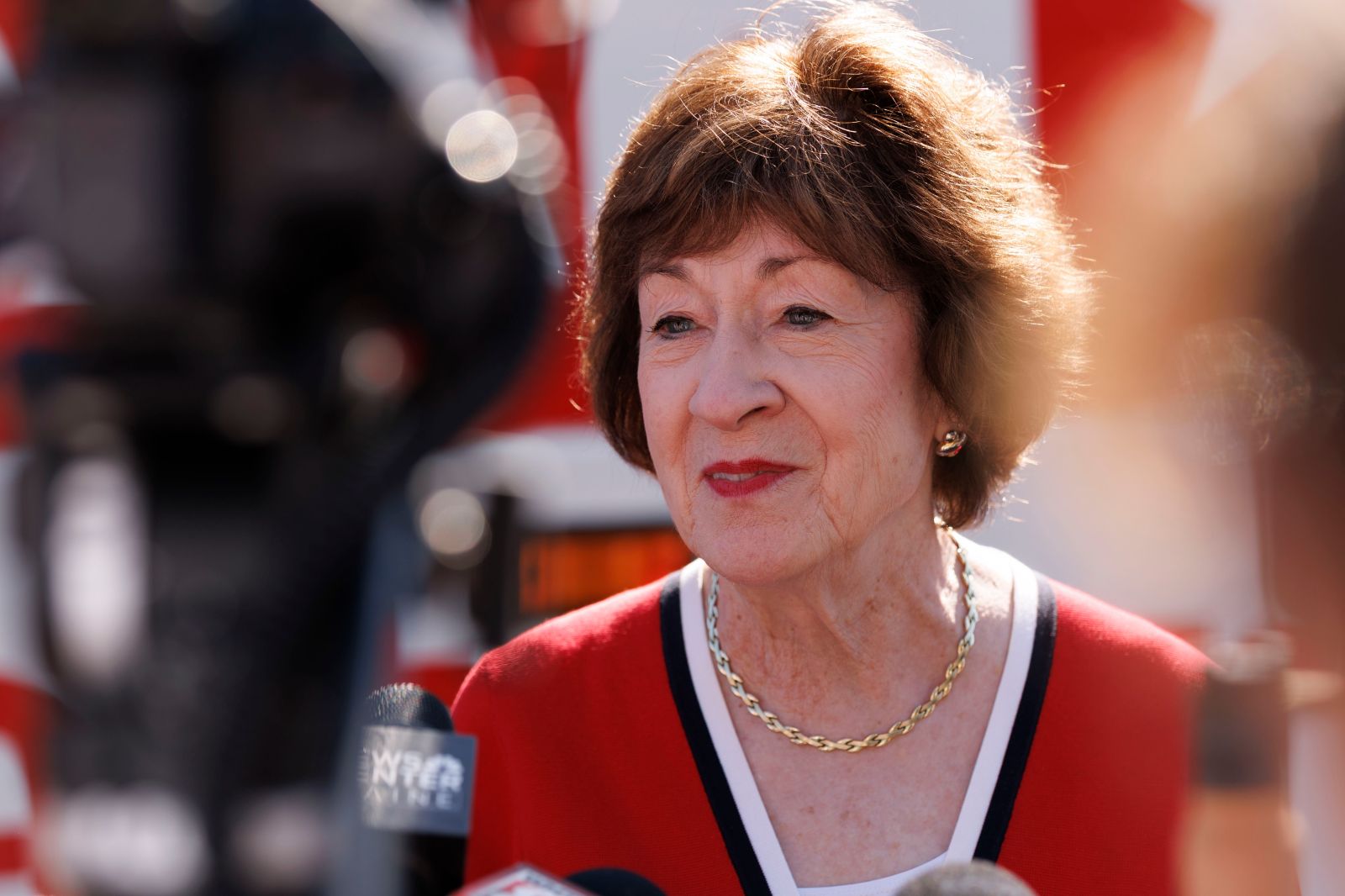
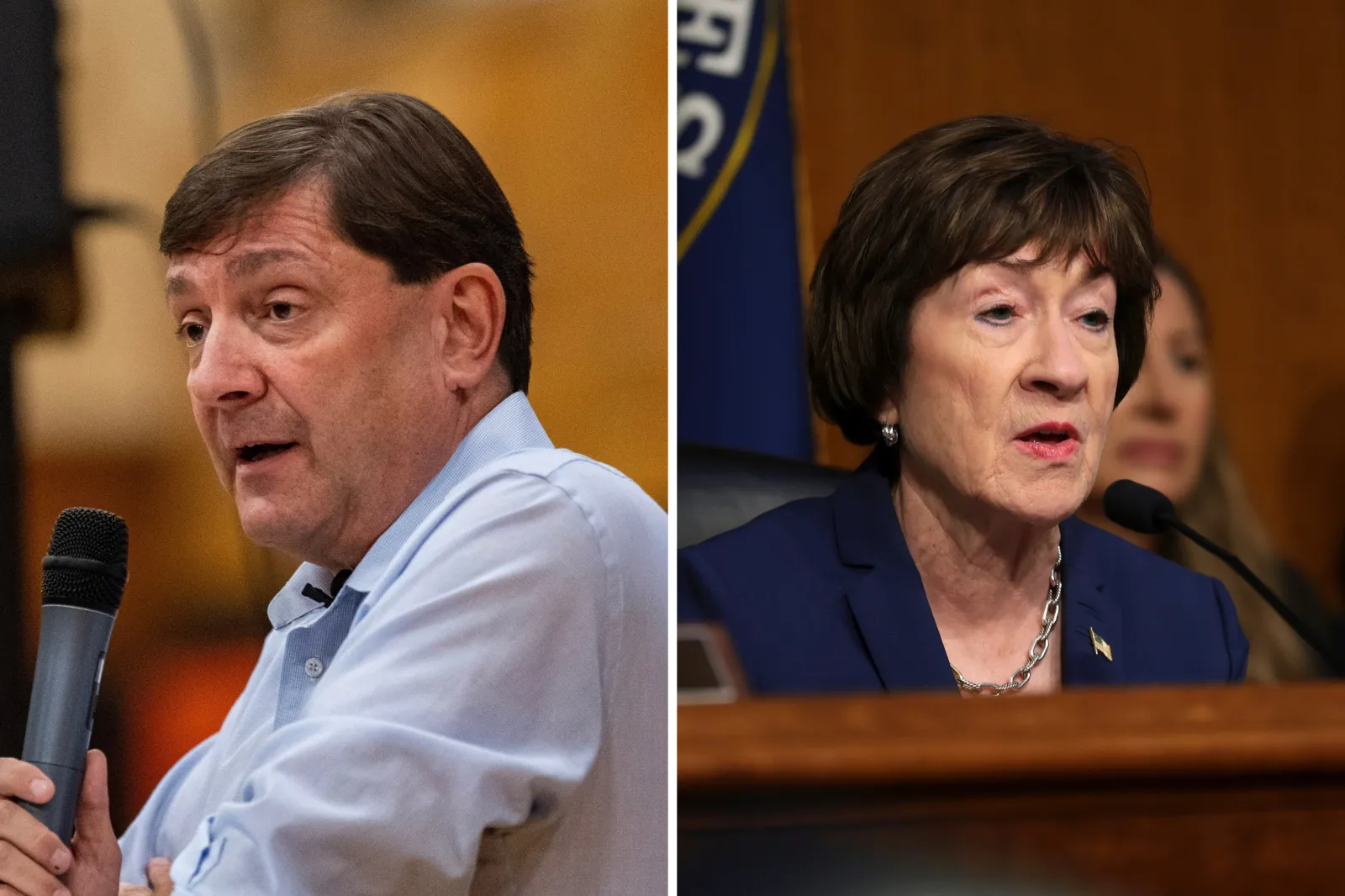
Republican Senator Susan Collins demanded an apology from Democratic challenger Troy Jackson during Thursday night's Senate debate after Jackson accused her of benefiting financially from the war in Iran, marking the sharpest exchange in a debate dominated by allegations of corruption, arguments over energy prices and disagreements about President Donald Trump.
"That is absolutely outrageous, and you owe me an apology," Collins, a five-term senator, said.
Jackson did not retreat from the accusation, instead arguing that Collins votes with Trump too often and accused her of being influenced by corporate interests and defense contractors.
Read More on News
The debate was the second this week between the candidates competing for Maine's U.S. Senate seat, just two days after their first encounter, where Jackson drew attention for his now-viral "You can't eat rock salt" attack on Collins' support for increased domestic energy production.
Abortion Rights Spark Sharp Exchange
Abortion rights produced one of the night's most pointed policy confrontations.
Jackson again faulted Collins for supporting Supreme Court Justice Brett Kavanaugh, arguing that his confirmation helped pave the way for the overturning of Roe v. Wade.
Collins countered by saying she helped write legislation establishing federal abortion protections.
"Not only would I vote for it, I authored such a bill," Collins said of a measure that would codify Roe nationwide.
The incumbent then turned the issue back on Jackson, pointing to what she described as his long anti-abortion voting record before entering federal politics.
Jackson acknowledged he had previously voted differently.
"Was I voting the wrong way? Yeah, and I've said that consistently," he said.
Collins then accused Jackson of wanting to pack the Supreme Court, to which Collins said he wouldn't need to if she hadn't voted for Kavanaugh.
Cost of Living Takes Center Stage
The candidates spent most of the Thursday debate sparring over rising energy costs and home heating concerns, a major issue in Maine.
Jackson repeatedly argued that Mainers' soaring heating costs stem from the conflict with Iran and accused Collins of failing to use her influence to stop it.
"We have to get out of Iran. Everything points to the Iran war that is driving these fuel prices in an insane direction," he said. "People will freeze to death this winter because they can’t afford to heat their homes."
He called for expanding eligibility for the Low Income Home Energy Assistance Program (LIHEAP) and argued Washington should do more to help working families.
Collins agreed that Mainers are struggling but highlighted her work on heating assistance. She said Congress could expand both heating assistance and weatherization programs, while also pushing for greater domestic energy production.
Collins accused Jackson of supporting policies that contributed to Maine's high electricity costs.
"It's under Troy's leadership that electric rates in Maine became the fourth highest in the nation," she said.
Jackson Ties Collins to Trump
Jackson repeatedly attempted to make the race a referendum on President Donald Trump,
When asked why voters should support him after entering the race late, Jackson said the campaign was not really about him.
He argued the election was about Trump and Collins, repeatedly citing the "Big Beautiful Bill," tariffs, the Iran war and abortion rights as examples of policies he believes have hurt Mainers.
Jackson's sharpest line came when he described Collins as: "Powerful in town, but she's weak every time that we need her to stand up and fight for us."
Collins rejected that characterization, arguing she has demonstrated independence from multiple administrations during her Senate career.
"I have worked with five different presidents, and with each of them, I've supported them when I thought they were right, and I've opposed them when I thought they were wrong," Collins said.
She also pushed back on Jackson's frequent claim that she votes overwhelmingly with Trump, saying critics cherry-pick certain votes to reach that conclusion.
"This Congress alone, I voted against President Trump 137 times," Collins said.
Candidates Show Clear Division on ICE
One of the night's starkest policy divides emerged over immigration enforcement and the future of Immigration and Customs Enforcement.
The exchange centered on the July fatal shooting of Maine resident Johan Sebastian Guerrero. Jackson argued the killing reflected broader problems within the agency and advocated for defunding it.
"This agency is so rogue that I don't know that it can be reformed," he said. "I know for a fact that people are always going to know ICE as an outfit has murdered at least four people here in this country, and that that is not law enforcement."
Collins pointed to ICE's role in deporting violent criminals, investigating child exploitation, combating drug trafficking and dismantling criminal organizations, arguing that eliminating the agency would make the country less safe.
"We need to reform ICE further. There's no doubt about that," she said.
Collins also defended funding she secured for body-worn cameras, saying officers are required to activate them during enforcement actions. She added that she supported more restrictions, including limiting ICE arrests in schools, hospitals and other sensitive locations.

...
Who Is Winning the Debates Between Susan Collins and Troy Jackson?
Some pundits said that Jackson held his own against the more-experienced Collins in the first debate.
"I think Troy Jackson, you know, optically handled himself pretty well in the first debate," Phil Harriman, a political commentator and former Maine Republican state senator, said on the Maine television station hosting the debate. "That was probably very intimidating for him, and I think he at least visually showed that he was worthy of being on the stage."
Ethan Strimling, a former Maine politician, told WMTW that both candidates, but especially Jackson, need to be sharper in future debates.
"Learn your lines. Figure out what you've got to say in terms of your opening statement, your closing statement, and then have confidence in your abilities to try to respond in the moment. Susan Collins was in her notes a little bit too, but she's more relaxed in that situation. She's been there before," he said.
...
Susan Collins vs. Troy Jackson: Latest Polls
A CBS News survey released last week showed a dead-even split between the candidates, though 10 percent of voters said they could change their minds before the election.
A co/efficient survey conducted September 28 to September 30 found that 16 percent of the 1,240 likely voters polled had no opinion on Jackson, who stepped in less than three months ago to replace Graham Platner—who dropped out following a sexual assault allegation, which he denies.
A New York Times/Press Herald/Siena Poll—conducted September 15 to 22 among 619 likely voters in Maine—found that 6 percent had "not heard of" Jackson, while an additional 4 percent did not provide an opinion on him.
Susan Collins vs. Troy Jackson: Latest Campaign Developments
New financial disclosures from Jackson show that his primary source of income this year and last was consulting work, and that he and his wife hold up to $430,000 of assets. Collins' estimated net worth sits comfortably in the millions, according to her recent disclosures.
"He's a logger and union member who understands what it means to worry about making ends meet—and he would bring that experience to a Senate dominated by millionaires," Jackson's campaign spokesman said.

...
Why the Maine Senate Race Matters
With Maine’s Senate seat still in toss-up territory by most accounts, the contest is among those being closely watched. The state historically leans blue and voted against Trump in all three elections, but Collins, a moderate Republican, has held her Senate seat since 1996. The landscape is tougher for Republicans in 2026, given Trump's historically low approval ratings.
When Is the Next Debate Between Susan Collins and Troy Jackson?
The two will spar twice more before Election Day. The third debate, hosted by WABI and WAGM, will be held October 13. The final debate is scheduled for 7 p.m. ET October 15, hosted by NEWS CENTER Maine, Maine Public and the Portland Press Herald.
For more analysis from us on the numbers shaping U.S. politics and the 2026 midterms, sign up for Newsweek*'s Midterms Monitor newsletter***.
Newsweek’s reporters and editors used Martyn, our AI assistant, to produce this story. Learn more about Martyn here. Contact Newsweek editors on this story: Jenna DeJong and Edward T. Cummins
View 0 Comments
Submit Correction
View Editorial & AI Guidelines