...

By Newsweek Editors
0
Share
Newsweek is a Trust Project member
See more of our trusted coverage when you search.Prefer Newsweek on Googleto see more of our trusted coverage when you search.
In Florida in 2023, Republican Governor Ron DeSantis' rule grounded Chinese-made police drones, and some of the loudest pushback came from Republican counties. At a hearing, a representative of the Collier County Sheriff’s Office said state-approved American replacements had "limited capabilities," couldn’t fly at night, and their cameras were "not safe." A Palm Beach County Sheriff’s Office representative added that a battery on one of the approved models had spontaneously caught fire in an officer’s car. In Lakeland, the assistant police chief summarized the effect more starkly: "With no drones, we're back to figuring out which direction we want to go."”"
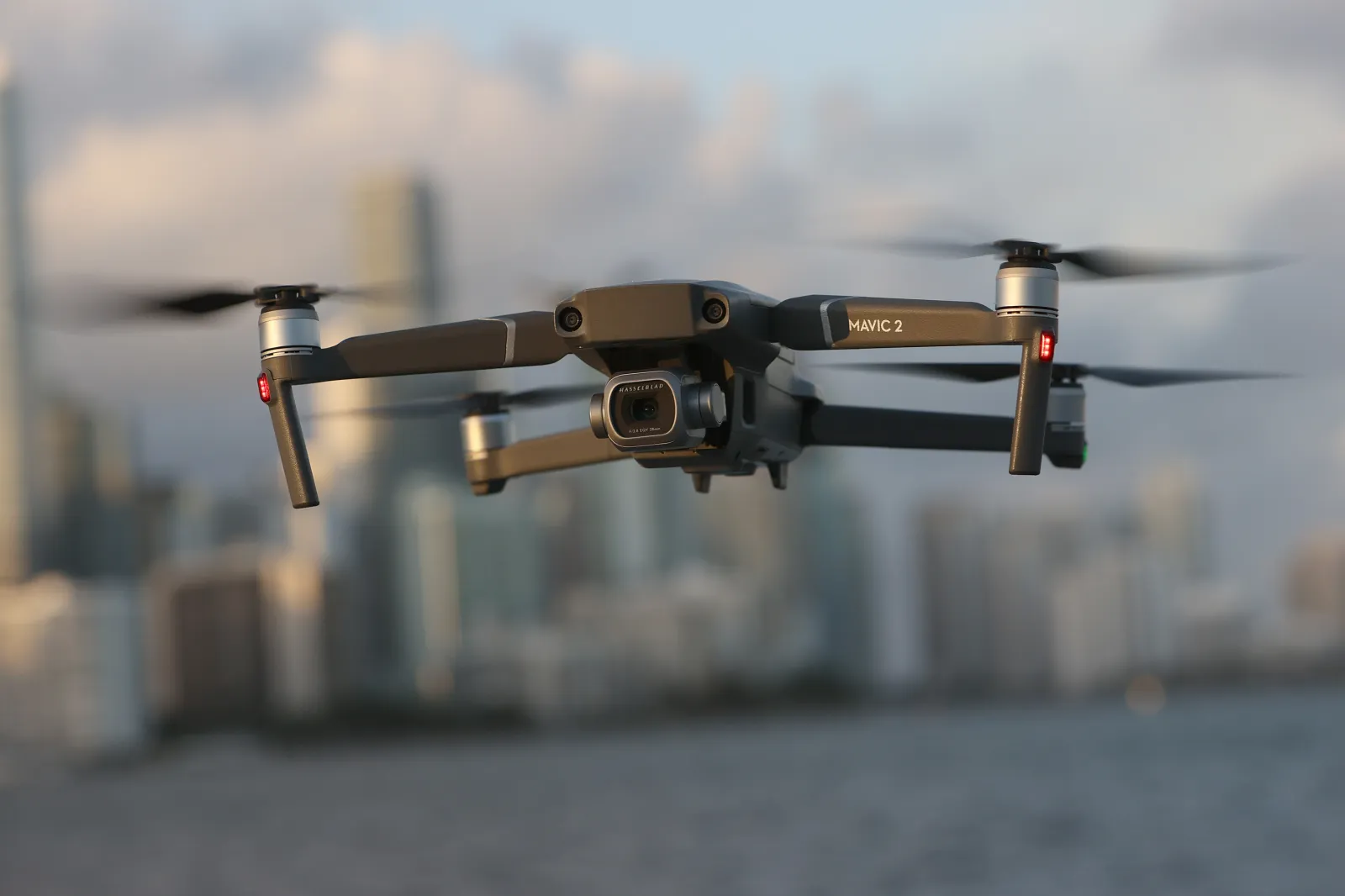
That local-level revolt now collides with a national deadline. Tomorrow, DJI—the Shenzhen giant that dominates U.S. commercial drone sales—could be placed on the FCC’s "Covered List,"”" blocking new models from America unless a national-security review exonerates it under provisions pushed into the FY25 defense bill. The glaring issue is that DJI gear is woven into emergency response, farming and infrastructure work. In Kansas City, for example, DJI makes up nearly half of the police drone fleet. Police from Texas to San Francisco rely on them by the thousands.
It means that Republican sheriffs and county commissioners—heavy users of DJI—are now fighting the practical fallout of a MAGA-backed crackdown. Florida’s GOP legislature appropriated $25 million to help departments swap out Chinese drones after the DeSantis rule, but many agencies say such measures won't cover performance gaps or higher costs.
Read More on News
Common Knowledge
On the right, the hawks say the ban is overdue. House Republican Conference Chair Elise Stefanik, a former ally of President Donald Trump who has said she won't rerun for Congress, said her Countering CCP Drones Act was a way to "end the drone monopoly Communist Chinese DJI held in the U.S., protect our skies, and build the U.S. drone industrial base.” In the Senate, Senator Rick Scott urged the FCC to rescind authorizations for DJI-linked devices.
On the left, civil-liberties groups such as the ACLU worry what drones do to policing. The Electronic Frontier Foundation calls "drone-as-first-responder” programs a "latest aerial police surveillance push,” with a researcher saying they carry a "huge potential for privacy invasion.”
However, parts of the left are hawkish, too. Democratic Senators Maggie Hassan and Gary Peters last week demanded that major federal contractors disclose any DJI use at sensitive sites, warning that the U.S. generally bans such drones in federal work and that their use "creates the potential to provide a pathway for the transfer of important national security-related information to the Chinese government.”
Uncommon Knowledge
DJI really is everywhere in American public safety. Look at Florida: before the 2023 rule, over 90 percent of Florida law-enforcement drone programs used DJI. After the ban, that plunged to around 14 percent. The Orange County Sheriff’s Office spent nearly $580,000 to replace 18 non-compliant drones, recouping about $400,000 from the state. Departments shelved fleets overnight: Broward County (63 drones) and Collier County (31) among them.
However, under the new federal framework, DJI must clear a national-security review or be added to the FCC’s Covered List by December 23, 2025, a designation that blocks new models from U.S. communications infrastructure. DJI has publicly urged Washington to finish the review or extend the deadline, warning of shocks to agencies that depend on its gear. The FCC, meanwhile, has finalized rules to limit previously granted authorizations for covered equipment, enabling it to halt importation and marketing, even for devices that once passed muster.
State Republicans warn a hard ban would hit law enforcement, farms and energy firms that adopted DJI because it’s cheap and effective. The FAA dashboard shows 837,513 registered drones and 481,760 certified remote pilots. That’s a workforce and an economy—construction, agriculture, cinematography, utilities—now bracing for a supply shock. Florida again is instructive. Approved non-Chinese platforms often cost five to 10 times more than the DJI models they replace, according to local reporting and procurement records reviewed by broadcast and trade outlets.
It's why MAGA is fighting MAGA: national-security hawks on the right have, in practice, landed on the same side as civil-liberties progressives—both pushing in ways that reduce police access to DJI. The people caught in the middle are sheriffs and fire chiefs whose budgets (and life-or-death use cases) were built around DJI.
There may be a way to reconcile these aims—write clear security standards for all drones, enforce them ruthlessly, and fund genuine U.S. competitors at scale—but that is a long road. For now, the more immediate reality is a countdown clock that could lock out new DJI models tomorrow. And that leaves a very 2025 dilemma: a MAGA Congress celebrating a win against "Communist Chinese spy drones,” while MAGA sheriffs feel the heat for their pricier replacements.
If you’re enjoying Uncommon Knowledge, please share. If you have suggestions for future editions or feedback, email subscriber.feedback@newsweek.com. We want to hear your voice.
View 0 Comments
Submit Correction
View Editorial & AI Guidelines