
By Kimanzi Constable
0
Share
Newsweek is a Trust Project member
See more of our trusted coverage when you search.Prefer Newsweek on Googleto see more of our trusted coverage when you search.
I still remember everything about the last conversation I had with a longtime friend when I said I wasn’t going to give him any more money. He needed $10,000 to keep his cars from being repossessed and threatened that our friendship would be over if I didn’t help.
Our relationship ended that day, and even though the loss of a treasured friendship stung, I knew it was the right decision. I couldn’t be a doormat anymore.
I grew up in a household where money was never discussed. I knew my parents had what appeared to be good middle-class jobs, but they never talked about paying bills, saving, investing or how much money they were sending to our family outside the United States.
Read More on My Turn
I Was Single at 37 and Had Given Up on Love—One Message Changed Everything10 min read

I Thought Going Gray Meant I’d Stopped Caring about My Looks. Then the Compliments Started6 min read

My Mother Died By Suicide When I Was 6. My Town Stayed Silent for 30 Years5 min read


...
My mother is from Kenya, and my stepfather, with whom I grew up, was from the Democratic Republic of Congo—talking about money with your children and teaching them financial literacy was not common where they grew up.
As a young adult, that lack of financial literacy affected how I spent money. I didn’t save or invest. I lived paycheck to paycheck. Luckily, the one thing I always had going for me was my ability to make money.
At 18, I got my commercial driver’s license and began driving semi-trucks, which paid well. At 19, I started my first business, delivering bread to grocery stores for a bakery, and it quickly became financially successful, bringing in multiple six figures.
In my 20s, I got married, and we had three children, which meant the everyday life expenses of a family. As I continued to achieve success in the business, family and friends noticed. That’s around when I started getting the first requests: “Can I borrow money?” “Can I have money?”
Back then, I felt fortunate to have created a successful business, and I wasn’t good with money anyway, so I lent and gave it away liberally, even though I wasn't rich. I had an incredibly hard time saying “no,” despite how many bills I now had.

...
My family outside the U.S. were among the worst offenders. If I hesitantly declined, they sent pictures of dirty water and sewage in the streets and told me what a selfish person I was for not giving them money. They would remind me that I was fortunate to be born in America and that it was my duty to send money back home to my family.
To say I was gutted was an understatement, and I would eventually give in to the pressure. This pattern of asking, guilt trips, and me caving would happen every few months.
My grocery delivery business continued to grow, and I eventually sold it and started an online business selling educational courses in 2012. While the first business had overhead costs, the online business had very few expenses, resulting in higher profit.
As I gained more visibility on the internet, the requests for money increased. People began expecting me to pay for everything. It changed the way I approached spending because I had to budget as if I was responsible for what would normally be split among family and friends—and, at that point, I thought that was my responsibility. After all, I was the one with money.
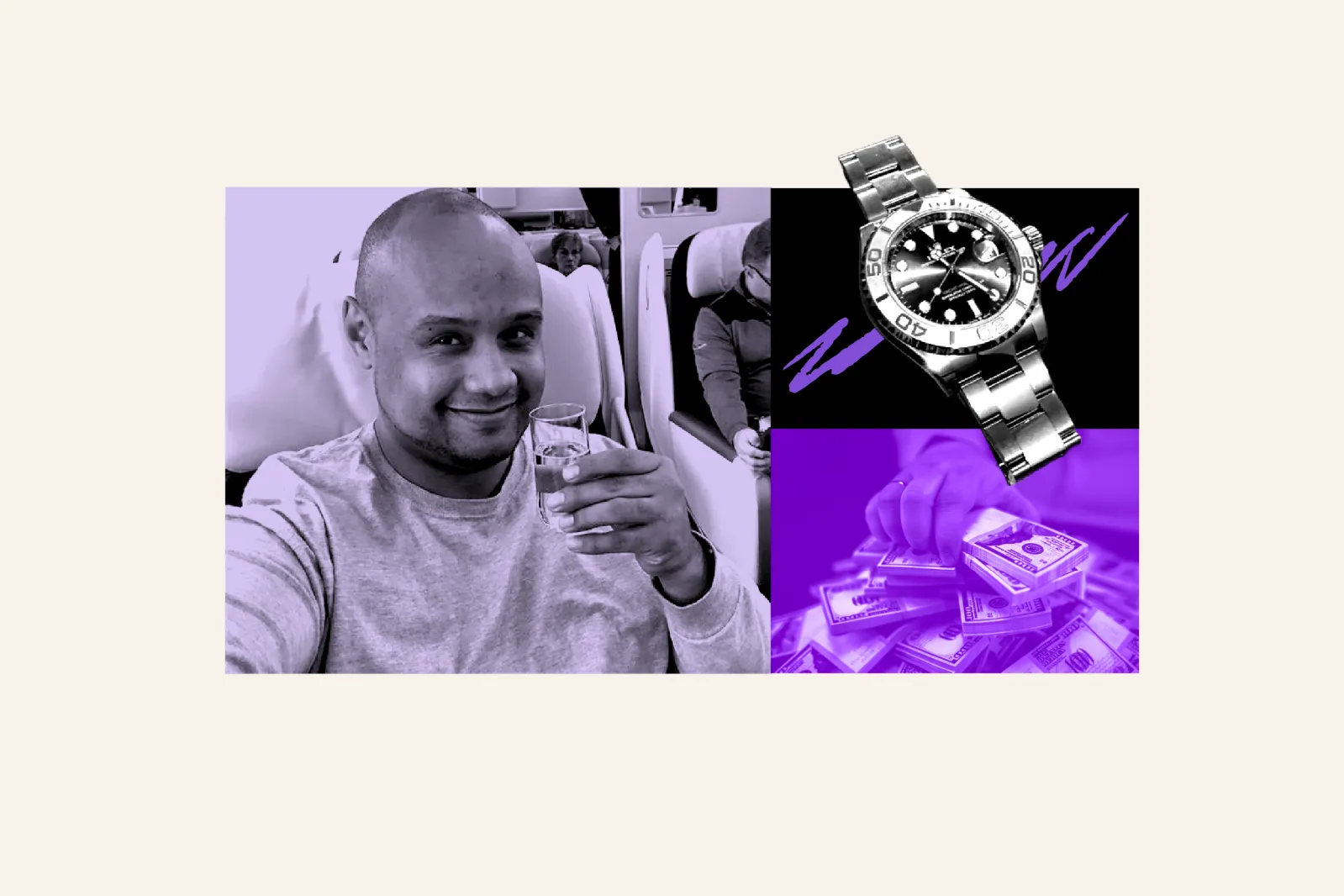
In 2023, I reached my breaking point. I set a goal of reaching $1 million in revenue, and I did it. What I didn't expect was what earning at that higher level would do to my relationships.
I’d been fielding requests for money since I was 20 years old, but now the demands and expectations became unbearable.
Some friends and family no longer asked to borrow money; they expected me to pay for everything. We would go out to extended family dinners, and when the waiter would ask, “One check or separate?” there was a quick “one check” response. When the bill came, it was passed to me to pay without anyone asking or offering to contribute—it was assumed.
I felt like a loser who was good for only one purpose in life—being an ATM for the people who said they loved me. I was so eager to keep people happy that I let them walk all over me, and it destroyed my self-worth.
I felt like a loser who was good for only one purpose in life—being an ATM for the people who said they loved me. I felt like my entire value in life was to make money so that I could give it to other people. If I couldn't, I’d have felt like less than a man.
I was so eager to keep people happy that I let them walk all over me, and it destroyed my self-worth.
The breakthrough came in therapy. I learned how to set and keep firm boundaries regarding relationships and money. I would help people financially only on my own terms, if I felt it was the right thing to do, and I was doing it from a healthy place.
The boundaries worked, though I lost some friends along the way. But I was left with the people who saw me for more than what I could do for them.
Therapy also helped me see that, as a man, my value is far more than making money and being a provider—I deserved to be loved for who I am as a human being, not just what I earn.
Learning to love myself and address my self-esteem issues helped me see what relationships I wanted to maintain—and who needed to find another way to get free money.
Life is much happier these days, surrounded by those who love Kimanzi simply for being Kimanzi.
Kimanzi Constable is a software founder, author, writer and global traveler who’s been to 88 countries.
All views expressed in this article are the author's own.
Do you have a personal essay you want to share with Newsweek? Send your story to MyTurn@newsweek.com.
View 0 Comments
Submit Correction
View Editorial & AI Guidelines