...

By Gabe Whisnant
News Editor
0
Share
Newsweek is a Trust Project member
See more of our trusted coverage when you search.Prefer Newsweek on Googleto see more of our trusted coverage when you search.
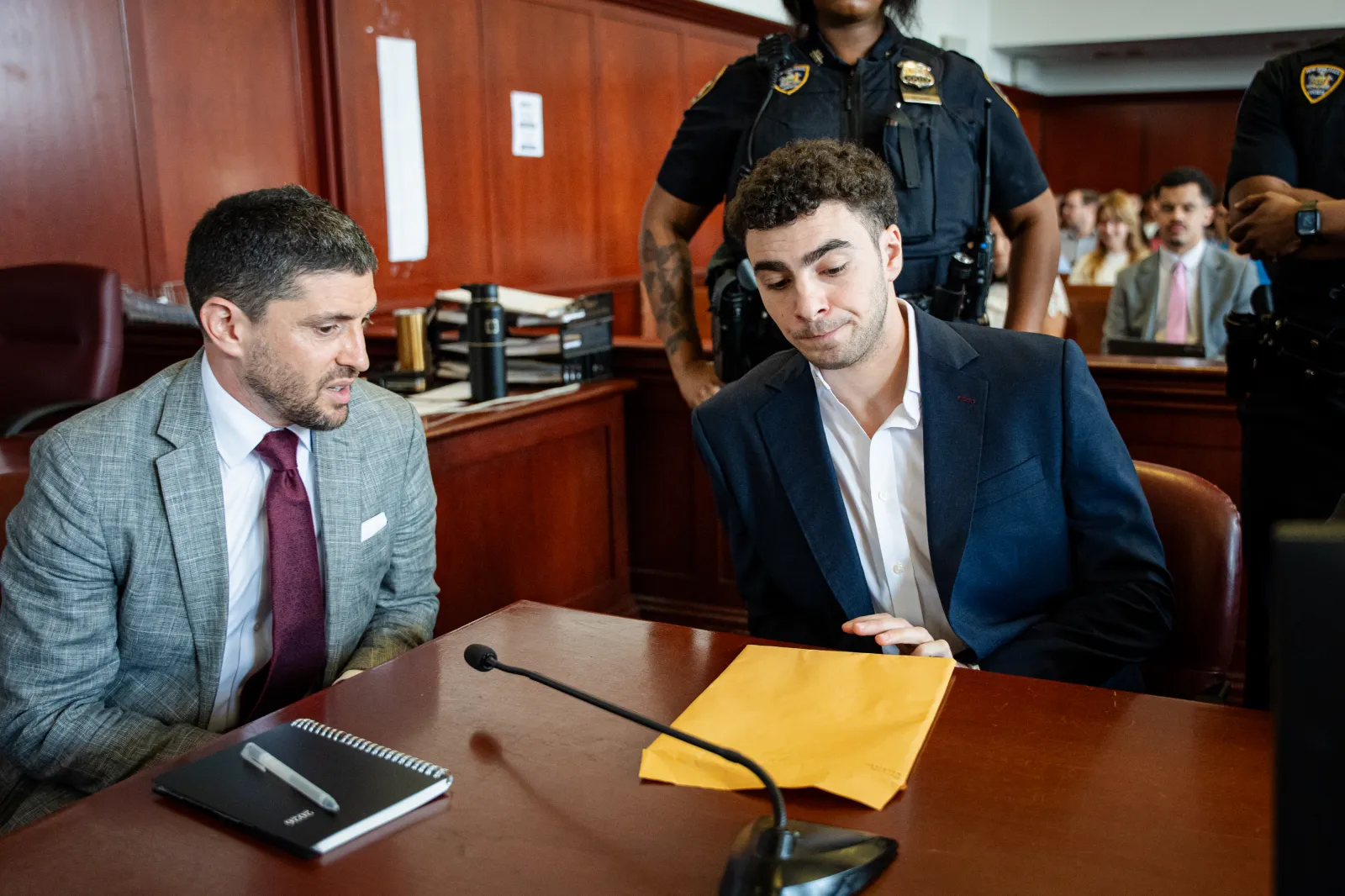
Luigi Mangione will pursue a psychiatric defense at his upcoming state murder trial in the killing of UnitedHealthcare CEO Brian Thompson, a judge ruled Wednesday, potentially reshaping the legal stakes in one of New York’s most closely watched cases.
Judge Gregory Carro said defense attorneys plan to argue Mangione was experiencing “extreme emotional disturbance at the time of the occurrence,” a claim that, if accepted by a jury, could lead to a manslaughter conviction rather than murder, carrying a lesser prison sentence.
How the Psychiatric Defense Applies
Under New York State law, the "extreme emotional disturbance" defense functions as an affirmative legal strategy that allows a jury to reduce a second-degree murder charge to first-degree manslaughter. Unlike a traditional insanity defense, which argues a defendant could not distinguish right from wrong, this specific mechanism concedes the act was committed but asserts that an overwhelming, subjective emotional crisis caused a profound loss of self-control.
Read More on U.S.
If Mangione’s legal team successfully proves this mitigating factor at his state trial on September 8, it would effectively take a mandatory life sentence off the table in the state case. It differs from a not guilty by reason of insanity defense, which can result in a defendant being committed to a psychiatric facility rather than sent to prison.
Newsweek has reached out to the Manhattan District Attorney's office via email on Wednesday morning for comment.

...
Pretrial Hearing Unsealed as Defense Strategy Emerges
The ruling follows a previously undisclosed hearing held at the defense’s request two weeks ago, during which the issue was argued under seal. Carro said the secrecy was intended to give Mangione’s legal team time to determine whether to proceed with a psychiatric defense and clarify its scope. He added that records from that hearing will now be unsealed, making details of the defense’s strategy public for the first time.
“The reasons for the sealing was to give the defense an opportunity to determine whether they were going forth with that defense and the nature of that defense,” Carro
Mangione’s attorney, Karen Friedman Agnifilo, objected to the unsealing, warning it could undermine his defense in a parallel federal case stemming from the same set of facts. She said the psychiatric defense is not available in federal court and argued that disclosing those arguments now risks prejudicing his client ahead of that proceeding. Mangione faces separate federal charges, including stalking, with a trial scheduled to begin October 13, weeks after his state trial is set to start on September 8.
“The reason why we asked for the sealing is that this defense is not available federally and Mr. Mangione is being prosecuted federally and this is prejudicial to his defense to the exact same facts,” Friedman Agnifilo said.
Prosecutors Outline Evidence in Brian Thompson Killing Case
Mangione, 28, has pleaded not guilty in both cases. Prosecutors allege he fatally shot Thompson, 50, from behind on December 4, 2024, as the executive walked toward a Manhattan hotel hosting UnitedHealth Group’s annual investor conference. Surveillance video captured a masked gunman, and authorities say ammunition recovered at the scene bore the words “delay,” “deny,” and “depose,” a phrase often used to criticize insurance industry practices.
Investigators later arrested Mangione at a McDonald’s in Altoona, Pennsylvania, about five days after the killing. Prosecutors contend a 3D-printed handgun recovered at the time matches the weapon used in the shooting, and a notebook found in his possession outlined hostility toward the health insurance industry and referenced plans to target an executive.
Earlier proceedings have already shaped the evidentiary landscape. Carro ruled in May that both the firearm and the notebook can be introduced at trial, bolstering prosecutors’ case. On Wednesday, however, he dismissed a separate charge tied to a gun magazine, finding it inadmissible because it was recovered during an initial search of Mangione’s backpack that violated evidentiary standards.
With trial dates approaching in both jurisdictions, Wednesday’s decision underscores the complex legal battle ahead, as defense attorneys seek to distinguish Mangione’s mental state while prosecutors aim to tie forensic and documentary evidence directly to the high-profile killing.
This is a breaking news article. Updates to follow.
Correction: An earlier version of this article incorrectly stated that an extreme emotional disturbance defense could result in Luigi Mangione being sent to a psychiatric facility instead of prison. If successful, the defense actually reduces a second-degree murder charge to first-degree manslaughter, which carries a prison sentence but removes the possibility of a mandatory life term.
View 0 Comments
Submit Correction
View Editorial & AI Guidelines