10
Loading video...


By Michael D. Carroll and Amir Daftari
0
Share
Newsweek is a Trust Project member
See more of our trusted coverage when you search.Prefer Newsweek on Googleto see more of our trusted coverage when you search.
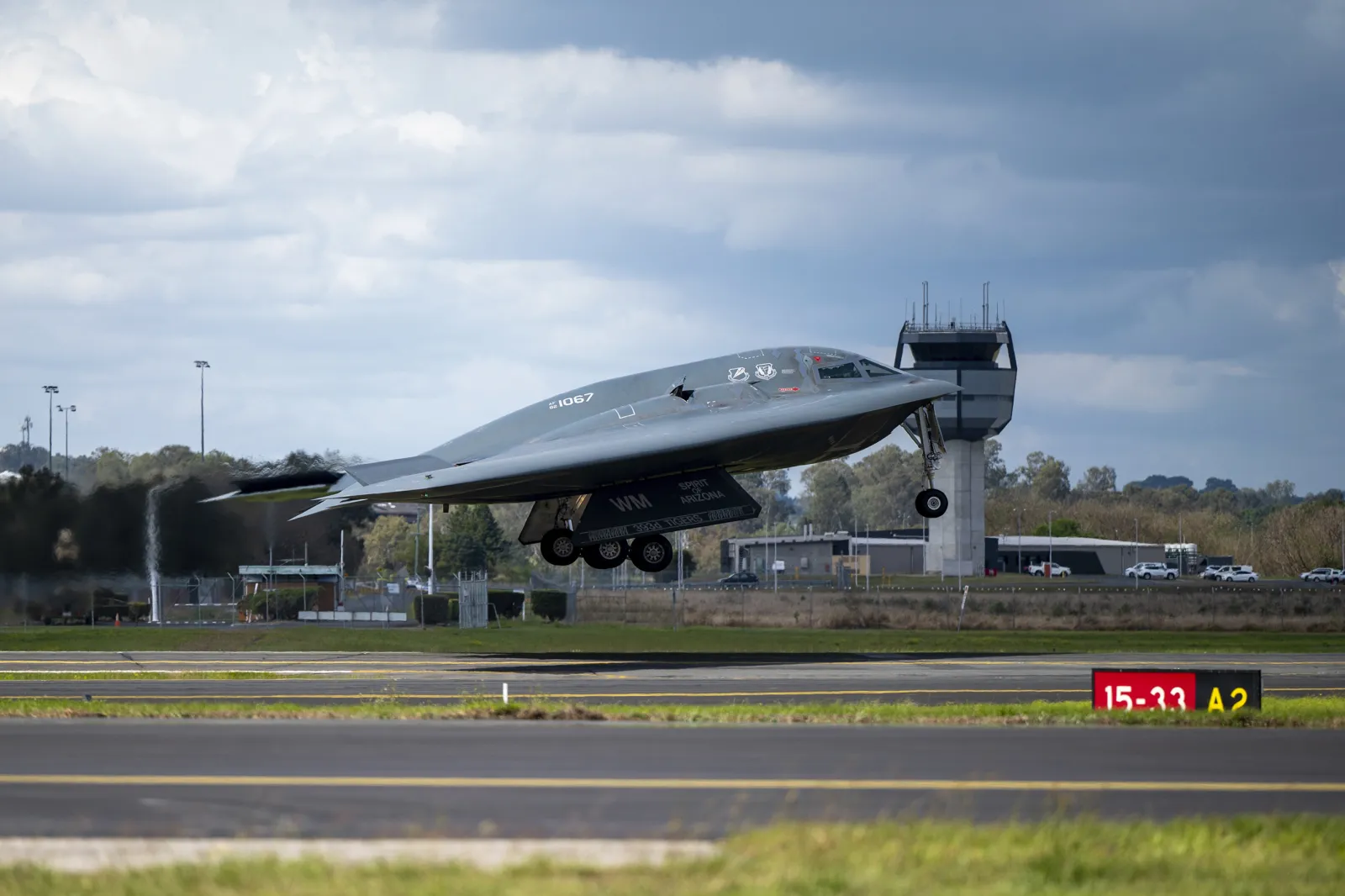
U.S. B-2 stealth bombers launched airstrikes early Thursday against underground bunkers used by Yemen's Houthi rebels, marking the first known use of the $2 billion aircraft in an operation of this type.
U.S. Defense Secretary Lloyd Austin described the action as a "unique demonstration of the United States' ability to target facilities that our adversaries seek to keep out of reach, no matter how deeply buried underground, hardened, or fortified."
The Houthis' al-Masirah news channel confirmed strikes near Yemen's capital, Sanaa, and the stronghold of Saada but provided no details on casualties. Austin confirmed the bombers hit "five hardened underground weapons storage locations."
Read More on News
...
The strikes also appear to have been directed as a warning to Iran, the Houthis' main supporter. The B-2 is capable of dropping the "Massive Ordnance Penetrator," vital in potential strikes on Iran's nuclear sites. U.S. Central Command reported no civilian casualties in its initial assessments.
The Red Sea has grown increasingly dangerous as the Houthis, claiming to target vessels linked to Israel or the U.S., have attacked over 80 ships with missiles and drones, sinking two and seizing another. Many of these vessels have no direct connection to the conflict, yet the rebels continue to launch attacks.
The bunkers targeted in the airstrikes are associated with known Houthi bases, which have been fortified since the Saudi-led coalition war began in 2015.

...
Analysts suggest the Houthis have expanded their underground networks, with significant support from Iran, mirroring Tehran's own reliance on this type of infrastructure.
The current conflict in the Middle East was sparked when Hamas militants breached Israel's security on Oct. 7, 2023, killing around 1,200 civilians and abducting 250 more. Israel's subsequent offensive in Gaza has resulted in over 42,000 Palestinian deaths, devastated large areas, and displaced 90% of Gaza's 2.3 million residents, according to local health authorities.
Iran FM meets Egyptian President
Iranian Foreign Minister Abbas Araghchi made a rare visit to Egypt on Thursday.
Araghchi met with Egyptian President Abdel-Fattah El-Sissi and other senior officials, to explore ways of de-escalating the Middle East situation, according to an official Egyptian statement reported by Associated Press.
The visit is significant given Egypt's role as the first Arab nation to make peace with Israel and its close relationship with the U.S.
Egypt has long played a crucial role in mediating between Israel and Palestinian factions, particularly Hamas. Araghchi's trip follows his visit to Jordan, another key U.S. ally, where discussions similarly focused on managing regional instability.
While the specifics of the talks remain undisclosed, the rare nature of Araghchi's visit to Cairo suggests a shared interest in preventing the conflict from spiraling into a wider regional war.
Refugee Council Warns of Humanitarian Crisis
The Norwegian Refugee Council (NRC) warned of a "new humanitarian crisis" in Syria as tens of thousands flee Lebanon amid the escalating Israel-Hezbollah conflict. Over 276,000 Lebanese and Syrian residents in Lebanon have crossed into Syria, including unaccompanied children. Angelita Caredda, NRC's regional director, emphasized that this marks the third major crisis in the region within a year, compounding existing challenges. Many refugees returning to Syria face worsening conditions as the humanitarian situation deteriorates further.
Iranian Commander Repeats Warning to Israel
The chief of Iran's Revolutionary Guard, Gen. Hossein Salami, repeated threats to Israel on Thursday, warning of more missile strikes if Israel targets Iran.
"Do not repeat your mistake—if you misbehave, if you strike anything of ours either in the region or in Iran, we will again hit you painfully," Salami said during the funeral of commander Abbas Nilforoushan, killed in Beirut.
Salami said Iran's missile barrage against Israel in October was the "tiniest" action, adding U.S. air defense systems won't prevent retaliation. "We do know about your weakness, and you know too," Salami said.

...
Israeli Strike Injures 2 in Syria
Meanwhile, Syria's military reported that an Israeli strike early Thursday hit the coastal city of Latakia, wounding two civilians and damaging a military post.
The statement, carried by state media, provided no additional details about the strike or the extent of the damage.

...
Israel frequently targets military sites in Syria linked to Iran and Hezbollah. These strikes have increased following exchanges of fire along the Lebanon-Israel border, which began in October 2023.
Hezbollah has attacked Israeli posts in support of Palestinians and its ally, Hamas. The situation has escalated, with Israel launching a ground invasion of southern Lebanon on October 1.
This article includes reporting from The Associated Press
View 0 Comments
Submit Correction
View Editorial & AI Guidelines