...

By Lauren Giella
Senior Reporter
0
Share
Newsweek is a Trust Project member
See more of our trusted coverage when you search.Prefer Newsweek on Googleto see more of our trusted coverage when you search.
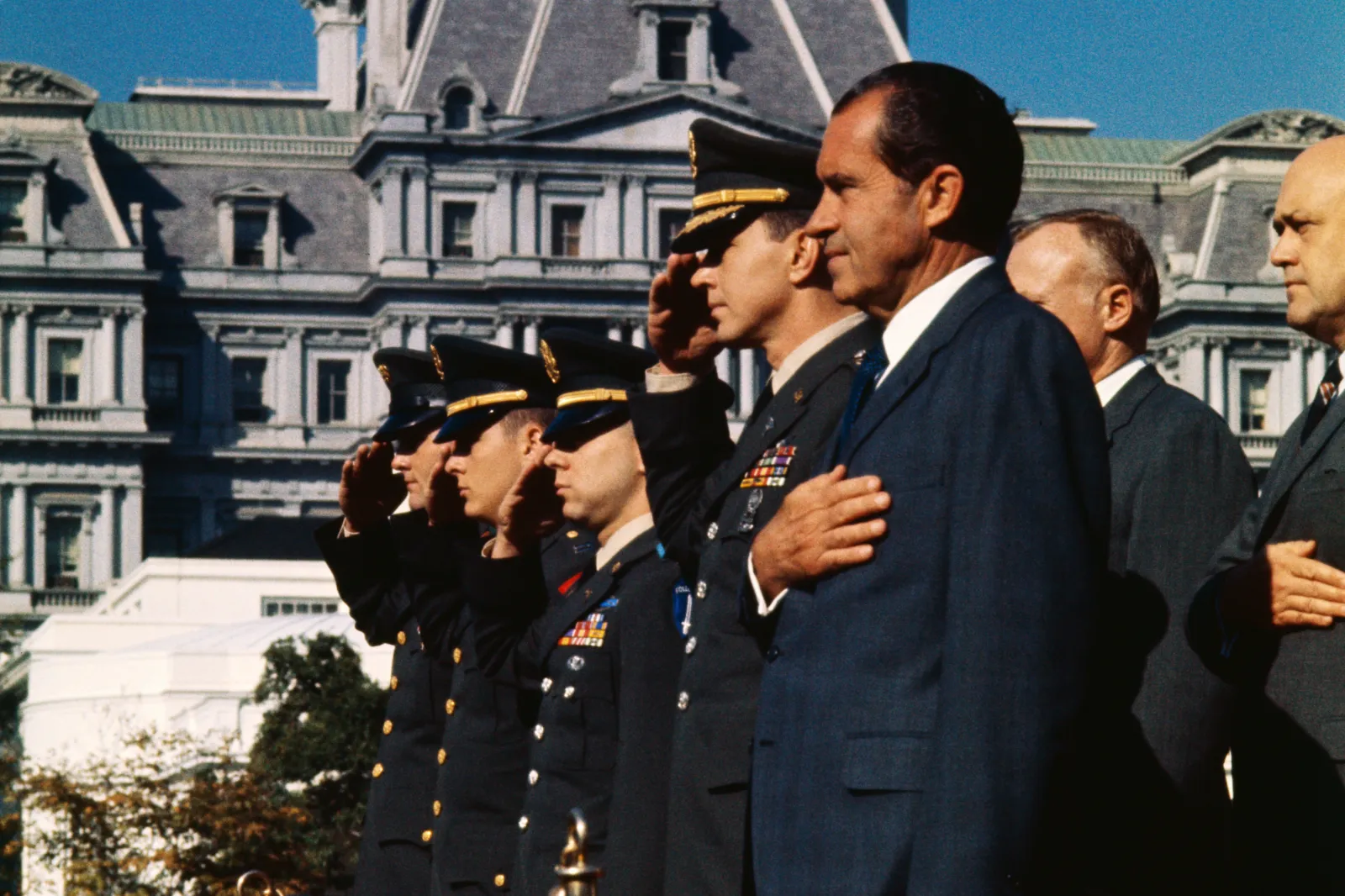
During his Medal of Honor ceremony on October 9, 1969, Col. Jack Jacobs remembers meeting fellow recipient Gen. Jimmy Doolittle, an aviation pioneer who, among his notable accomplishments, led a bombing raid against Japan in 1942, in retaliation for the attack on Pearl Harbor.
“He came up to me after the dinner, put his arm around my shoulder and said, ‘Let me tell you something, young man. You're no longer Jack Jacobs, you're Jack Jacobs, Medal of Honor recipient. And you better act accordingly,’” Jacobs told Newsweek. “And he was right.” As a Medal of Honor recipient, he added, “you represent the efforts of the millions of people who came before you, who gave us the freedom we enjoy now.”
It was, in effect, Jacobs's induction—not into an honor he'd already earned weeks earlier, alone, but into a society of people who carry the same one. Doolittle could have told him almost anything that night. Instead, he made it personal, recipient to recipient.
Read More
250 Great American Heroes2 min read

A War on Two Fronts: Delayed Justice for Medal of Honor Recipients 8 min read

Battlefield to the Big Screen: The Real Stories of Hollywood’s Heroes 4 min read


...
Today, there are 65 living Medal of Honor recipients, men who served in the wars in Korea, Vietnam, Iraq, Afghanistan and, most recently, Operation Absolute Resolve in Venezuela. “We’re all different and we are really a cross-section of this country,” Jacobs said. “We’re all different, and yet we have this common bond—not of the medal per se, but of the obligation to make sure everybody understands the values that made this country great.”
What connects them isn't only what each of them did to earn the accolade. It's what each of them has had to learn, separately, about living with it—and the fact that only 64 other people now on Earth have shared the same lesson.
Ask a recipient what the medal means to him, and the answer you’ll often hear points outward, to those who can’t wear it, those who lost their lives, those who never came home and those who committed brave actions but never got the recognition.
...
When many of today’s Vietnam-era recipients first joined the society of the Medal of Honor, there were hundreds of members, many of them WWII veterans in their 40s or 50s, young and spry enough to travel around the country to gather together for commemorative and speaking events. These days, most of those in the fraternity of living recipients are in their 80s.
Each of their stories is singular in its place in American history. What holds them together is each other.
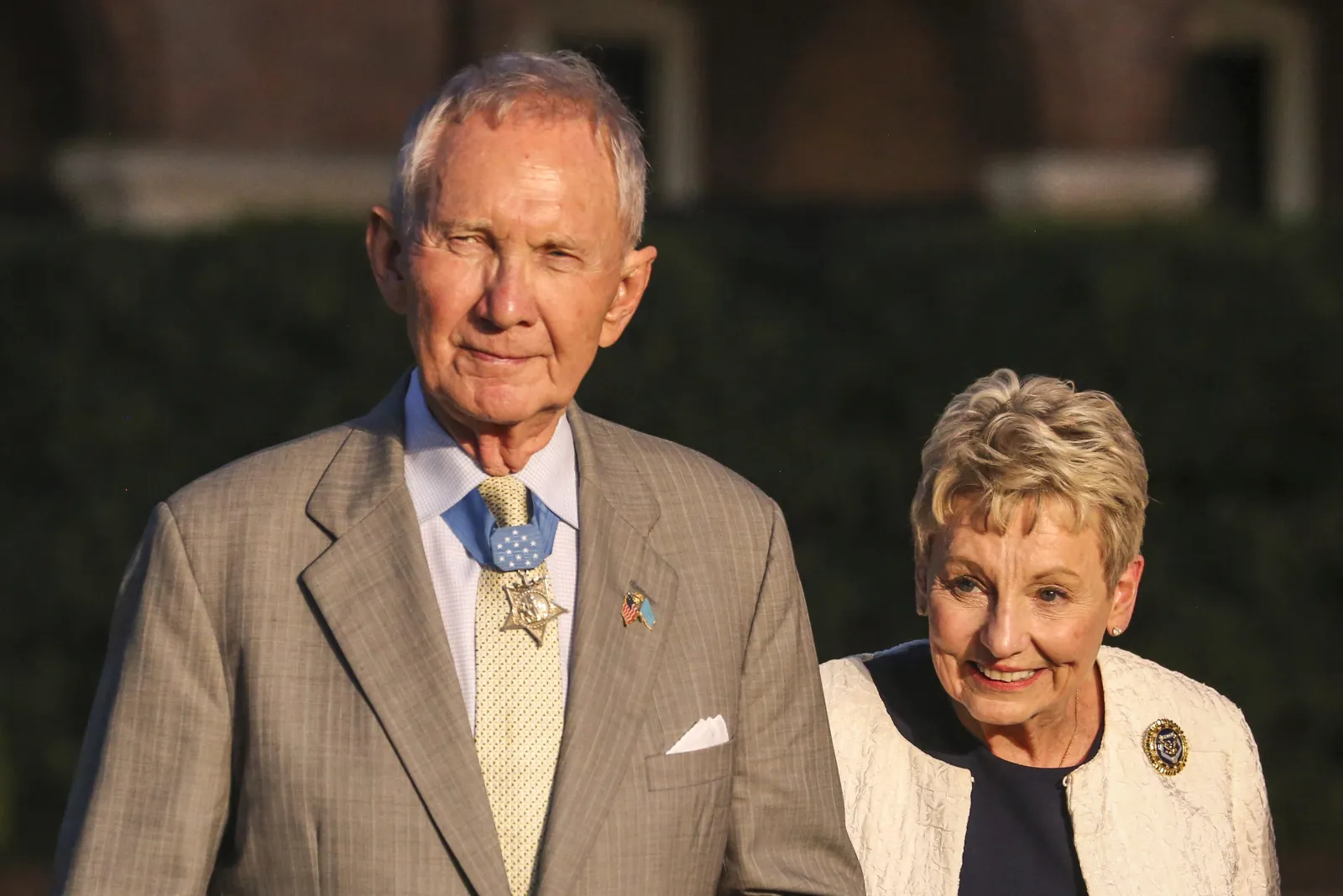
For James Livingston, the day he earned his Medal of Honor was just one day in his long life. “I didn't let the medal define my life,” he said. “I wanted to be a Marine and be respected for what I'm doing that day, not what I did on May 2, 1968.” He told Newsweek that he’s proud to be a recipient of the country’s highest award for valor—and proud to represent the Marines who “didn't have a chance to come home and be fathers and grandfathers.”
...
t would be understandable for these Medal of Honor recipients, who demonstrated immense bravery in combat, to quietly settle into civilian life. Life after service can be difficult— many arrived home to anti-war sentiment as they adjusted to the challenges of starting over as a civilian—but coming home as a medal recipient is just the beginning of a new form of service.
National Medal of Honor Museum Foundation Executive Vice President Cory Crowley said living recipients are generous with their time, advocating for veteran support, attending memorials, military ceremonies and fundraisers, speaking to schools and community organizations and giving talks at the museum. “Their firsthand perspective is important,” he said. “I think that's a great testament to their character.”
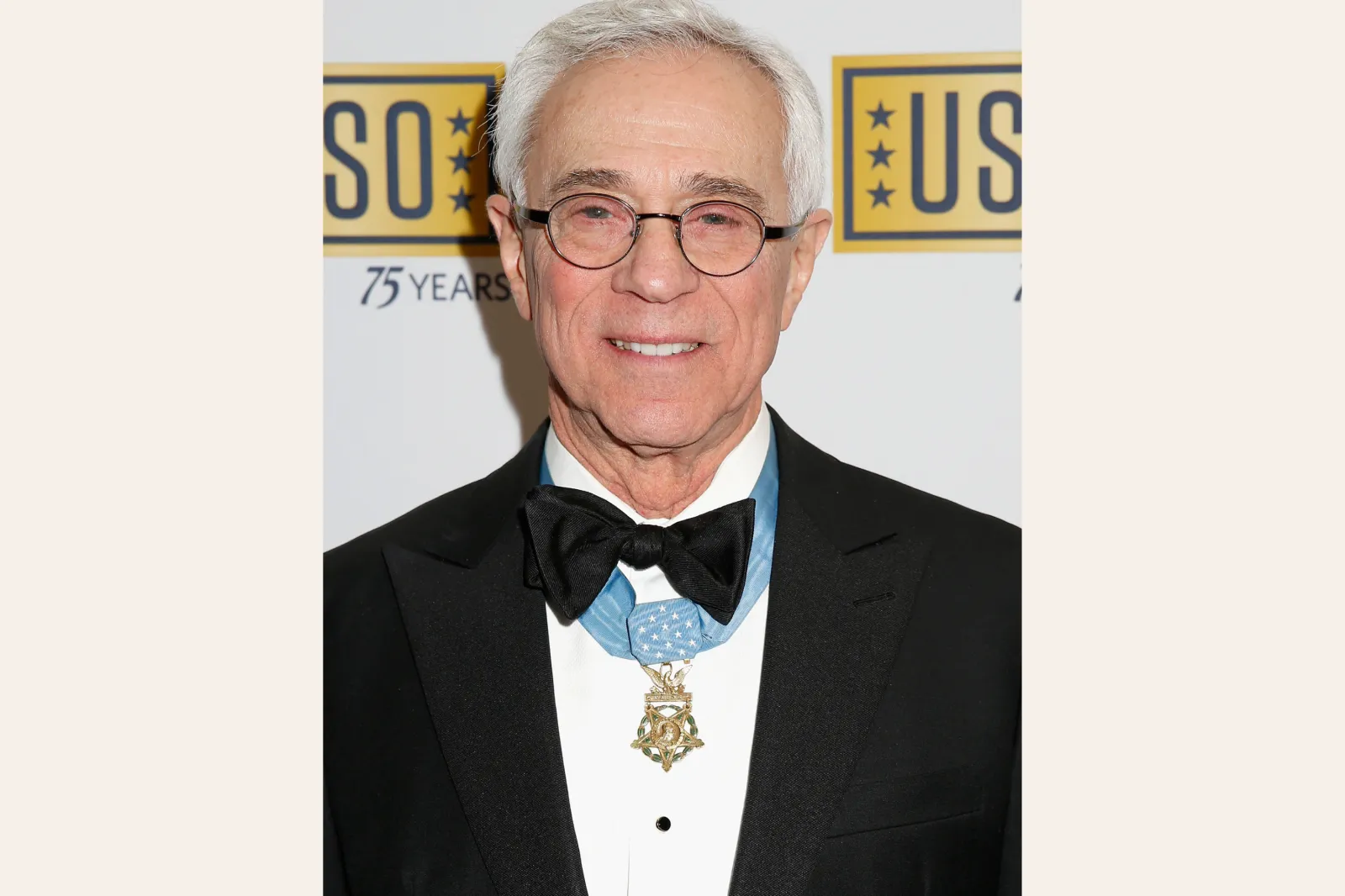
After earning his Medal of Honor as a medic in Vietnam, Jim McCloughan returned to the job he had been preparing for before the war: a teacher and coach at South Haven High School in Michigan, where he remained for 40 years, earning other honors like being named to the Michigan High School Coaches Hall of Fame. He said he’s dedicated his civilian life to preparing kids for “their Vietnam,” whatever that may be.
Today, at age 80, he is the chairman of the Medal of Honor Character Development Program, a free program designed to teach primary and secondary school students how to build strong character, leadership skills and embrace the spirit of community service. The program centers on the six core values of the Medal of Honor: courage, commitment, integrity, sacrifice, citizenship and patriotism.
“Isn't it funny that the worst things that happened become the best lessons?” he said. “I want these kids to be the next generation that can hold these 250 years that we've already had and then pass that on to the next generation."
...
The values are teachable. What it actually feels like to receive the medal is harder to put into words. "It's very difficult to describe," Jacobs said. “It's harder to harder to wear the medal than it is to earn it.”
List of Living Medal of Honor Recipients
John P. Baca, Army — Vietnam War
Donald E. Ballard, Navy — Vietnam War
Harvey Curtis "Barney" Barnum Jr., Marine Corps — Vietnam War
David G. Bellavia, Army — Iraq War
Dwight W. Birdwell, Army — Vietnam War
Patrick H. Brady, Army — Vietnam War
Edward C. Byers Jr., Navy — Afghanistan War
James Capers Jr., Marine Corps — Vietnam War
William K. Carpenter, Marine Corps — Afghanistan War
Ty M. Carter, Army — Afghanistan War
Kenneth J. David, Army — Vietnam War
Paris D.Davis, Army — Vietnam War
Sammy L. Davis, Army — Vietnam War
Drew D. Dix, Army — Vietnam War
Nicholas Dockery, Army — Afghanistan War
John J. Duffy, Army — Vietnam War
Frederick E. Ferguson, Army — Vietnam War
Michael J. Fitzmaurice, Army — Vietnam War
James P. Fleming, Air Force — Vietnam War
Robert F. Foley, Army — Vietnam War
Harold A. Fritz, Army — Vietnam War
Dennis M. Fujii, Army — Vietnam War
Salvatore A. Giunta, Army — Afghanistan War
Florent A. Groberg, Army — Afghanistan War
Robert R. Ingram, Army — Vietnam War
Jack H. Jacobs, Army — Vietnam War
Don Jenkins, Army — Vietnam War
Thomas G. Kelley, Navy — Vietnam War
Allan J. Kellogg Jr., Marine Corps — Vietnam War
Joseph R. Kerrey, Navy — Vietnam War
Peter C. Lemon, Army — Vietnam War
Gary L. Littrell, Army — Vietnam War
James E. Livingston, Marine Corps — Vietnam War
Allen J. Lynch, Army — Vietnam War
Walter J.Marm Jr., Army — Vietnam War
James C. McCloughan, Army — Vietnam War
Dakota L. Meyer, Marine Corps — Afghanistan War
Robert J. Modrzejewski, Marine Corps — Vietnam War
Melvin Morris, Army — Vietnam War
Thomas R. Norris, Navy — Vietnam War
Robert E. O’Malley, Marine Corps — Vietnam War
Robert M. Patterson, Army — Vietnam War
Thomas P. Payne, Army — Iraq War
Leroy A. Petry, Army — Afghanistan War
Ryan M. Pitts, Army — Afghanistan War
Earl D. Plumlee, Army — Afghanistan War
Alfred V. Rascon, Army — Vietnam War
Ronald E. Ray, Army — Vietnam War
Terry P. Richardson, Army — Vietnam War
Gordon R. Roberts, Army — Vietnam War
José Rodela, Army — Vietnam War
Clinton Romesha, Army — Afghanistan War
Gary M. Rose, Army — Vietnam War
Britt L. Slabinski, Navy — Afghanistan War
Eric. A Slover, Army — Venezuela (Operation Absolute Resolve)
James M. Sprayberry, Army — Vietnam War
William D. Swenson, Army — Afghanistan War
James A. Taylor, Army — Vietnam War
Brian M. Thacker, Army — Vietnam War
Michael E. Thornton, Navy — Vietnam War
Jay R. Vargas, Marine Corps — Vietnam War
Gary G. Wetzel, Army — Vietnam War
Kyle J. White, Army — Afghanistan War
Elmer R. Williams, Navy — Korean War
Matthew O. Williams, Army — Afghanistan War
Read more in our cover story about the Medal of Honor, our stories on the history of discrimination that delayed Medal of Honor recognition and the Medal of Honor in film; and see our gallery of 250 recipients
View 0 Comments
Submit Correction
View Editorial & AI Guidelines