
By Soo Kim
Reporter
0
Share
Newsweek is a Trust Project member
See more of our trusted coverage when you search.Prefer Newsweek on Googleto see more of our trusted coverage when you search.
New York City's iconic status as a global hub for culture, commerce and opportunity has also long come with an unmistakable "gritty" image.
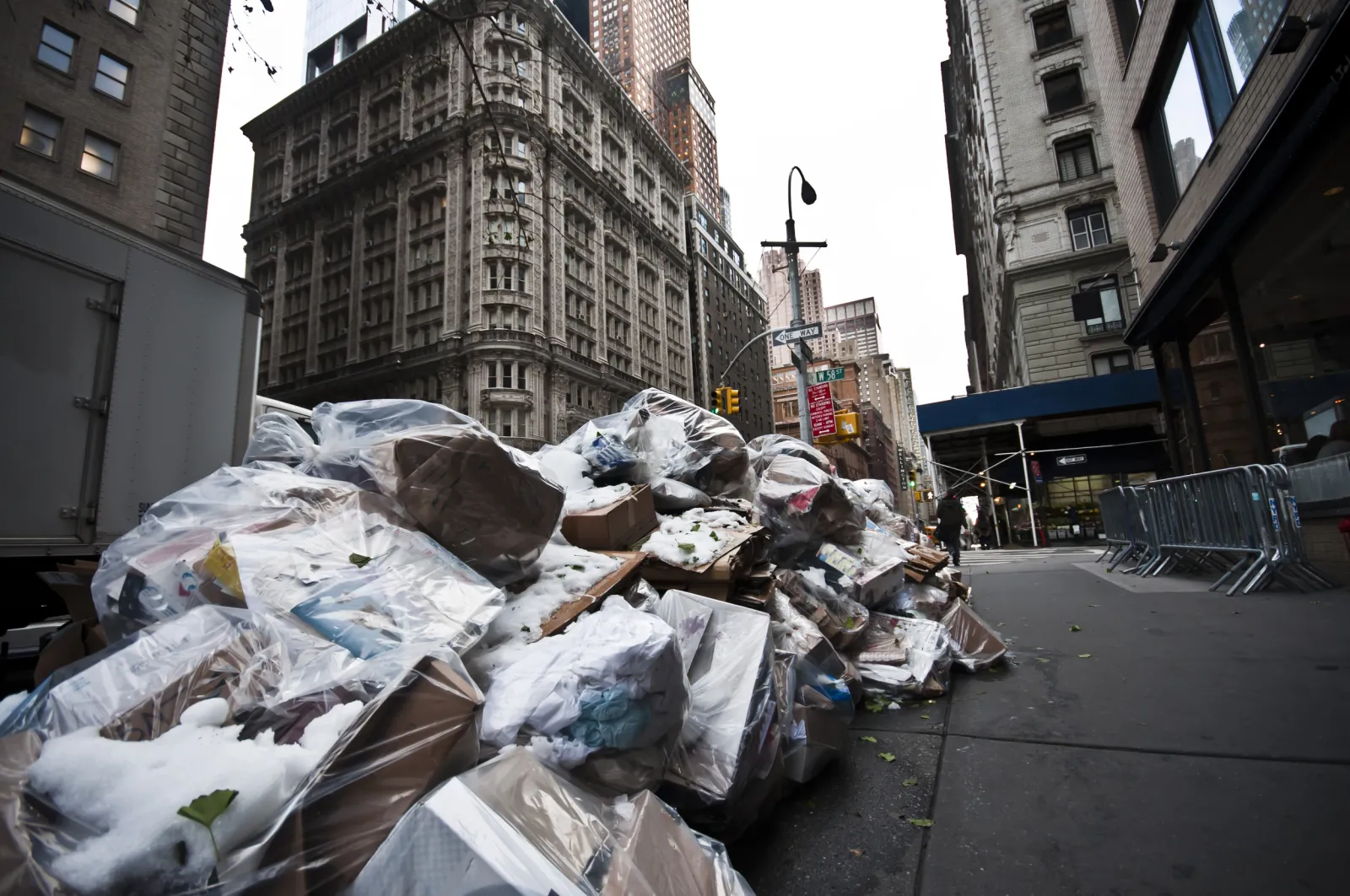
The New York-Newark-Jersey City metropolitan area was recently ranked as the "dirtiest" among the nation's 35 largest metro regions, and one New York City resident told Newsweek that the city's issues with sanitation, accountability, and infrastructure are getting worse.
The recent study, conducted by Oxi Fresh, a carpet cleaning company, graded each metro area based on several key indicators of cleanliness, including air and water quality, rodent and cockroach infestation, litter and vandalism, and population density.
Read More on Travel
The New York-Newark-Jersey City metro area earned the lowest possible grade—a "D"—and ranked last overall.
"New York City has struggled with waste removal for centuries, due largely to a lack of back alleys for trash bins," the study explained. "As a result, it's now notorious for its rampant rat infestations, though many efforts have been made in recent years to combat the problem."
Last month, New York City reported a drop in rat sightings, compared with the same month last year, since residential trash container requirements went into effect six months earlier.
A spokesperson for the New York City Department of Sanitation told Newsweek: "In the last two years, we have gone from zero requirements to put trash in containers to now 70 percent of trash being in containers, including all food waste."
However, New York City resident Amore Philip—who has lived in the Big Apple, specifically in the borough of Brooklyn, for over 30 years—told Newsweek that she was "not at all" surprised by the city's recent ranking.
"While New York City offers incredible culture, diversity, and opportunity, the sanitation issues are glaring, especially in densely populated or underserved neighborhoods," said Philip, who is the founder of Apples & Oranges Public Relations.
"A significant part of the problem lies in mindset and accountability. There are countries, even developing ones, that are far cleaner than NYC simply because people take pride in their environment."
...
Philip compared New York to where she is from, the Caribbean island of Barbados, which she says "maintains an impressively clean public space despite having a fraction of the resources."
New York City has been "ushering in a new era of clean sidewalks, clear corners, and fewer rats," the city's sanitation department said, following the installation of around 1,100 on-street containers for residential trash from its largest buildings.
Manhattan's West Harlem area became the first neighborhood in North America to have 100 percent of their trash "fully containerized," the department noted in June.
The latest improvements formed part of New York City Mayor Eric Adams' "Trash Revolution," which kicked off in October 2022. It aimed to move trash "from black bags on the sidewalk to rat-resistant, closed containers," the department said.
All businesses in the city have been required to put their trash in bins since March 2024, and, since November 2024, all buildings with one to nine residential units are required to use bins.
In May, Mayor Adams committed over $32 million in permanent funding for the sanitation department to help "protect the cleanliness and quality of life of city neighborhoods for generations to come," the department said.
Philip said that, among the most persistent and visible issues in New York City, is the prevalence of dog waste on sidewalks.
"It's everywhere, some neighborhoods more than others. Many pet owners fail to pick up after their dogs, especially in residential areas, which contributes to the overall feeling of neglect," she added. "It's not just unpleasant—it's unsanitary, it's grotesque, and it sends a message that public spaces are no one's responsibility."
Philip said that while the city's gritty image is part of its character, the underlying realities are difficult to ignore.
"There's a difference between 'gritty' and truly unsanitary. New York City has long been known for its gritty charm. Still, the reality is that aging infrastructure, inconsistent sanitation services, and a lack of enforcement regarding littering all contribute to the city's perceived dirtiness," she explained. "The perception isn't entirely off—it's rooted in visible daily realities."
During warmer months, sanitation problems become even more apparent, according to Philip.
"The sidewalks, overflowing trash bins, and rat problems in specific neighborhoods are significant concerns," she said. "During the summer, the smell and garbage buildup become even more intense."
As the owner of a public relations firm, Apples & Oranges, Philip said these problems aren't just an inconvenience—they affect her business, too.
"As a business owner, I've had to plan around street cleanliness when organizing events or photoshoots," she noted. "It impacts not just daily quality of life but also how visitors perceive the city."
Do you have a travel-related video or story to share? Let us know via life@newsweek.com and your story could be featured on Newsweek.
Update 07/14/25, 8:24 a.m. ET: This article was updated with comment from the New York City Department of Sanitation.
View 0 Comments
Submit Correction
View Editorial & AI Guidelines