10
Loading video...

By Mandy Taheri
Reporter
0
Share
Newsweek is a Trust Project member
See more of our trusted coverage when you search.Prefer Newsweek on Googleto see more of our trusted coverage when you search.
President Donald Trump on Monday doubled down on his support for data centers, warning that communities that reject the projects risk becoming "backwards and poor," even as a growing number of Republicans have backed restrictions, moratoriums and other measures aimed at slowing their expansion and giving local communities a greater role in the approval process.
Trump has argued that data centers bring jobs, investment and tax revenue, and has cast the facilities as critical to the United States' competition with China. Representative Tim Burchett, a Tennessee Republican, told MeidasTouch in response to Trump’s post on Monday: “I guess I’m backwards and poor.”
Despite Trump’s stance, a growing number of Republican elected officials and candidates have publicly distanced themselves from that position, reflecting mounting voter concerns over rising electricity costs, water consumption, tax incentives and the impact of massive server farms on local communities. The pushback has come from governors, senators and House members, including some who previously welcomed data center development before calling for new restrictions, moratoriums or stronger local oversight.
Read More on Politics
The divide highlights a potentially emerging fracture inside the Republican Party ahead of the 2026 midterms. While Trump continues to champion rapid AI expansion, many GOP candidates in competitive races have begun embracing restrictions or consumer protections as public opposition to data centers has grown.
Newsweek reached out to the White House and Burchett for comment via email on Tuesday.

...
What To Know
In his Monday post on Truth Social, Trump described data centers as a key driver of future prosperity and warned against what he called the "anti-Data Center movement."
Trump's comments come even as polls suggest skepticism about data centers extends to many of his own supporters. An Economist/YouGov poll conducted August 21-24 found that 47 percent of 2024 Trump voters opposed having a new data center built in their community, compared with 35 percent who supported one. A majority, 52 percent, also said a local data center would likely drive up power bills.
Opposition to data centers extends beyond Trump's political base. A Gallup survey conducted in March found that 7 in 10 Americans opposed building a data center in their local area. Meanwhile, a July Politico poll found 41 percent would oppose a facility within three miles of their home, up from 28 percent in January.
Critics have raised concerns about noise, pressure on power grids, rising utility bills and the environmental impact of meeting the industry's growing energy demands. Yet tech giants including Meta, Microsoft, Amazon and Google continue racing to build massive facilities to support AI development and cloud services.
Related Story
What It’s Really Like to Live Next to a Data Center
A growing number of Republicans have adopted a more skeptical tone toward data centers as public opposition to the facilities has increased nationwide, particularly in the lead-up to the midterm elections. According to an analysis by The Washington Post, GOP officials' public comments on the issue have become significantly more negative over the past six months. The study reviewed thousands of social media posts and newsletters from hundreds of politicians in both major parties since April 2024.
Industry estimates there are more than 3,000 data centers nationwide, with major concentrations in states including Virginia, Texas, California, Ohio and Arizona.
Data centers in seven major U.S. states depend on an estimated 3.4 trillion gallons of freshwater annually through the electricity they use, according to a new study by sustainability nonprofit Ceres.
List of Republicans Publicly Opposing AI Data Centers

...
Representative Tim Burchett
Burchett suggested some data centers could be located on military installations instead of near residential communities and argued that public concerns have been fueled in part by a lack of information and education. Burchett said officials had done a "poor job educating the public" about data centers.
"We need more local control. We should have brought everybody to the table," Burchett said, while also pointing to measures such as recycled-water use that developers have reportedly adopted in some sites.
Senate Nominee Mike Rogers
Michigan Republican Senate nominee Mike Rogers has called for a one-year statewide moratorium on new data center construction. The former congressman has argued that Michigan should pause new projects while policymakers evaluate their impact on local communities, energy infrastructure and utility costs, saying the projects should be halted “until we establish a fair, transparent approval process that puts local communities first.”
“While I don’t support a federal ban, Michigan needs stronger guardrails to protect community control, prevent utility price hikes, protect our water and stop pay-to-play schemes,” Rogers added, The Hill reported.
Rogers is in a tight matchup against Democratic nominee Abdul El-Sayed for the open Senate seat in Michigan.
Newsweek reached out to Rogers' press team for comment via email on Tuesday.

...
Representative Tom Barrett
In campaign messaging, Republican Representative Tom Barrett of Michigan has highlighted his willingness to challenge fellow Republicans on data center policy, stating in an August ad that “I stood up to my own party" on data centers.
The congressman has also pushed for legislative action to strengthen local authority over data center projects, introducing two bills in August that prohibit federal agencies from overriding local decision-making processes about data centers.
"Specifically, the two bills would protect local control by prohibiting the federal government from overriding local zoning decisions and banning members of Congress from signing non-disclosure agreements related to data center projects," his team said in a press release announcing the Protecting Local Control of Data Centers Act and No Data Center NDAs Act.
“People in mid-Michigan are tired of big corporations and politicians negotiating backroom deals, especially when it comes to data center projects that impact every community differently,” he said in the press release.
“Families in my district are rightly concerned about the effect data centers could have on their utility bills, as well as the land and water in their neighborhood. They deserve to know all the facts and have the final say over any proposed project. That starts with stopping federal overreach and preventing the secrecy pledges that have plagued Michigan and undermined the power of local residents," he added.
Newsweek reached out to Barrett's press team for comment via email on Tuesday.

...
Governor Greg Abbott
Texas Governor Greg Abbott, who is up for reelection in November, has shifted from promoting Texas as a hub for artificial intelligence investment to calling for tougher oversight of data center development. While Abbott has not opposed data centers outright, he has argued that the industry needs stronger guardrails and greater engagement with residents affected by proposed projects.
The governor's position has put him at odds with Trump, who criticized Texas' more restrictive approach in an interview with Punchbowl News last month, with the president saying "for Texas to say no to data centers is a mistake" and arguing the industry could become "bigger than oil." Trump added that "if we turn off on data centers and we turn off on AI, we aren't leading" globally.
Speaking on ABC News' This Week, Abbott said many projects had moved forward with little coordination with local residents or government officials, fueling concerns about electricity demand, water consumption and community impacts. He argued that data center developers contributed to the backlash by failing to engage adequately with the communities where they planned to build.
"They basically dug their own grave for the problem that's been caused for them and that's why they got the backlash they deserve," Abbott said. He added that Texas has paused progress on some new data center projects while the state develops statewide standards.
Newsweek reached out to Abbott's press team for comment via email on Tuesday.

...
Senator Jon Husted
Ohio Senator Jon Husted, who is also on the ballot this November in a closely watched special Senate election against former Democratic Senator Sherrod Brown, has taken a more measured approach to the data center debate than Trump.
The Republican senator has argued that communities should weigh the economic benefits of data centers against local concerns, noting that some Ohio communities that embraced the projects have seen significant new tax revenue and lower property taxes.
More recently, however, Husted has acknowledged growing public concerns about the industry's impact on electricity costs and utility infrastructure. He has argued that data center operators should bear the costs associated with their energy needs rather than passing them on to ratepayers. Husted told Ohio Statehouse News Bureau that data center companies have done "a terrible job of talking about the value and virtue" of their projects and said they have "earned that backlash."
While supporting the economic benefits data centers can bring, Husted said decisions about new projects should ultimately rest with local communities rather than the federal government. "The state government has a little bigger role in that, but local governments and local residents are the ones that should make those choices," he said.
In July, Husted introduced The Ratepayer Protection Act, legislation aimed at preventing utility customers from shouldering costs associated with new data center development. His office said the measure would "protect Americans from footing the bill for new data centers."
Husted was appointed to the Senate in 2025 to fill the seat vacated by Vance and is now seeking voter approval to serve out the remainder of the term in a race widely viewed as one of the country's most competitive Senate contests.
“More than any other thing in this race, data centers are the anchor hanging around Husted’s neck,” the National Republican Senatorial Committee wrote in a memo last week, first reported by Axios.
Newsweek reached out to Husted's press team for comment via email on Tuesday.

...
Gubernatorial Nominee Stacy Garrity
Earlier in her gubernatorial campaign, Pennsylvania Treasurer Stacy Garrity touted Pennsylvania's potential to become a leader in artificial intelligence and data center development, arguing the state had room for additional projects, particularly in rural areas.
She has maintained that she is not out of step with the president on the matter, saying during an August press conference, "If you're trying to infer I'm out of line with the president [on data centers], I don't think I am."
However, Garrity has called for a pause on data center development and emphasized that local communities should have a greater role in determining whether projects move forward, taking aim at her opponent, Governor Josh Shapiro, over data centers. Speaking at several public forums, she argued that residents, local officials and other stakeholders should have "a seat at the table" before major developments are approved.
While not a full moratorium on data centers, Garrity has said, "I don’t think a full moratorium is necessary. So a moratorium is full stop for a defined period of time. And I’m saying a pause is, I mean this could be very simple. You get everybody together, all of the leaders, and you figure out what we need to do to make sure that there’s model zoning...that we could share."

...
Representative Tom Tiffany
Representative Tom Tiffany of Wisconsin, the Republican nominee for governor, has pledged to end tax breaks for data centers and has repeatedly highlighted concerns about their impact on local communities.
He has branded his opponent, Democrat David Crowley, as "data center David Crowley" in campaign ads, alleging he isn’t strong enough against data centers. In a statement, Tiffany said, “My priority is protecting Wisconsin families, taxpayers, farmland, and water, not turning our state into a data center hub for the ‘entire globe."
He continued, “There should be no new data centers without strong standards to protect Wisconsin. If we pave over productive farmland and drive up demand on our electric grid, families will pay the price through higher food and utility costs.”
Newsweek reached out to Tiffany's press team for comment via email on Tuesday.

...
Representative Nancy Mace
South Carolina Representative Nancy Mace has also criticized the expansion of data centers, particularly when development involves eminent domain.
She told Newsweek in an email on Tuesday: "Every massive data center puts more strain on our grid and leaves ratepayers stuck with the tab, not to mention some of them are having their property stolen by the government to build them.
"We will not support families footing the bill for massive energy demands from billion-dollar tech companies. We called for a one-year moratorium to get this right. The rule is simple: Big Tech pays its own way. It’s that simple.”
In a June social media post, Mace wrote: "Eminent domain is government theft. I am NOT letting Big Tech steal our homes for their ugly data centers."
"I warned about these costs long before the media turned this into a national conversation," she said in a statement to The Washington Post.
In May, she backed a pause on new data center construction in her state. She said, “These companies are planting massive data centers across our state, driving up energy demand, and leaving families and small businesses to pick up the tab."

...
Why Is There Opposition to AI Data Centers?
Opposition to AI data centers has grown as communities raise concerns about their impact on electricity costs, power grids, noise pollution, water supplies and local infrastructure. Critics also argue that residents often have limited input on projects that can significantly alter surrounding communities. More than 500 jurisdictions across the U.S. have banned data center construction, according to analysis by The Information.
“You work all day, and you come home, and you can’t even get three hours of peace and quiet,” Charcie Chavis, a resident living in Conover, North Carolina next to a new Microsoft data center development, previously told Newsweek in July. “At 2:30 in the morning, they’re gonna be out here.”
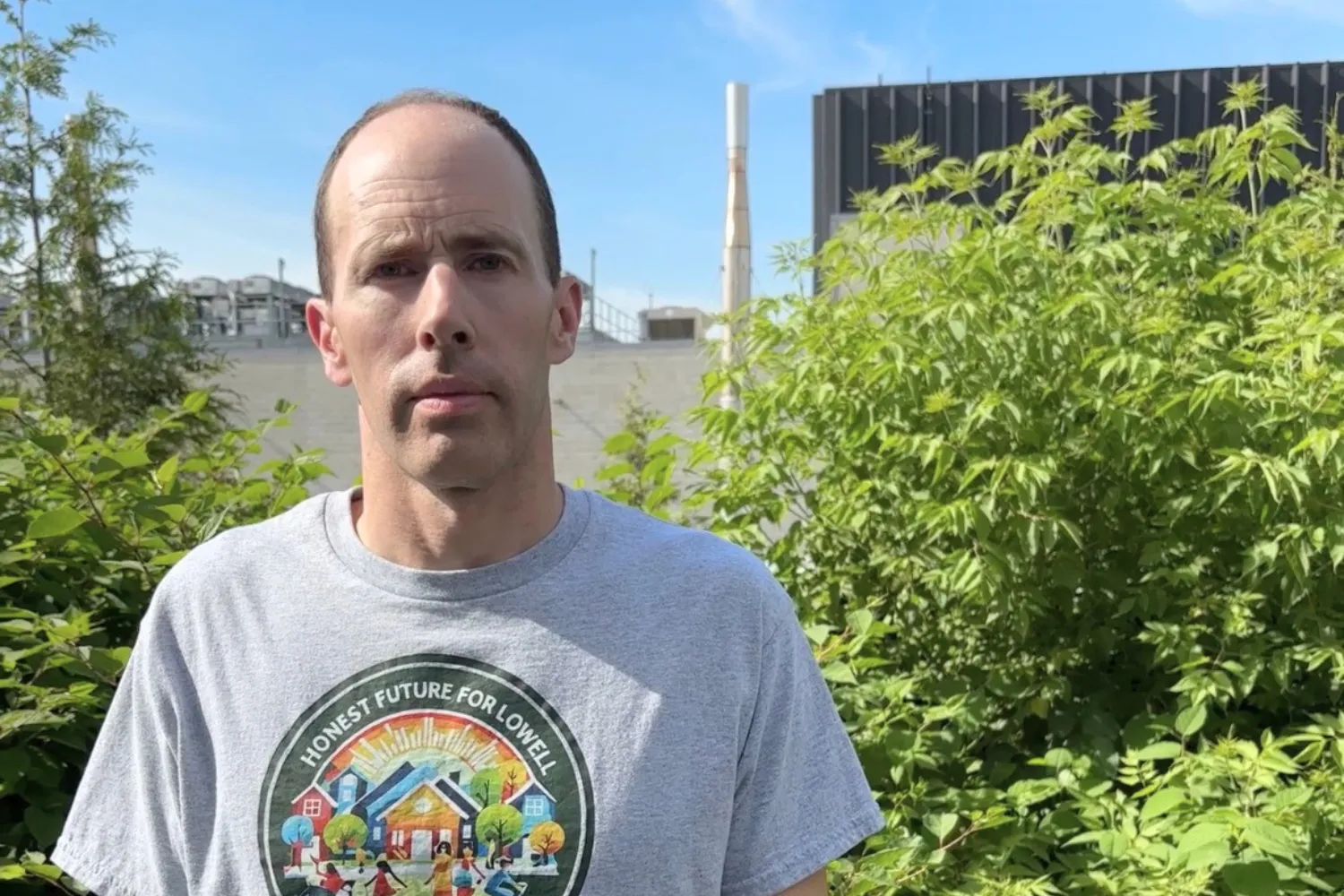
Jake Fortes, who lives in Lowell, Massachusetts, said the completion of a center didn't stop the noise near him. Cooling systems and infrastructure run day and night, he said, producing a sound that rises and falls unpredictably. “It’s like just putting a jet engine next to you in bed,” Fortes previously told Newsweek, describing how surges in noise can wake him during the night.
Mid-sized data centers can use up to 300,000 gallons of water for cooling every day, while larger ones can reach up to 5 million gallons daily, according to estimates by the Environmental and Energy Study Institute. Five million gallons daily is equivalent to the water use of a town with a population between 10,000 and 50,000. Excessive water consumption is a concern, as many communities already face limited resources and drought conditions.
Supporters, meanwhile, argue that data centers can create jobs, attract billions of dollars in private investment and generate tax revenue for local governments. They also contend the facilities are critical to supporting artificial intelligence development and helping the United States remain competitive with China in emerging technologies.
Contact Newsweek editors on this story: Jason Lemon, Gray R. Thomas, Dave Siminoff, Sam Wilson.
View 0 Comments
Submit Correction
View Editorial & AI Guidelines