...


By Dan Gooding and Gabe Whisnant
0
Share
Newsweek is a Trust Project member
See more of our trusted coverage when you search.Prefer Newsweek on Googleto see more of our trusted coverage when you search.
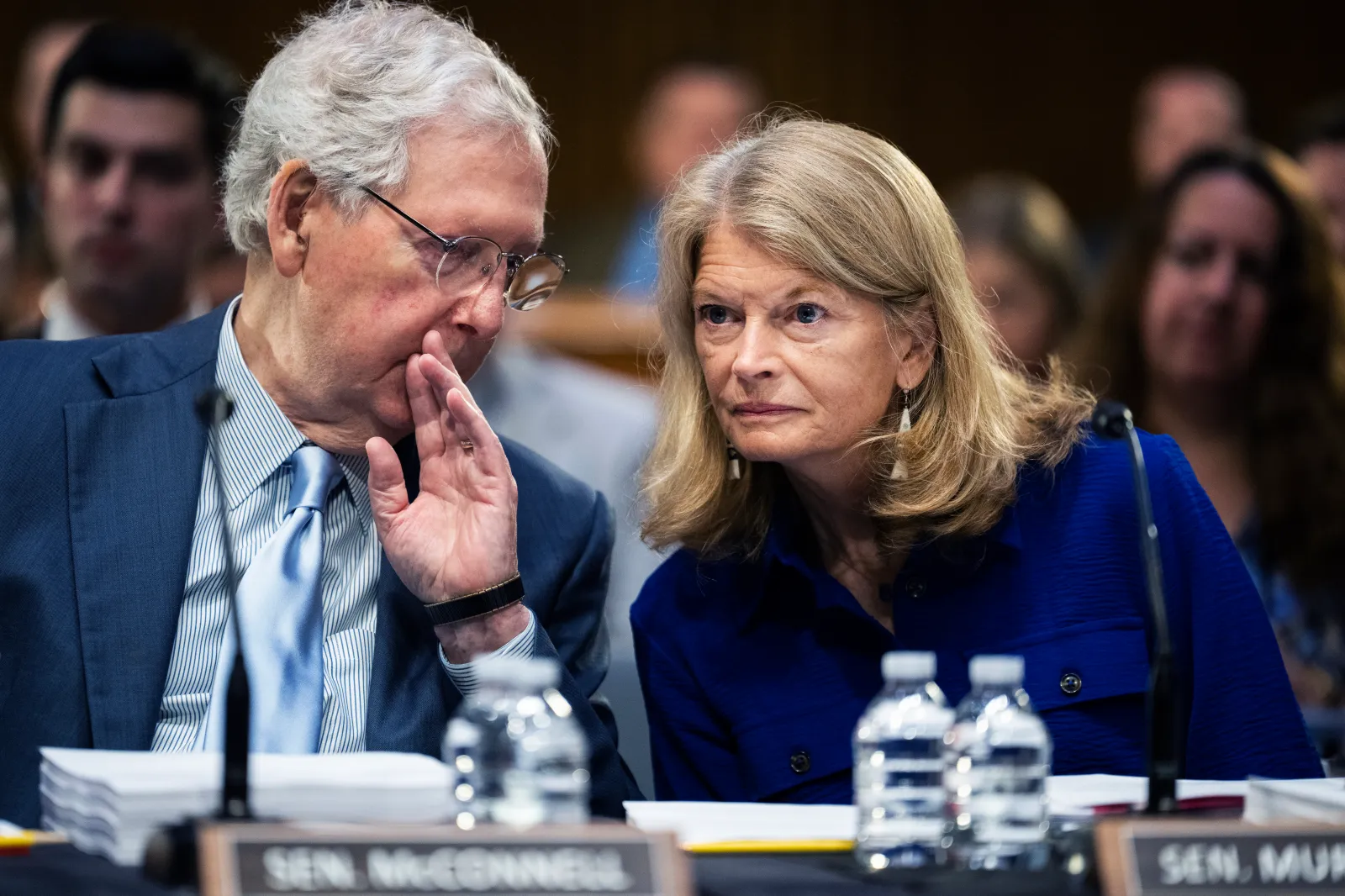
Republican Senator Lisa Murkowski of Alaska is breaking with President Donald Trump and much of her party over the Trump-backed SAVE Act, warning that it amounts to unconstitutional federal overreach.
In a pointed statement on X, Murkowski said Republicans were unanimous in opposing Democratic election reforms in 2021 precisely because they would have federalized elections. She argued that proposals like the SAVE Act now do the same, undermining states’ constitutional authority to regulate the administration of federal elections.
"Once again, I do not support these efforts," the senator wrote Tuesday. "Not only does the U.S. Constitution clearly provide states the authority to regulate the 'times, places, and manner' of holding federal elections, but one-size-fits-all mandates from Washington, D.C., seldom work in places like Alaska."
Read More on News
"Election Day is fast approaching. Imposing new federal requirements now, when states are deep into their preparations, would negatively impact election integrity by forcing election officials to scramble to adhere to new policies likely without the necessary resources. Ensuring public trust in our elections is at the core of our democracy, but federal overreach is not how we achieve this," she added.
Why It Matters
Republicans, including the president, have long claimed that elections across the United States are open to mass fraud and need better regulations. This has largely stemmed from the repeatedly-debunked claims that the 2020 election was "stolen" from Trump through fake or stolen ballots, and immigrants being allowed to vote.
Congress does have the power to change how elections are administered, but the U.S. Constitution says that it is up to states, not the federal government, to determine how elections are held in their communities. This means different states have different grace periods for mail-in ballots and use different counting systems.
...
What To Know
Murkowski's comments come as Trump has pushed for election reform, including calling on Republicans to nationalize elections in multiple statements in recent weeks. Trump told former Deputy FBI Director and podcaster Dan Bongino that the GOP should take over voting in at least 15 places around the U.S., repeating his claims of election fraud.
Creating a national body to oversee elections, thereby ensuring all elections are carried out the same way, has been seen as federal overreach by some, while other experts say the idea does not match what the Constitution says.
One of the big pushes by Trump and others within the Republican Party is to introduce voter ID, meaning those registering to vote would have to prove their U.S. citizenship.
SAVE Act Explained: What Is It?
The SAVE Act (Safeguard American Voter Eligibility Act) is a proposed federal election law that would amend the National Voter Registration Act to require documentary proof of U.S. citizenship—such as a U.S. passport, certified birth certificate, REAL ID–compliant ID indicating citizenship, or naturalization papers—when registering to vote in federal elections.
It would also mandate ongoing verification of voter rolls to ensure only U.S. citizens are registered, expanding the federal government’s role in election administration.
How Does the SAVE Act Impact Voting?
Since it was proposed in 2025, the SAVE Act has received backlash from left-leaning groups. The Center for American Progress (CAP) has said the legislation would "invert the responsibility to verify a person’s eligibility and citizenship status from election officials and the government onto every single American citizen, making citizens convince the government that they’re eligible to exercise their right to vote."
According to the League of Conservation Voters, the SAVE Act would create significant barriers for many voters. In the 42 states that rely on online or mail-in voter registration, individuals would now need to appear in person even for simple updates like a change of address or party affiliation. This could pose challenges for military, Tribal, and rural voters who live far from polling locations—during the 2022 election cycle, 8 million people registered online and 3 million by mail, email, or fax.
Low-income voters would also be disproportionately affected, as only one in five Americans earning under $50,000 a year has a valid passport.
How Does the SAVE Act Impact Married Women?
Particular concerns have been raised for married women. The CAP has reported that "as many as 69 million American women do not have a birth certificate with their legal name on it and thereby could not use their birth certificate to prove citizenship" if they do not have an up-to-date passport.
Caroline Welles, executive director & founder of The First Ask, an organization focused on electing first-time female candidates and advocating on voter issues, told Newsweek that this was a legitimate concern.
"This burden really takes affect for women at the intersection of multiple marginalized identities," Welles said. This includes Native American women born on reservations; rural or low-income women who lack easy access to vital records; women born in U.S. territories with complex documentation processes; and survivors of domestic violence who fled without documents.
"This is part of a broader pattern where seemingly ‘neutral’ voting policies have deeply gendered and racialized impacts," Welles added.
What People Are Saying
White House Press Secretary Karoline Leavitt, at a briefing Tuesday: "I can't speak for House Republicans, I can obviously speak for the president who is quite possibly the strongest supporter of the SAVE America Act... He wants House Republicans, and Democrats, too, if they were politically wise to pass this legislation, for the Senate to pass it so it can be sent to the president's desk, so it can be signed into law."
House Minority Leader, Democrat Hakeem Jeffries, on CNN's State of the Union on Sunday: "What Donald Trump wants to do is try to nationalize the election. Translation: steal it. And we're not going to let it happen."
Representative Don Bacon, a Nebraska Republican, on X: “I opposed nationalizing elections when Speaker Pelosi wanted major changes to elections in all 50 states. I’ll oppose this now as well. I work w/the NE Gov & Unicameral to ensure we have secure elections where every citizen’s vote counts. This is what the Constitution calls for.”
Senate Minority Leader Chuck Schumer, a New York Democrat, on February 2: “Does Donald Trump need a copy of the Constitution? What he’s saying is outlandishly illegal. Once again, the president’s talking no differently than a dictator who wants elections in America to be as legitimate as elections in countries like Venezuela.”
What Happens Next
The SAVE Act is still making its way through Congress, and while the GOP holds the majority in both chambers, skeptical members, including Murkowski, will need to be convinced if the bill is to pass.
Update 2/10/26, 12:57 p.m. ET: This article was updated with additional information.
Update 2/10/26, 2:02 p.m. ET: This article was updated with comment from White House Press Secretary Karoline Leavitt.
In a polarized era, the center is dismissed as bland. At Newsweek, ours is different: The Courageous Center—it's not "both sides," it's sharp, challenging and alive with ideas. We follow facts, not factions. If that sounds like the kind of journalism you want to see thrive, we need you.
When you become a Newsweek Member, you support a mission to keep the center strong and vibrant. Members enjoy: Ad-free browsing, exclusive content and editor conversations. Help keep the center courageous. Join today.


View 0 Comments
Submit Correction
View Editorial & AI Guidelines