10
Loading video...

By Amanda Castro
Associate News Editor
0
Share
Newsweek is a Trust Project member
See more of our trusted coverage when you search.Prefer Newsweek on Googleto see more of our trusted coverage when you search.
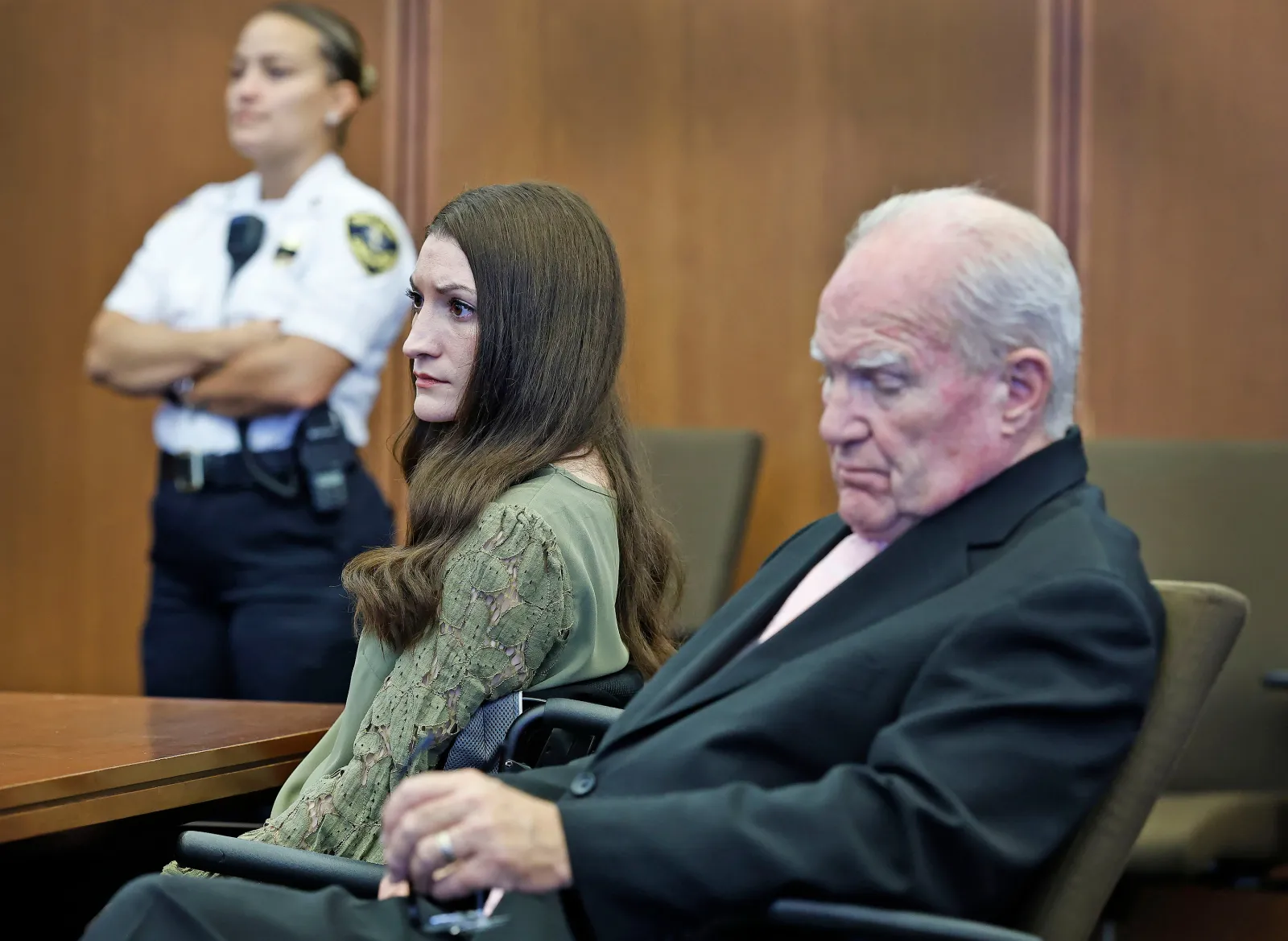
Lindsay Clancy returned to court Monday as her lawyers asked a Massachusetts judge to throw out the murder case against her, while a separate fight erupted over allegations involving the lone juror whose vote helped produce a mistrial.
Judge William Sullivan's pending decisions could determine whether Clancy can be prosecuted again after jurors failed to reach a unanimous verdict in September.
Prosecutors said they are headed toward another trial, although the precise charges and timing remain unresolved, while the court is scheduled to reconvene November 16 before a possible March retrial.
Read More on News
The hearing in Plymouth Superior Court revisited the extraordinary breakdown of Clancy's first trial over the 2023 deaths of her three young children but quickly expanded into allegations about cellphone use, a juror's background, post-trial interviews and even the conduct of other members of the panel.
Clancy, 36, has not disputed killing her children. Her defense argued at trial that she was suffering from postpartum psychosis and was not criminally responsible, while prosecutors maintained that she understood what she was doing and acted deliberately. The jury ultimately deadlocked, with an 11-1 split in favor of finding her not criminally responsible.

...
Here are the biggest developments from Monday's hearing.
Defense Claims Juror Used Phone and Researched Terms During Deliberations
One of the most consequential allegations came from Clancy attorney Kevin Reddington, who told the court that the defense had obtained information indicating the holdout juror used a cellphone during the case.
Reddington said another juror had reported seeing him scrolling on the device and alleged that he researched terms connected with evidence presented at trial. The defense argued that the allegation raised questions about whether outside information could have entered the jury's deliberations.
The court did not find the allegation established, and the juror's attorney disputed the defense's characterization. She argued that the post-mistrial account amounted to an allegation that the juror had a phone in hand at times, not proof that he used it to research the case or contact anyone about the trial. She also said every juror had been allowed to keep a phone.
That distinction became central to her argument against further investigation. She warned that allowing one juror's phone to be searched based on information that surfaced after the mistrial could have broader consequences for future jurors.
"If that's enough to put a juror under oath, to search their phone, to pull their history, then the lesson every future juror in this Commonwealth is simple: agree with the majority or potentially be investigated," she told the court.
Related Story
Lindsay Clancy Bid to Dismiss Murder Case Denied—Here’s What Happens Next
Defense Raises Allegations About Juror's Court History
The hearing became more contentious when Reddington questioned information the juror supplied during jury selection and sought to discuss alleged prior criminal or court matters.
"I have evidence that this man was not honest on his form," Reddington told the court while pressing to introduce the material, before asking why he could not present it as evidence.
The prosecution objected to publicly discussing protected information, while Sullivan stressed that the juror questionnaire was confidential by statute. The court later placed some material concerning the dispute under seal.
The juror's attorney offered a different account, telling the court the juror had disclosed a prior arrest on his questionnaire. She argued that the defense had reviewed the questionnaire during jury selection, had an opportunity to question him and accepted him onto the panel.
Prosecutors Raise Questions About Conduct by Other Jurors
The hearing also produced an unexpected warning from prosecutors: If Sullivan allows an investigation into the holdout juror, the inquiry may not stop with him.
Assistant District Attorney Jennifer Sprague told the court that post-mistrial statements about other jurors raised questions about cellphone use and matters they may have considered while reaching their positions. She also referenced discussion of a potential joint press conference before the evidence had closed. Sprague's point was not that the allegations had been proved, but that scrutiny based on post-trial statements could potentially sweep in the entire panel.
She argued that information emerging after the mistrial was irrelevant to the defense's bid to have the case dismissed on double-jeopardy grounds because Sullivan's decision must be judged on what was known when the mistrial was declared. The prosecution warned that singling out the lone holdout based on later interviews risked opening the door to examining statements and actions by all 12 jurors.
Defense Seeks Complete Dismissal Under Double Jeopardy
Defense attorney Martin Weinberg argued that Sullivan declared a mistrial without sufficiently investigating two notes from the jury foreperson suggesting one juror was not properly applying the court's reasonable-doubt instructions. Weinberg said a more probing inquiry could have established whether the holdout was following the law and potentially provided an alternative to ending the trial.
"We don't know without probing from the foreperson what they meant," Weinberg said while discussing the jury's references to doubt.
That uncertainty is central to the defense's double-jeopardy argument. Weinberg contended that if a viable alternative existed, prosecutors could not establish the "manifest necessity" required to justify the mistrial and subject Clancy to a second trial.
Prosecutors sharply disagreed. They argued that Sullivan individually questioned jurors, reinforced his instructions and properly avoided intruding into the substance of their deliberations. Sprague distilled the prosecution's position into a single line: "This juror did not refuse to deliberate. He refused to agree."
Sprague argued that a lone juror's refusal to join the majority does not automatically demonstrate that the person misunderstood or improperly applied the law. Sullivan took the dismissal motion under advisement rather than ruling from the bench.
Juror's Lawyer Says Investigation Is Retaliation for His Vote
The holdout juror's attorney offered one of the hearing's sharpest counterarguments, contending that her client was facing scrutiny because he cast the vote Clancy's defense did not want.
She argued that the juror answered questions during selection, was accepted onto the panel and later told Sullivan under oath that he could follow the court's instructions. In her telling, the critical fact that changed after the mistrial was that the defense knew where he stood in the jury room.
"We are here because Juror Doe did not vote the way that the defense needed," she told the court.
The defense takes a different position, arguing that its concerns involve potential misconduct and the juror's candor rather than his vote itself. But his attorney said post-mistrial television and podcast interviews should not be allowed to retroactively alter the legal analysis surrounding Sullivan's decision to end the trial.
Judge and Defense Clash Over Publicly Naming Juror
Tensions boiled over when Reddington publicly used the holdout juror's name, Mr. Desronvil, while making his argument.
Sullivan interrupted and objected to naming the juror in open court, saying there was "no need" and directing the lawyers to refer to him as "Juror Doe." Reddington resisted the intervention.
"You're not going to stop me," Reddington said during the exchange.
The clash illustrated a wider tension throughout Monday's hearing between the defense's attempt to investigate the juror and concerns about juror privacy.
It resurfaced minutes later when Reddington sought to discuss information from the man's jury questionnaire and prosecutors objected on confidentiality grounds.
What Did Lindsay Clancy Do?
Clancy killed her three children, Cora, 5, Dawson, 3, and Callan, 8 months, at the family's Duxbury, Massachusetts, home in January 2023. Her trial centered not on whether she killed the children but whether she was criminally responsible for their deaths.
Prosecutors argued during her trial that Clancy acted intentionally and understood that what she was doing was wrong. Her attorneys presented a sharply different explanation, maintaining that she was suffering from postpartum psychosis and should therefore be found not guilty by reason of insanity, which Massachusetts describes as lack of criminal responsibility.
Following more than a month of testimony, jurors could not unanimously agree on a verdict, prompting Sullivan to declare a mistrial in September.
What Was Lindsay Clancy Charged With?
Clancy faced three first-degree murder charges, which carry the possibility of life imprisonment if convicted.
What happens to those charges is now a central question. At Monday's hearing, the defense sought to have the case dismissed entirely under double-jeopardy principles. Prosecutors opposed dismissal and indicated that they expect another trial, although the material supplied from the hearing says they had not yet determined exactly what form the retrial would take.
Sullivan plans to reconvene the parties on November 16, when he hopes to address the dismissal question before moving toward scheduling another trial.
A March trial date is being weighed, but Sullivan stressed that discussing a date does not prevent him from granting the dismissal motion.
Where Is Lindsay Clancy Now?
Clancy remains at Tewksbury Hospital, a state-run psychiatric hospital in Massachusetts. She has been held there since shortly after the killings and has remained there since the mistrial.
Her future placement could ultimately depend on the disposition of the criminal case. A conviction could result in imprisonment, while the previous trial centered on the defense contention that Clancy should be found not criminally responsible because of her mental state.
For now, however, no new verdict exists, and Sullivan has not granted the request to dismiss the prosecution.
Who Is Patrick Clancy?
Patrick Clancy is Lindsay Clancy's former husband and the father of Cora, Dawson and Callan. He was among the family members who gave evidence during her trial. His evidence also offered a window into the deterioration in Lindsay Clancy's mental health before the killings.
Patrick Clancy testified that his ex-wife's mental health had taken a significant downward turn roughly a month before their children's deaths, while other relatives and psychiatric evidence became part of the wider dispute over whether she was criminally responsible.
Contact Newsweek editors on this story: Samantha Beech and Dave Siminoff.
View 0 Comments
Submit Correction
View Editorial & AI Guidelines