
By Jesus Mesa
Reporter
0
Share
Newsweek is a Trust Project member
See more of our trusted coverage when you search.Prefer Newsweek on Googleto see more of our trusted coverage when you search.
Rich Logis spent seven years as an unapologetic MAGA activist—volunteer, writer, podcaster, donor. He cultivated a second family within the movement so close it sometimes took precedence over his blood relatives.
By May 2022, with Donald Trump after office, after the Uvalde school shooting and reflecting on the movement's response to COVID and January 6, Logis decided he had enough. Three months later, he published a public apology expecting no one would care. Instead, he received desperate messages from people trying to reconnect with MAGA-identified friends and family they'd lost.
That led him to found Leaving MAGA, a support organization for people questioning their allegiance to the movement led by Trump. The group hosts free weekly support groups, maintains a deradicalization website, and published Logis's memoir, "One Betrayal Too Many," detailing how ordinary, educated, successful people—not just economically distressed voters—fall into and escape extremist politics.
Read More on Politics
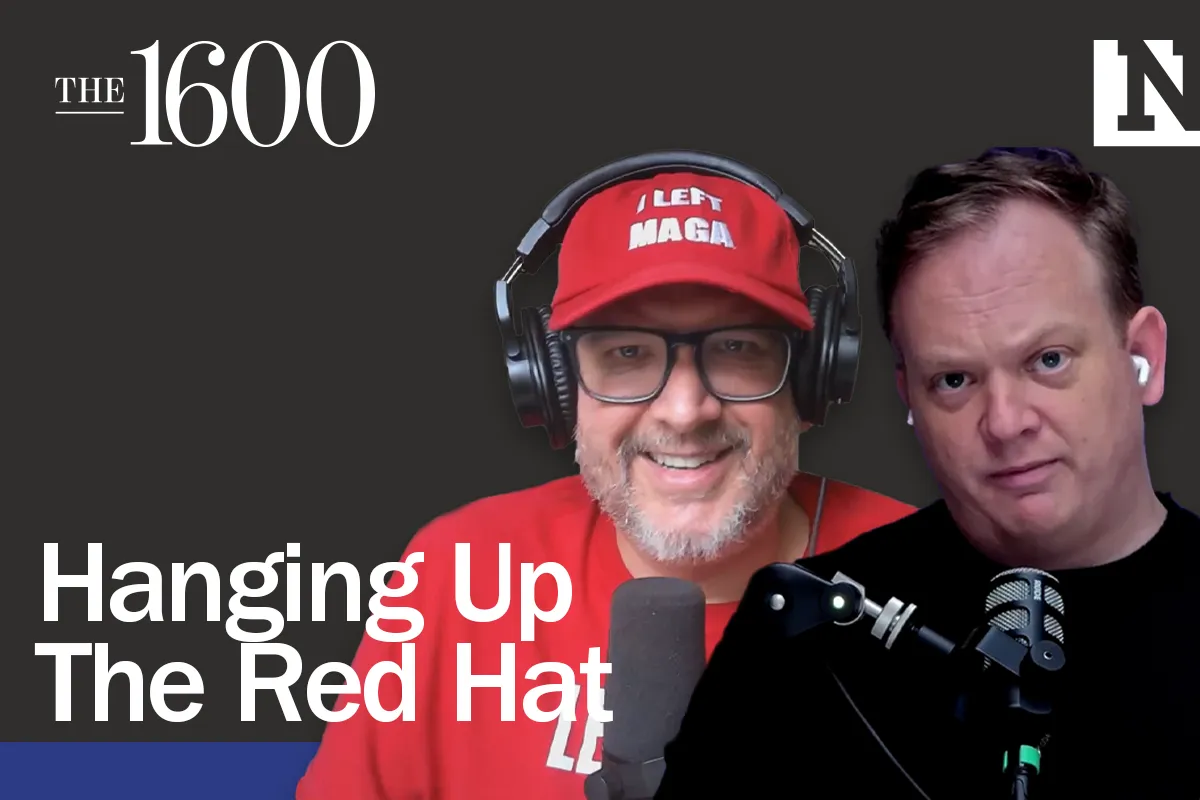
"What I realized was that millions of relationships had been torn asunder as a result of this MAGA movement," Logis said in an interview with Carlo Versano for The 1600. "I was naive to the fact that I had been an active participant in that."
Watch Here: The 1600 Podcast Full Episode
'Addiction to Rage'
Logis describes his time in the movement using the language of addiction: perpetual fear, paranoia, despair, and rage. There was always a "they" coming for their guns, coming to indoctrinate children, coming to replace Americans.
"That way of thinking is a really traumatic way of life," Logis said.
The movement exploited natural human fears, he said, creating a narrative where deviation from Trump loyalty meant you were the enemy. No nuance: 100 percent with them or 0 percent.
Support groups at Leaving MAGA emphasize the "addiction to rage," a dopamine-induced cycle of outrage. "There is a dopamine induced addiction to the rage and the outrage," Logis said. "For me, it was obsessive. I never took an hour off from MAGA."
Logis' exit from the movement wasn't sparked by a single moment but a gradual accumulation. In his memoir, he uses a brick wall metaphor: the response COVID, January 6, stolen election lies, Florida Governor Ron DeSantis platforming anti-vaxxers, the shooting Uvalde, which occurred during the Biden administration. Each brick removed, the wall weakens, until finally it collapsed.
"You take out all these bricks, and eventually the wall falls," he said.

...
One trigger came when DeSantis began platforming COVID vaccine skeptics in the summer of 2021. That prompted Logis to do something transformative: he diversified his media diet. Until then, he consumed only MAGA-friendly news—Fox, The Federalist, American Greatness, WorldNetDaily.
Exposure to different information created cognitive dissonance. January 6, which he'd originally dismissed as an overreaction, revealed itself as an attempt to overturn a free election. Then Uvalde: Trump appeared at an NRA conference three days after the school shooting, where he rejected calls for gun control.
"What it drove home for me was that Trump and the GOP deemed acceptable avoidable deaths and suffering," Logis said. "I realized that I had been in these perpetual states of fear and paranoia and despair and rage."
Deradicalization and Reconciliation
Logis' public apology in August 2022 sparked something unexpected. He began receiving messages from people struggling to maintain relationships with MAGA-identified loved ones—grieving the loss of close relationships fractured by politics.
The Tuesday night support groups focus on three things: self-care, nonviolence, and releasing the pressure to change other people. "A change only comes from the individual from within," he said.
Leaving MAGA urges reconciliation with friends and family. "There are more around us than we realize who are right now quietly quitting MAGA and are quietly having doubts," Logis said.

...
The organization has no ideological purity tests. Members don't have to become Democrats. But they must take responsibility for their past actions. What Logis requires is acknowledgment—announcing remorse to the world, not wallowing in it, but using discomfort as fuel for remaining active in democracy.
"In every moment in our country's history when we've been in a time of crisis, the way we've gotten through it and made progress is through unlikely but necessary alliances," Logis said. "I think those who are not MAGA welcoming into the alliance those who were MAGA and then decided to genuinely leave, that's forming and forging that unlikely but necessary alliance."
Logis believes MAGA has transformed the Republican Party permanently, and for the worse. But the movement's grip will loosen when Trump leaves office. That's when Leaving MAGA hopes to be ready with support and a roadmap for what it calls a process of "de-radicalization."
For those still in the movement, Logis' message is direct: "Today is a stellar day to leave MAGA. If you're doubting, and you're questioning, and you're struggling, I know where you've been. I've been where you are. You don't have to go through it alone. We can provide you the support."
Watch the full conversation between Rich Logis with Carlo Versano in the video player above or on YouTube.
Subscribe to The 1600 newsletter for more interviews and to receive Carlo's popular daily column. Tap here to have it delivered straight to your inbox.
View 0 Comments
Submit Correction
View Editorial & AI Guidelines