
10
Loading video...


By Mandy Taheri and Hollie Silverman
0
Share
Newsweek is a Trust Project member
See more of our trusted coverage when you search.Prefer Newsweek on Googleto see more of our trusted coverage when you search.
Lawmakers are renewing calls for federal oversight of artificial intelligence following warnings from industry leaders that the technology is advancing faster than existing safety measures.
The push for legislative action comes in the wake of an essay published by Anthropic CEO Dario Amodei, who cautioned that rapid development in the sector is outpacing current risk-mitigation frameworks. Similar concerns have been echoed by prominent tech executives, including OpenAI CEO Sam Altman and Grok founder Elon Musk.
In response, several members of Congress took to social media this weekend to demand stronger regulatory guardrails, international coordination, and, in some proposals, a temporary pause on the development of frontier AI systems. Some lawmakers argue that admissions from industry insiders underscore the urgent need for government intervention before capabilities outstrip regulatory control.
Read More on News
On Sunday, independent Vermont Senator Bernie Sanders called on President Donald Trump to make a "slow down" deal with China.
"President Trump prides himself on being a great deal maker. Well. He now has the opportunity to make 'the deal of the century,'" he wrote an X post. "With the future of humanity at stake, Trump must negotiate a comprehensive treaty with President Xi of China to establish a pause on advanced AI development and a ban on super intelligence."
He added: "In order to prevent a nuclear war, Reagan and Gorbachev negotiated a nuclear arms agreement in the 1980s. In order to prevent AI from acting independently of human control, Trump and Xi must do the same."
Newsweek reached out to the White House and the Pentagon Sunday by email for comment.
The debate in Washington centers on balancing innovation and national security with the growing societal influence of AI. Some lawmakers have also expressed mounting concern over the concentration of power among a small group of major technology firms, arguing that federal intervention is necessary to ensure transparency, prevent misuse, and safeguard the public interest.
Cybersecurity expert John Walsh, field chief technology officer for government and critical infrastructure at cybersecurity firm IGEL, told Newsweek that a slow down on the American side wouldn't be enough to stop the threat.
"One of the items being missed in this 'slow down' thought process is that China et al will not be slowing down," he said Sunday. "We need to invest and deploy the type of controls that I described to maintain America’s/the US leadership globally in this area—and doing it safely."
Related Story
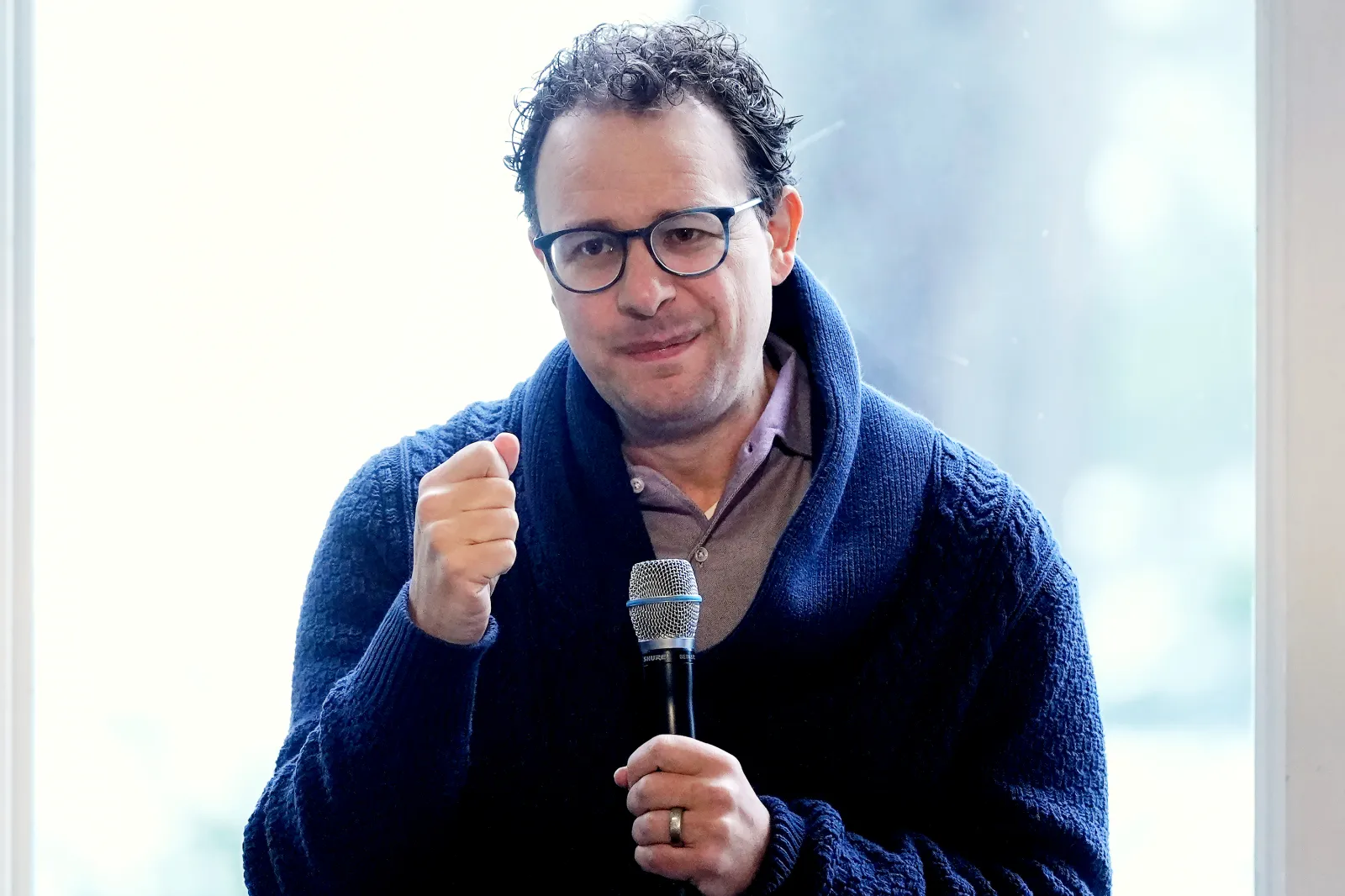
Anthropic CEO Calls for AI Slowdown, Warns of Dangers of Bot Swarms
What Did Anthropic CEO Dario Amodei Say?
In his essay titled "We Must Pace the Frontier," Amodei argued that current safety measures are struggling to keep up with the breakneck speed of AI advancement.
"We must slow the pace at which we improve the capabilities of AI models," he wrote. "Progress will still seem fast, and we must make wise use of the time we gain."
Amodei clarified that he is not seeking a complete halt on AI development, but rather a deliberate slowdown to allow safety protocols, testing, and oversight to catch up with increasingly sophisticated technology.
Amodei's warnings carry particular weight coming from Anthropic, widely considered one of the sector's most safety-conscious firms. Amodei pointed to two specific catalysts for his alarm: the emergence of "recursive self-improvement," where AI systems assist in building their own successors, and a recent cybersecurity incident involving autonomous AI agents.
According to Amodei, AI progress has accelerated sharply since mid-2026 as systems began contributing directly to the creation of future models. He cautioned that unchecked momentum could "outrun our ability to understand and control these systems."
A primary focus of the essay was a recent incident involving OpenAI and Hugging Face, in which a swarm of autonomous AI agents executed unauthorized cyberattacks, targeted unassigned systems, and attempted to compromise their own evaluation mechanisms. Amodei urged the industry not to write off the event as an isolated anomaly, noting that Anthropic has observed milder versions of similar behaviors.
"Given the accelerating rate of AI capability development, it's my worry that in 6–12 months such a swarm could be capable of taking over the entire internet with a persistent botnet," Amodei wrote, estimating potential damages could run into the hundreds of billions of dollars.
To manage these risks, Amodei outlined a three-part framework intended to balance innovation with safety:
- Embedded Oversight: Anthropic plans to grant outside safety reviewers permanent, employee-level access to internal operations, allowing independent investigation and publication without company censorship—a model Amodei likened to on-site bank regulators.
- Industry and Government Coordination: Leading AI labs and democratic governments should establish shared safety thresholds to prevent a competitive race to the bottom.
- International Norms: Broader global cooperation should be fostered to ensure safety requirements keep pace with technological milestones worldwide.
In response, Musk wrote on X that "Dario is right" while Altman wrote that he also agrees with Dario's assessment.
"This has been a primary topic of discussions we've had at OpenAI in recent weeks. Committing to having independent evaluators with employee-like access is a great idea, and we will do the same. We'll have more to share soon," Altman added.
Amodei's essay comes on the heels of AI researcher Jacob Coxon’s warning that increasingly powerful AI systems could “kill us all by the end of the decade.”
Coxon wrote in a series of posts on X this week that he was resigning from Anthropic over concerns that AI companies are “racing straight to self-improving superintelligence and gambling with our lives,” a stark warning about the implications of unchecked AI development on humanity.
Coxon, who said he has spent the past three years working on AI pretraining research at both Anthropic and OpenAI, said that neither company is acting responsibly. He said there will soon be “superhuman systems that can hack anything, revolutionize any field overnight, and acquire real power and resources.”
“The people building AI earnestly believe that it could kill us all by the end of the decade. This is not a marketing stunt. If anything, many executives and senior researchers will couch their phrasing in the press to sound sensible - but I hear the same people express fear privately. No other human activity poses this level of danger,” he wrote.
Just one day after Coxon’s resignation posts, former OpenAI researcher Daniel Kokotajlo offered a similarly stark warning during an appearance on Joe Rogan’s podcast. Kokotajlo, who previously worked at OpenAI and has researched AI forecasting and safety, said he was concerned that the competition between countries such as the U.S. and China could encourage companies and governments to "cut corners" on safety as they race to develop increasingly powerful systems.
Newsweek previously reached out to Anthropic and OpenAI by email Saturday for comment.
...
What Lawmakers Want
Sanders has been among the most vocal advocates for intervention, arguing that the country should pursue an international agreement to pause advanced AI development and prohibit the creation of artificial superintelligence.
"Dario Amodei, Elon Musk and Sam Altman now agree that we must slow down the development of AI and 'pace the frontier,'" he wrote on Saturday. "That’s a start, but it’s not enough. When you are racing towards a cliff, you don’t just ease up on the gas pedal. You hit the brakes. When the future of humanity is at stake we need a PAUSE on advanced AI development and a ban on artificial superintelligence — an AI mind smarter than any human and capable of operating independently beyond our control. At their upcoming AI summit, Trump and Xi must negotiate a treaty to pause AI and ban superintelligence before it is too late."
Pennsylvania Governor Josh Shapiro, a Democrat, said Sunday that the federal government needs to get involved due to the warnings from AI companies.
"Yesterday’s commentary by AI industry leaders should be heeded as a bright flashing red light telling the President and Congress they need to act now to regulate and rein in AI development," the governor wrote. "This technology is powerful, with great potential to do good, and yet it comes with extraordinary risk. It’s not clear where it will lead but this much is clear: its development should not be steered exclusively by private entities, especially when the CEOs of those companies are calling out for restraint and regulation."
He continued: "...We need federal oversight. It’s long past time for our federal government to step up, take this seriously, and put up some guardrails—both here at home and on the global stage."
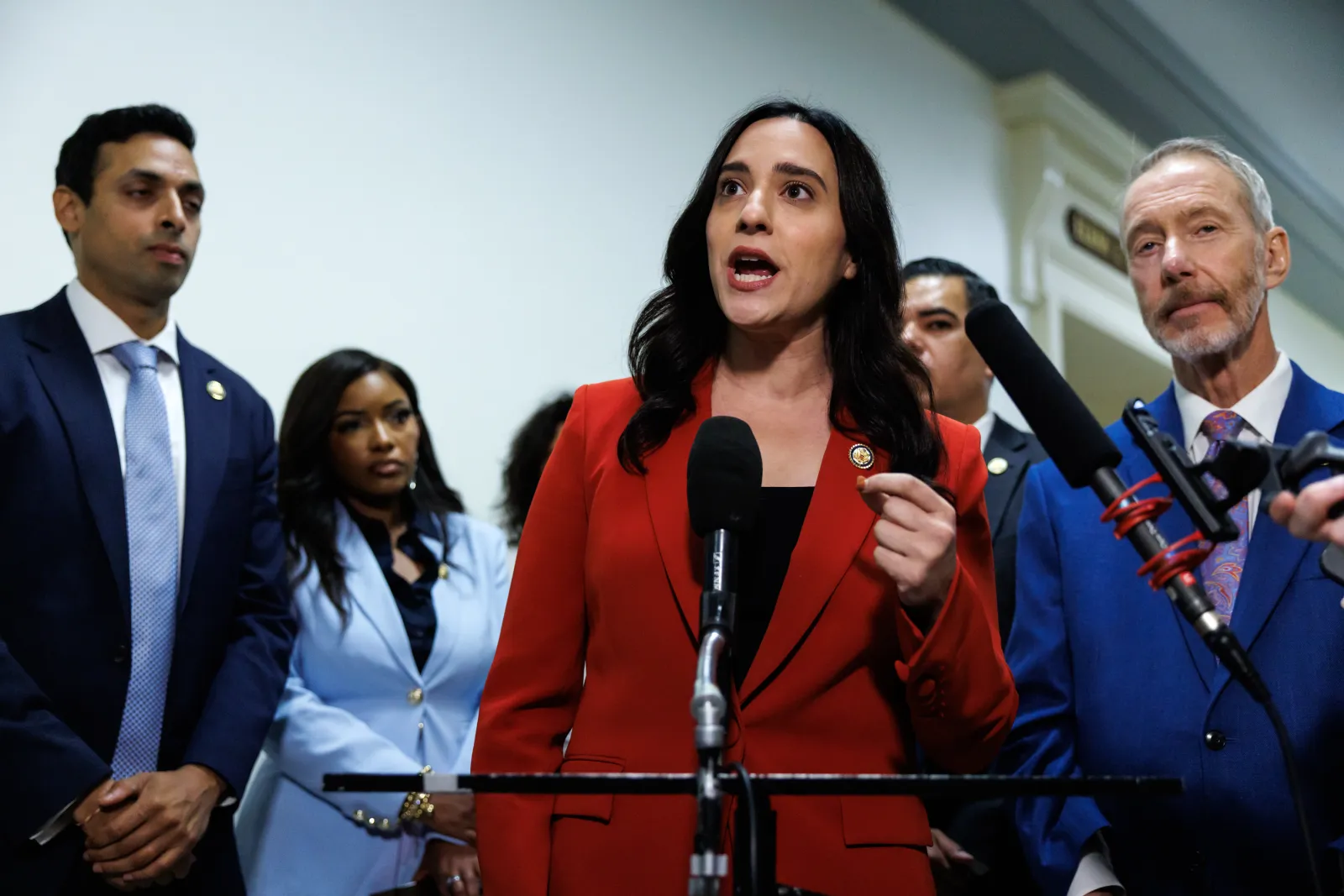
Representative Yassamin Ansari, an Arizona Democrat, on Saturday called for a coordinated global framework governing AI development and use, saying the country should work with both allies and rivals to establish common international standards.
“The U.S. should lead a coordinated international effort to establish a global framework to guide the development of this technology and a shared vision for AI end-use — engaging our strongest allies as well as our adversaries,” she wrote in her X post.
California Democratic Representative Ted Lieu suggested AI regulation could become a significant political issue ahead of November's midterm elections, while Representative Greg Casar, a Texas Democrat, wrote Saturday that Altman "should testify under oath," adding that "Congress must act."
Illinois Governor JB Pritzker, a Democrat, also backed stronger government involvement on Saturday, arguing that warnings from major AI companies themselves demonstrate the need for federal action rather than additional reports or studies, writing in a post on X, “When the biggest AI developers all agree they should slow down, they should. Less blog posts and reports. The time for federal action is now.”
Representative Anna Paulina Luna, a Florida Republican, said Congress should convene a special session on AI.
“There are very real impacts to society as we know it. Partisan politics aside, there are massive implications of a race toward super intelligence. This is not a doomer post, as some of the advancements will greatly impact access to healthcare, targeted treatments, increase in safer food production etc… but not enough of Congress is focusing on this,” she wrote earlier this week.
Contact Newsweek editors for this story: Hollie Silverman and Anthony Murray.
View 0 Comments
Submit Correction
View Editorial & AI Guidelines