10
Loading video...

By Tom Howarth
Science Reporter (Nature)
0
Share
Newsweek is a Trust Project member
See more of our trusted coverage when you search.Prefer Newsweek on Googleto see more of our trusted coverage when you search.
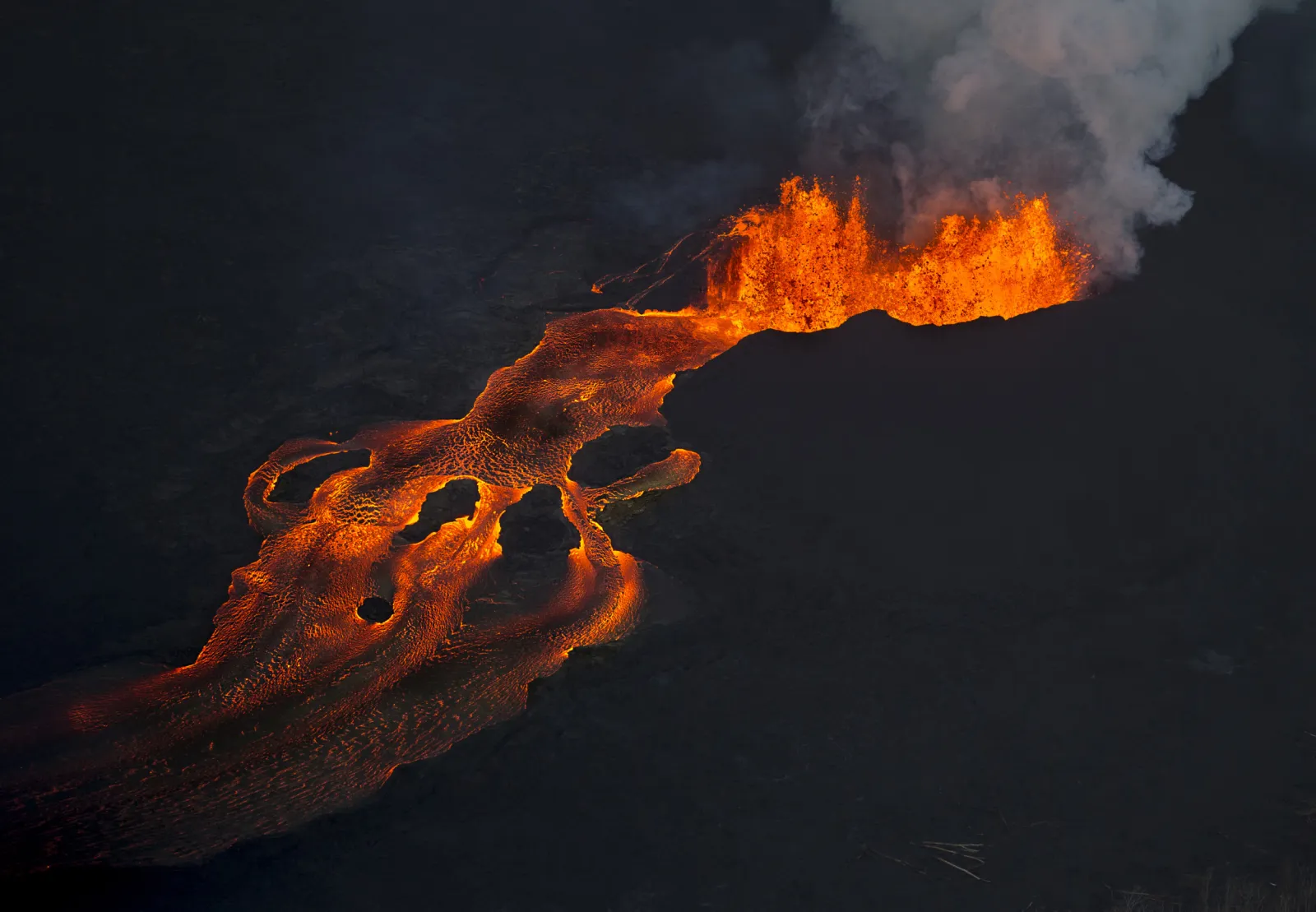
A volcanic eruption near Nāpau Crater in Hawaii's Volcanoes National Park is continuing to dramatic effect, footage by the United States Geological Survey (USGS) shows.
The eruptive activity at the Kilauea volcano began on September 14, when magma intruded beneath the ground in the volcano's East Rift Zone. The following day, magma was seen bubbling up to the surface along a 480-meter fissure in the ground.
"The eruption near Nāpau Crater in Hawaii Volcanoes National Park continues," the USGS said in its status report on Wednesday evening.
Read More on Science
"Webcam and GOES satellite thermal imagery show that eruptive activity within Nāpau Crater, which had been waning throughout the day, has likely ceased while eruptive activity on the west edge of Nāpau Crater appears to have restarted. Lava is currently cascading into Nāpau Crater on the northwest rim."
...
Kilauea, located on the southeastern coast of Hawaii's Big Island, is one of the most active volcanoes in the world, with regular eruptions since 1983. The eruption temperature of the lava is about 2,140 °F; however, as soon as it is exposed to air, it begins cooling by hundreds of degrees per second.
By Tuesday, new vents at the volcano had opened, and the extent of the eruption was growing. "In total, the fissure system has stretched over 1.6 kilometers (1 mile) of the East Rift Zone, with lava flows now covering 18 hectares (44 acres)," the USGS said in its timeline of events.
"This eruption is occurring in a remote and inaccessible area of Hawaii Volcanoes National Park. The USGS Hawaiian Volcano Observatory is closely monitoring the eruption, which is posing no immediate threat to life or infrastructure," Katie Mulliken, a geologist at the USGS, told Newsweek.
Though the eruption is occurring in a remote location of the national park, with no immediate threats posed to life or infrastructure, several hazards have been identified.
Volcanic smog, or "vog," is a mixture of water vapor and sulfur dioxide that is emitted during eruptions and can have far reaching effects downwind, according to the USGS. "Vog creates the potential for airborne health hazards to residents and visitors, damages agricultural crops and other plants, and affects livestock," the USGS Hawaiian Volcano Observatory said.
Hawaiian lava flows generally move slowly, burning and destroying everything in their paths. As well as scorching vegetation and soil, the flows can ignite gas pockets below the surface, leading to explosions.
Temporary closures are in place in Volcanoes National Park as a result of the activity, and public viewing of the eruption is not currently permitted.
Updated 9/20/24, 13:40 a.m. ET: This article was updated to include comment from Katie Mulliken, a geologist at the USGS.
Do you have a tip on a science story that Newsweek should be covering? Do you have a question about wildfires? Let us know via science@newsweek.com.
View 0 Comments
Submit Correction
View Editorial & AI Guidelines