10
Loading video...

By Anna Skinner
Associate News Editor
0
Share
Newsweek is a Trust Project member
See more of our trusted coverage when you search.Prefer Newsweek on Googleto see more of our trusted coverage when you search.
Lake Powell, one of the largest reservoirs in the United States and a linchpin of the Colorado River system, is again at the center of mounting concern across the American West.
A coalition of more than 70 organizations spanning six states and multiple tribal nations is urging Congress to provide at least $2 billion in new federal funding as the reservoir faces intensifying pressure from chronic drought, depleted storage and record-low snowpack in the Colorado Rockies.
The push for federal investment comes as the water year shapes up to be one of the most challenging in more than a century of recordkeeping, according to basin stakeholders. Lake Powell, which straddles the Arizona-Utah border and supplies water and electricity to millions, is approaching critical thresholds that could affect everything from drinking water deliveries to hydropower production.
Read More on News
...
Lake Powell Water Level Update
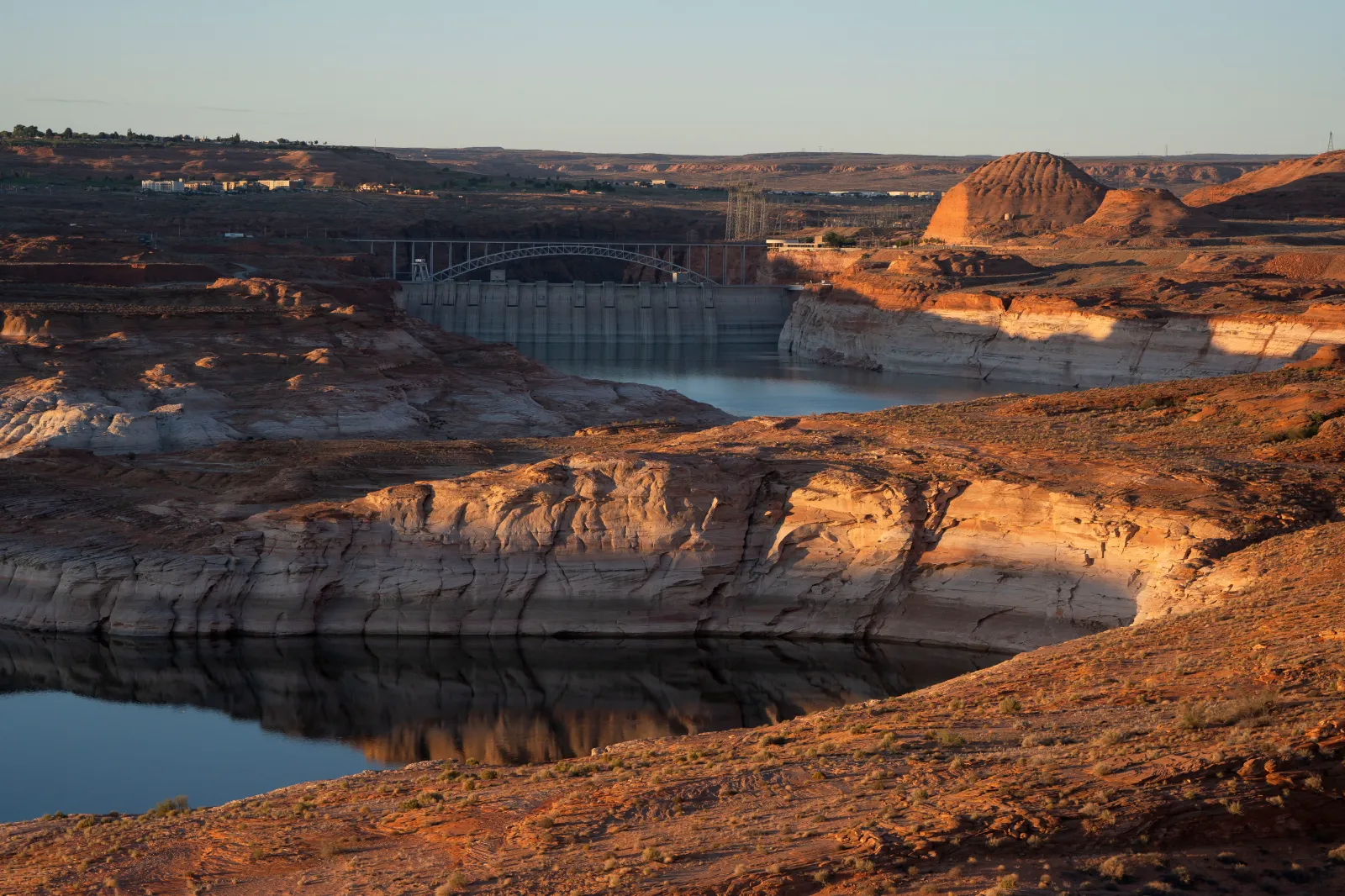
As of Tuesday's data, Lake Powell's water level was at 3,526.4 feet elevation, roughly 31 feet lower than during this time last year and 35 feet lower than in 2024. The lake's levels have been plunging since last June and it is only 23 percent full.
The concerning levels have prompted action from coalition leaders. In a letter sent May 13 to the Senate Committee on Energy and Natural Resources, groups representing agriculture, cities, utilities, conservation organizations, tribes and hydropower users warned that the Colorado River system is under “continued stress on an already depleted reservoir system.”
Signatories span Arizona, California, Colorado, New Mexico, Utah and Wyoming, along with numerous tribal governments—effectively mapping the full geographic reach of the Colorado River Basin. Together, these states support more than 35 million people and vast agricultural and industrial economies dependent on reliable river flows.
The coalition argues that without immediate federal intervention, the basin risks falling into a cycle of emergency-driven responses that are “more disruptive, less effective, and more costly” over time. The requested $2 billion would expand near-term drought mitigation efforts already underway through the Bureau of Reclamation while serving as a bridge to longer-term solutions.
"These are things that can both help stabilize the system in the near term and help start bringing us toward longer-term resiliency," Sara Porterfield, Colorado River program director and Western Water Policy adviser for Trout Unlimited, told Newsweek.
If funding is approved, the efforts would likely go into effect in 2027 and 2028, Porterfield said. As the letter was sent to Congress on Wednesday morning, Porterfield said the coalition has not yet received a response or confirmation of receipt from the committee.
Newsweek reached out to committee Chair Senator Mike Lee, a Utah Republican, and ranking member Senator Martin Heinrich, a New Mexico Democrat, by email for comment.
Record-Low Colorado Snowpack Raises Alarm
One of the most troubling signals for Lake Powell’s future lies upstream. This year, the Upper Colorado River Basin experienced the lowest snowpack totals in recorded history. Snowpack in the Colorado mountains functions as a natural savings account, slowly melting through spring and summer to replenish rivers and reservoirs downstream.
When snowpack collapses, runoff follows. Basin leaders warn that exceptionally low runoff, combined with already-depleted storage, places Lake Powell in a precarious position. Emergency measures have already been deployed, including altered operations at Flaming Gorge Reservoir and reduced releases from Glen Canyon Dam to protect Powell from dropping below critical elevations.
These actions may buy time, but they come with tradeoffs and underscore the severity of the crisis facing the basin. There's also a chance Congress could deny the coalition's request for funding.
"I think there's a really broad recognition of the need for federal funding, so I would hope that this letter and other calls for funding would raise the urgency of the issue," Porterfield told Newsweek.
Is Drinking Water at Risk?
Lake Powell plays a crucial role in delivering water across the Southwest. While immediate shortages for household taps are not guaranteed, basin leaders caution that continued declines in reservoir levels increase operational risks for water delivery infrastructure. Lower water elevations can reduce system flexibility, complicate releases downstream and heighten the potential for emergency curtailments during extreme drought years.
The coalition letter stresses that targeted investments in conservation, efficiency and infrastructure are necessary to protect drinking water supplies and avoid more severe disruptions in the future. Without sustained action, water providers could face increasingly difficult decisions as climate-driven hydrologic conditions worsen.
Is Electricity at Risk?
Hydropower is one of the most visible vulnerabilities tied to Lake Powell’s shrinking water levels. Glen Canyon Dam, which forms Lake Powell, generates electricity for millions of customers across the West. But that power depends on sufficient water pressure at the dam’s turbines.
According to basin officials, Lake Powell is approaching elevations that place hydropower generation at risk, prompting immediate drought response measures this year. If water levels fall too low, power production becomes less efficient or could cease altogether, forcing utilities to rely more heavily on alternative energy sources that may be more expensive or carbon-intensive.
Hydropower customers are among the signatories calling for federal funding, underscoring that the crisis extends beyond water users alone. Reliable electricity generation, affordable energy prices and grid stability are all intertwined with the health of the Colorado River reservoir system.
In its appeal to Congress, the coalition emphasized that short-term actions are not enough. While conservation efforts are already widespread across the basin, leaders say “the West cannot conserve its way out of this challenge alone.”
Infrastructure across the region was designed for a climate that no longer exists. Rising temperatures, prolonged drought and increased wildfire risk are reshaping water availability in ways that demand updated systems and new tools. The proposed funding would support conservation and efficiency but also explore “smart, targeted augmentation” projects to develop new water supplies where appropriate.
Advocates are also calling for greater transparency and stakeholder input to build trust and encourage participation at the scale necessary to make a meaningful impact.
Will Lake Powell Water Levels Recover?
Whether Lake Powell can recover in the coming years is an open question. Historically, strong winter snowfall in the Rockies has helped the reservoir rebound after dry periods. But climate change is altering those patterns, making extreme lows more frequent and recovery less certain.
Coalition members warn that without a long-term federal funding mechanism, the basin will remain vulnerable to recurring crises driven by drought, wildfire and hydrologic change. They argue that sustained investment could help stabilize the system, restore natural infrastructure and advance innovations needed to adapt to new realities.
Such investments, the letter notes, would represent only a small fraction of the economic value generated by the Colorado River system but could prevent far greater losses tied to system instability.
As Congress weighs its response, Lake Powell continues to serve as a stark indicator of the West’s water future. The reservoir’s water level is no longer just a local concern; it is a shared national challenge with implications for food security, energy reliability, ecosystems and millions of lives across the Colorado River Basin.
View 0 Comments
Submit Correction
View Editorial & AI Guidelines