...

By Joe Edwards
Reporter
0
Share
Newsweek is a Trust Project member
See more of our trusted coverage when you search.Prefer Newsweek on Googleto see more of our trusted coverage when you search.
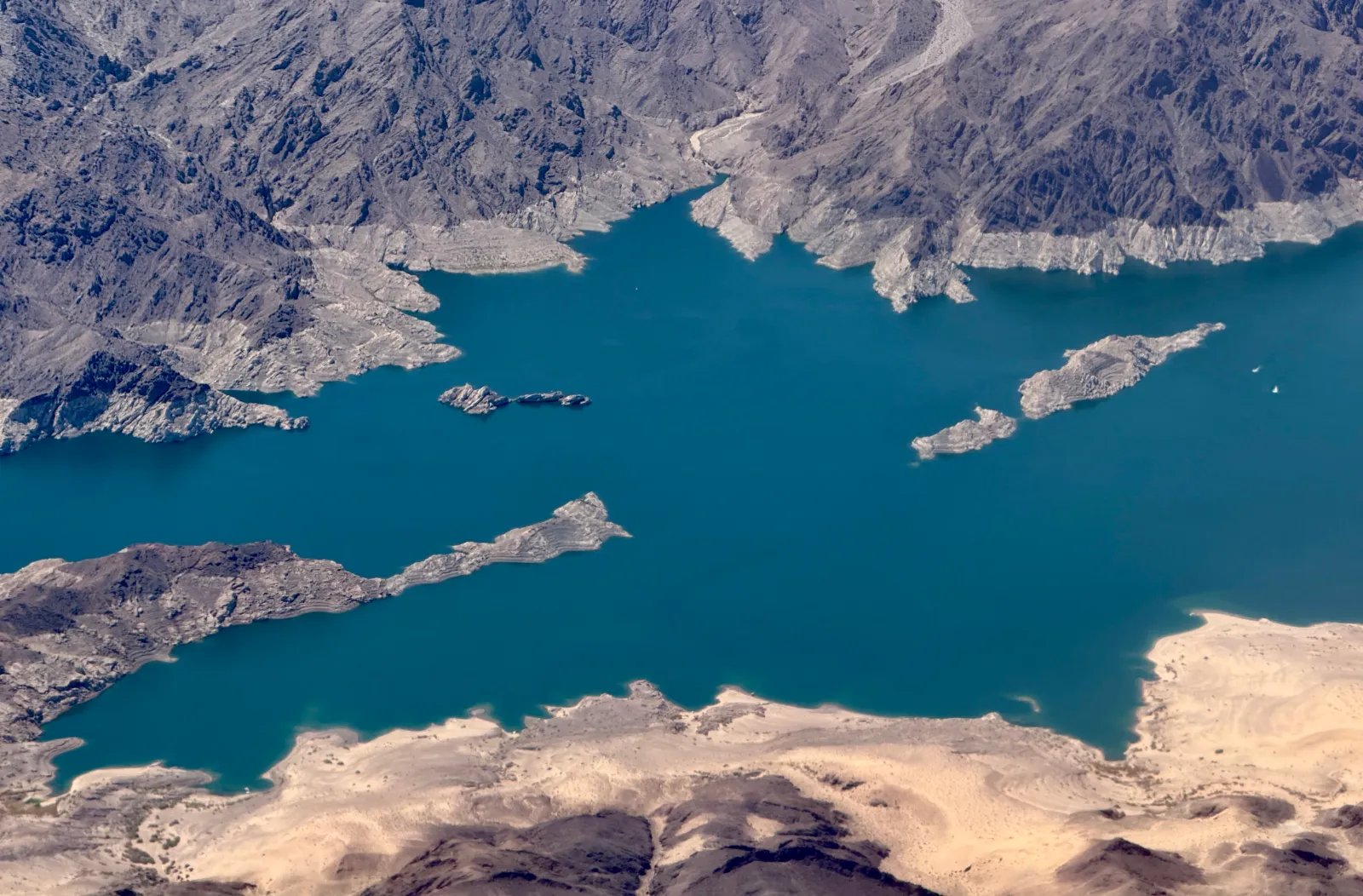
The surface of Lake Mead could sink to an unprecedented low within the next two years, as new federal forecasts warn the nation’s largest reservoir could fall well below its previous record amid ongoing strain on the Colorado River system.
Why It Matters
The Colorado River system—which includes the major reservoirs Lake Mead and Lake Powell—irrigates more than 5 million acres of farmland and supplies water to some 40 million people across the Western U.S., according to the National Agricultural Law Center.
Read More on Weather
What To Know
In new projections released Friday, the U.S. Bureau of Reclamation (USBR) said Lake Mead’s November 2027 end of month is expected to reach 1,032.76 feet above sea level.
As Newsweek reported in January, USBR previously expected the reservoir to reach 1,036.5 feet at the end of November 2027, which would already have been lower than any end-of-month elevation at the reservoir recorded in 2022—when the lake was battling critically low water levels following years of drought.
...
The Las Vegas Review-Journal noted that the new projection would push the reservoir nearly eight feet below the prior record low set in 2022, when falling levels also exposed skeletal remains.
Lake Powell has also received concerning forecasts. Projections earlier this year indicated that Lake Powell could drop to minimum hydropower level in December, potentially jeopardizing Glen Canyon Dam’s ability to generate power.
Newsweek contacted USBR for comment via email on Monday.
What People Are Saying
Peter Soeth, USBR deputy chief of public affairs, previously told Newsweek: "Reclamation is closely monitoring hydrologic conditions and coordinating with stakeholders. The basin’s continued poor hydrologic outlook underscores the need for collaboration as we develop new operating guidelines for the Colorado River system. Urgent, collective action is essential—we must move forward together, without further delay."
Sharon Megdal, director of the University of Arizona Water Resources Research Center, told Newsweek in December: "Currently, the water-in-storage situation for the Colorado River system is not good.
“[There is] less in storage than last year, and current snow conditions are not good. Even if early 2026 snowpack is robust, the system will remain highly stressed. The region is faced with difficult choices regarding Colorado River water deliveries and dam operations, including those related hydropower generation.
"The debates regarding river management reflect these physical realities. There are many trade-offs to consider. We cannot keep drawing from savings (system storage) when the system is not making sufficient deposits of water. We must work with what nature is providing."
What Happens Next
As of March 13, official data shows that Lake Mead was just 34 percent full, with around 8.8 million acre-feet of water in storage—roughly 53 percent of the average level for the date.
View 0 Comments
Submit Correction
View Editorial & AI Guidelines