
...

By Robyn White
Nature Reporter
0
Share
Newsweek is a Trust Project member
See more of our trusted coverage when you search.Prefer Newsweek on Googleto see more of our trusted coverage when you search.
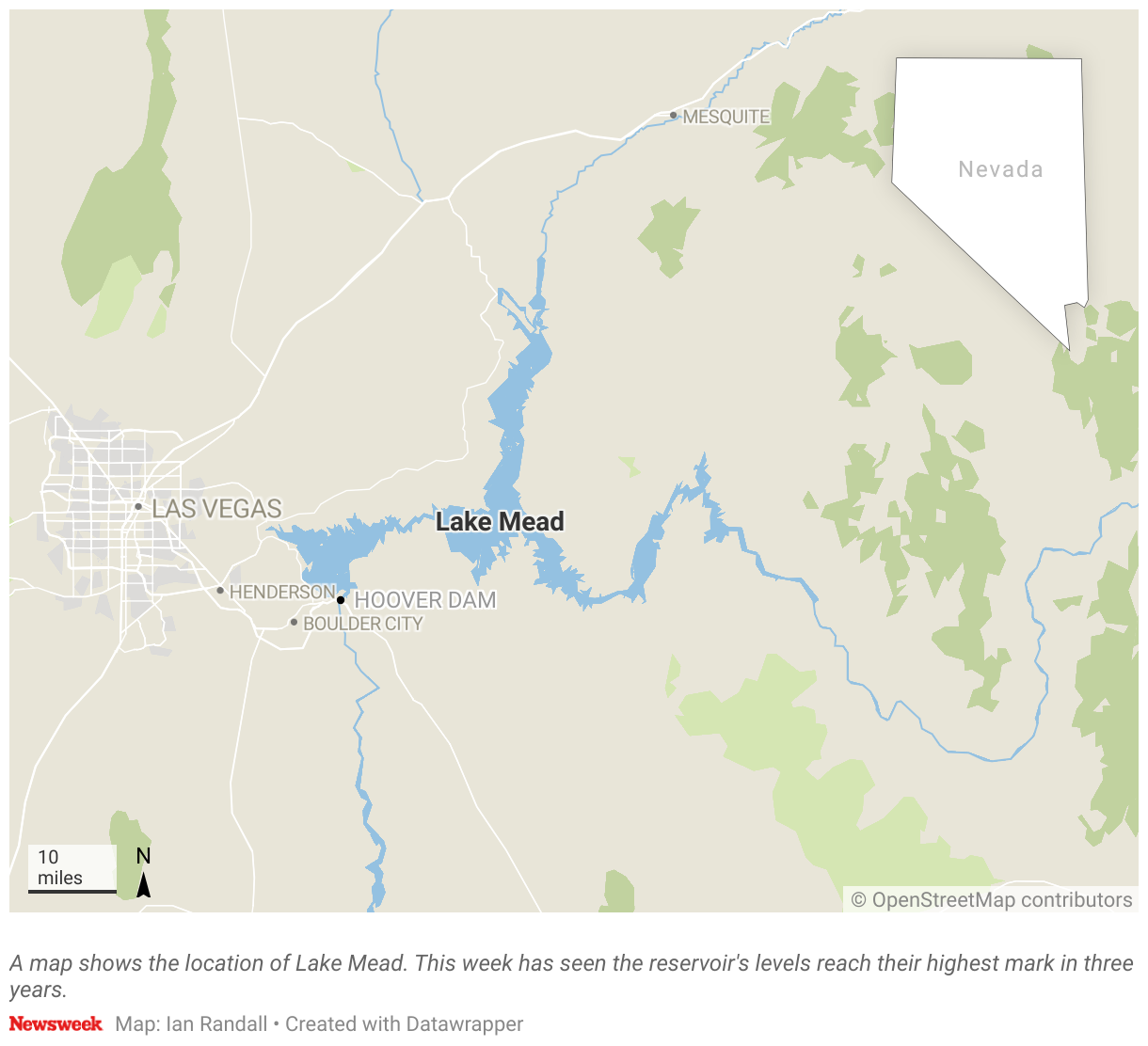
Lake Mead's water level is now the highest it has been in three years.
On February 15, the reservoir's water levels stood at 1,075.21 feet—the highest level since May 2021.
At the beginning of this year, Lake Mead's water levels stood at 1,068 feet. Since then, it has gradually continued to rise throughout the winter months. At the same point last year, the lake's levels were at around 1,044 feet following a particularly dry 2022.
Read More
Great Lakes Sees Historic Low Ice Coverage—’Crossed a Threshold’3 min read

Shark Attacks Man in River, Rips Off Foot and Most of Calf3 min read

Tijuana River Sewage Contamination a ‘Public Health Crisis’3 min read

The rise in water levels is likely down to an increase in snowpack in the surrounding mountains. In the winter and early spring months of 2023, the southwestern United States saw a series of intense winter storms, which increased precipitation across the region. This meant more snow melt was feeding into the reservoirs, which, up until now, have been at extremely low levels.
...
In recent years, drought paired with an overconsumption of water has meant the lake's water levels have declined to the lowest point on record. In July 2022, water levels reached 1040 feet, which is the lowest elevation recorded since the reservoir was first filled in the 1930s.
In recent years, white bathtub rings can be seen around Lake Mead's edge, showing just how far its water levels have dropped since they were a healthy level.
The low levels were of great concern, considering the lake, which is the largest manmade reservoir in North America, provides water for 25 million and hydropower via the Hoover Dam.
Although Lake Mead has now reached its highest level in three years, it does not mean experts get to stop being concerned.
Despite the rise, the reservoir's levels are not what they used to be, and as climate change worsens, it could mean more prolonged periods of drought in the future.
Eyes are also on Lake Mead's neighbor, Lake Powell, which is also an integral water source for the southwest.
"Lake Powell and Lake Mead are both higher today than they were a year ago, thanks to a very wet winter last year, but they are still more than half empty," Jennifer Pitt, Colorado River Program Director for the National Audubon Society, told Newsweek in December.
How the reservoir will fare throughout the rest of 2024 remains to be seen.
"We can't forecast water levels in 2024 until we know how much snow falls in the Rocky Mountains over the coming winter, but we do know the situation will get worse over time as climate change continues to diminish the Colorado River," Pitt said.
Do you have a tip on a science story that Newsweek should be covering? Do you have a question about Lake Mead? Let us know via science@newsweek.com.
View 0 Comments
Submit Correction
View Editorial & AI Guidelines