...

By Jasmine Laws
Reporter
0
Share
Newsweek is a Trust Project member
See more of our trusted coverage when you search.Prefer Newsweek on Googleto see more of our trusted coverage when you search.
Concern around water levels at Lake Mead has notably amplified as a federal deadline to agree on a plan for water use in the Colorado River was missed over the weekend.
Department of the Interior (DOI) Secretary Doug Burgum said on Saturday that the states concerned had missed a February 14 deadline to reach a consensus on a plan to guide use of the Colorado River over the coming decades. This is the second deadline that has been missed.
The current guidelines, last updated in 2007, are set to expire at the end of 2026, and without a new plan, the water security of seven states hangs in the balance.
Read More on News
As a result of the growing concern surrounding the management of the river, while no consensus was reached, the DOI said the U.S. Bureau of Reclamation (USBR) would be pushing forward a plan of its own.
The USBR said in an announcement that the department "cannot delay action." It added: "Meeting this deadline is essential to ensure certainty and stability for the Colorado River system beyond 2026."
...
Why It Matters
Seven states rely on water from the Colorado River, meaning around 40 million Americans count on its supply. It also supports the generation of hydroelectric energy, powering around 700,000 homes, and sustains around 5.5 million acres of farmland and agricultural communities where a significant share of the fruit and vegetables consumed in the U.S. are grown.
It is also a vital resource for 30 Tribal Nations and two Mexican states and supports seven National Wildlife Refuges, four National Recreation Areas, and 11 National Parks.
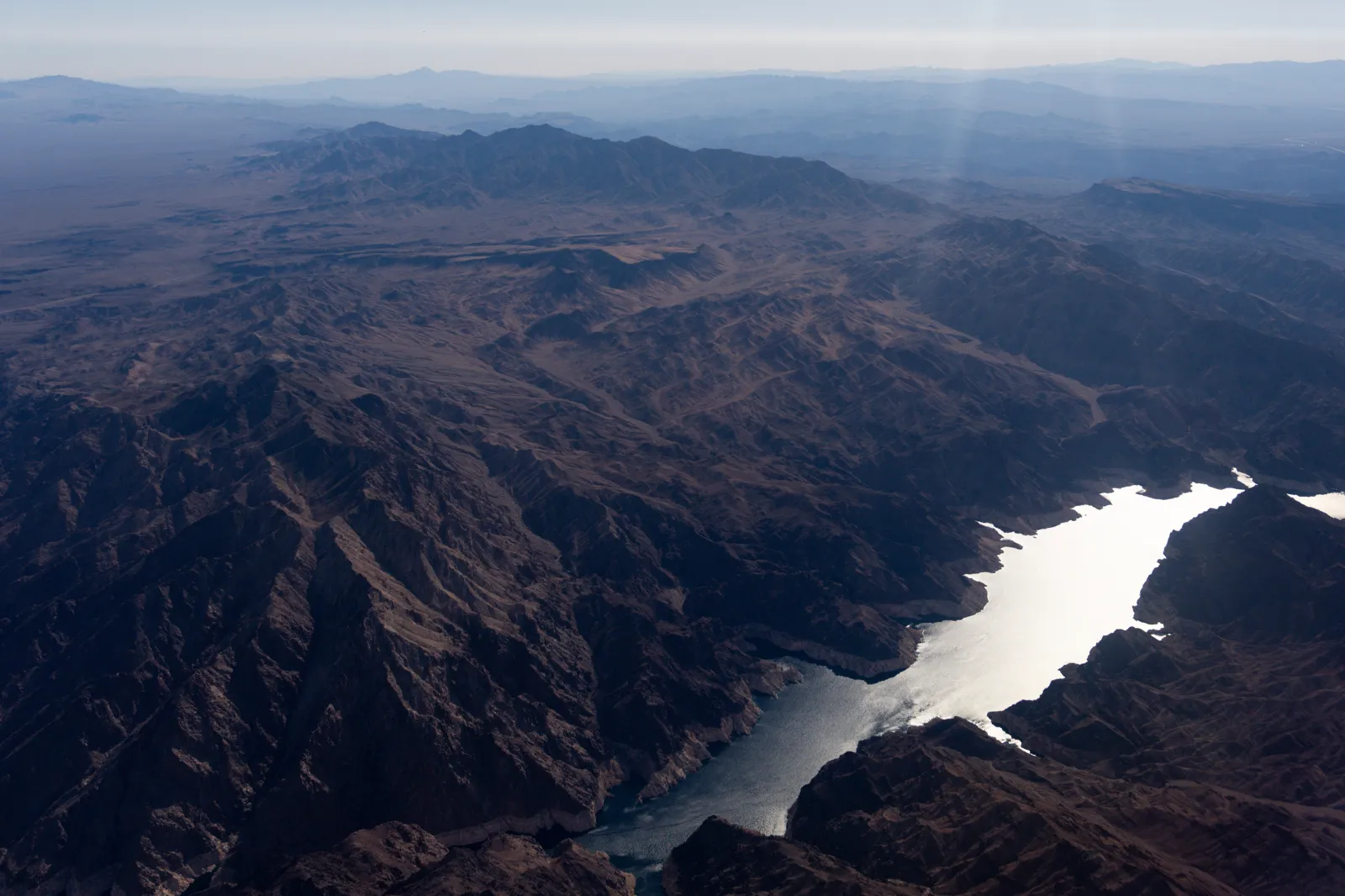
Concern around Lake Mead, a reservoir formed on the Colorado River, and its water levels have been ongoing for some time. Recent forecasts by the USBR indicate that Lake Mead’s elevation is expected to be 1,036.5 feet at the end of November 2027, which would be lower than any end-of-month elevation at the reservoir recorded in 2022, a time when the lake was battling critically low water levels following years of drought.
What To Know
A number of the states relying on the water from Colorado River have been in negotiations for a number of years, although some have resisted any permanent cuts on their water use.
Colorado, New Mexico, Utah and Wyoming are all upper basin states, meaning their water supply is highly variable and they already have to implement cuts because of issues with supply.
The governors of these states said in a statement as the February 14 deadline neared that upper basin water users "live within the means of the river by adapting our uses every year based on available supplies."
They said they were "putting every tool on the table available to us, including releases from our upstream reservoirs, meaningful voluntary conservation both now and in the future, and continued strict self-regulation of water supplies," to bring about an agreement.
Meanwhile, the governors of California, Nevada and Arizona also said in a joint statement: "Our stance remains firm and fair: all seven basin states must share in the responsibility of conservation."
"Our shared success hinges on compromise, and we have offered significant flexibility, allowing states without robust conservation programs time to gradually develop these programs in ways that work in each state," they added.
To secure an agreement, Arizona offered to reduce its Colorado River allocation by 27 percent, California by 10 percent, and Nevada by nearly 17 percent.
However, no agreement was reached, and now, because of the urgency of the situation, the USBR has put its own plan forward.
The USBR's plan, titled "Post-2026 Draft Environmental Impact Statement (EIS) Post-2026 Operational Guidelines and Strategies for Lake Powell and Lake Mead," predominantly focuses on the operation of Glen Canyon Dam and Hoover Dam, but includes some actions upstream and downstream of these facilities to protect critical reservoir elevations.
What People Are Saying
Secretary of the Interior Doug Burgum said in a statement: "Negotiation efforts have been productive; we have listened to every state’s perspective and have narrowed the discussion by identifying key elements and issues necessary for an agreement. We believe that a fair compromise with shared responsibility remains within reach. I want to thank the governors of the seven Basin States for their constructive engagement and commitment to collaboration. We remain dedicated to working with them and their representatives to identify shared solutions and reduce litigation risk. Additionally, we will continue consultations with Tribal Nations and coordinate with Mexico to ensure we are prepared for Water Year 2027."
John Entsminger, Nevada's chief Colorado River negotiator and Southern Nevada Water Authority general manager, said, according to reports, that states "have failed to reach an agreement to collectively protect our respective communities and economies in the face of almost certain reductions."
He told KNTV: "As I talk with people throughout Southern Nevada, I hear their frustration that years of negotiations have yielded almost no headway in finding a path through these turbulent waters. As someone who has spent countless nights and weekends away from my family trying to craft a reasonable, mutually acceptable solution only to be confronted by the same tired rhetoric and entrenched positions, I share that frustration."
What Happens Next
The USBR's plan is now available for public review, and comments are being accepted until March 2, 2026.
View 0 Comments
Submit Correction
View Editorial & AI Guidelines