...

By Joe Edwards
Reporter
0
Share
Newsweek is a Trust Project member
See more of our trusted coverage when you search.Prefer Newsweek on Googleto see more of our trusted coverage when you search.
Arizona water leaders warned that a 1922 agreement that divides water from the Colorado River among seven western states could be breached as soon as 2026 amid falling snowpack, declining reservoir levels and stalled negotiations over river operations, according to reported remarks from a Monday Arizona Reconsultation Committee Meeting.
Among the seven states, Colorado, Wyoming, New Mexico and Utah make up the Upper Basin while the Lower Basin consists of California, Arizona, and Nevada. Under the 1922 Colorado River Compact, each basin is allocated 7.5 million acre-feet annually, with the Upper Basin obligated to deliver a 10-year rolling average of at least 75 million acre-feet to the Lower Basin measured at Lees Ferry. It's mainly the negotiations on future water cuts, due to depleting water levels, that have stalled.
Brenda Burman, general manager of the Central Arizona Project, said releases to the Lower Basin might be reduced this year and warned, “We may breach the compact in 2026, and almost certainly it will be breached in 2027,” underscoring potential legal consequences if required deliveries are not met at Lees Ferry, as reported by AZPM.
Read More on News
Why It Matters
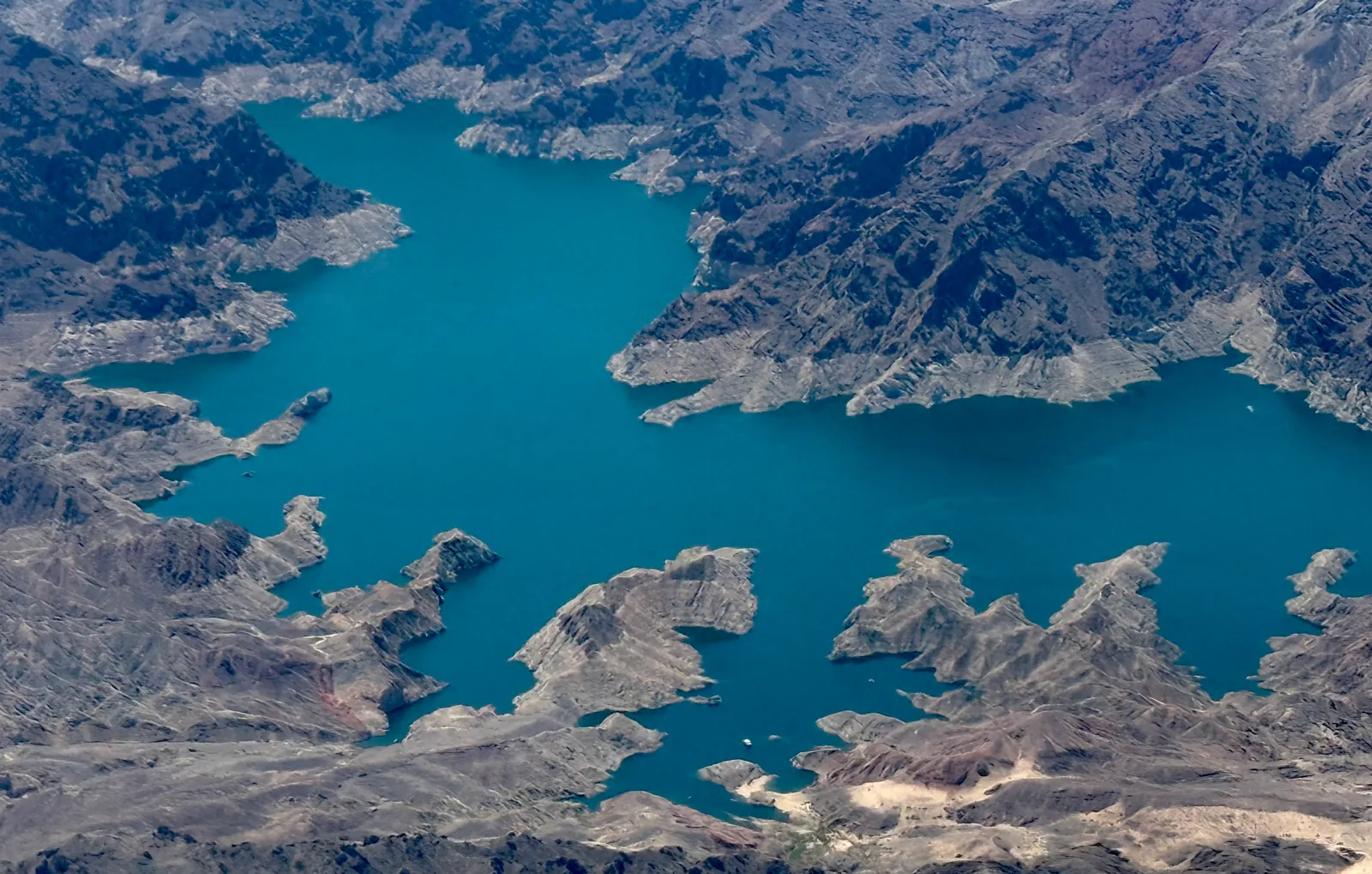
The Colorado River system supplies water to over 40 million people and irrigates more than 5 million acres of farmland, according to the National Agricultural Law Center, and includes the major reservoirs Lake Mead and Lake Powell.
The states that depend upon the river system's water are in a race against time to establish new water sharing agreements, with current guidelines set to expire this year and new ones required to determine how much water leaves Lake Powell and Lake Mead–the two largest reservoirs in the U.S.
...
What To Know
Negotiators disagreed over annual releases from Lake Powell to Lake Mead, AZPM reported, with Arizona Department of Water Resources director Tom Buschatzke saying debates with Upper Basin states covered ranges “as low as 7 million acre-feet, maybe 7.3” annually—instead of 7.5 million—while noting that 1.5 million acre-feet in Lower Basin reductions could stabilize Lake Mead, although Upper Basin leaders pressed for deeper Lower Basin cuts.
The seven states missed a November deadline for new operating guidelines and face a February 14 federal target to reach consensus, with multiple agreements and management plans that regulate how the Colorado River’s facilities are operated set to expire at the end of 2026.
Recent federal projections indicated Lake Mead could be at elevation 1,036.5 feet at the end of November 2027, a level lower than any end-of-month elevation recorded in 2022, when the reservoir was grappling with critically low water levels.
Experts have previously warned that combined water storage in Lakes Powell and Mead could fall to about 9 percent of what it was at the century’s start by late summer 2026.
What People Are Saying
Brenda Burman said, per AZPM: “We may breach the compact in 2026, and almost certainly it will be breached in 2027…sobering news, it’s something that hasn’t happened before, our Upper Basin neighbors have always met that obligation in the past.”
Sharon Megdal, director of the University of Arizona Water Resources Research Center, told Newsweek in December: "Currently, the water-in-storage situation for the Colorado River system is not good.
“[There is] less in storage than last year, and current snow conditions are not good. Even if early 2026 snowpack is robust, the system will remain highly stressed. The region is faced with difficult choices regarding Colorado River water deliveries and dam operations, including those related hydropower generation.
"The debates regarding river management reflect these physical realities. There are many trade-offs to consider. We cannot keep drawing from savings (system storage) when the system is not making sufficient deposits of water. We must work with what nature is providing."
What Happens Next
As of February 4 federal data, Lake Mead sits at 34 percent full, while Lake Powell is 25 percent full as of February 3.
View 0 Comments
Submit Correction
View Editorial & AI Guidelines