...

By Joe Edwards
Reporter
0
Share
Newsweek is a Trust Project member
See more of our trusted coverage when you search.Prefer Newsweek on Googleto see more of our trusted coverage when you search.
Officials have issued an update outlining potential plans for managing the Colorado River system.
Why It Matters
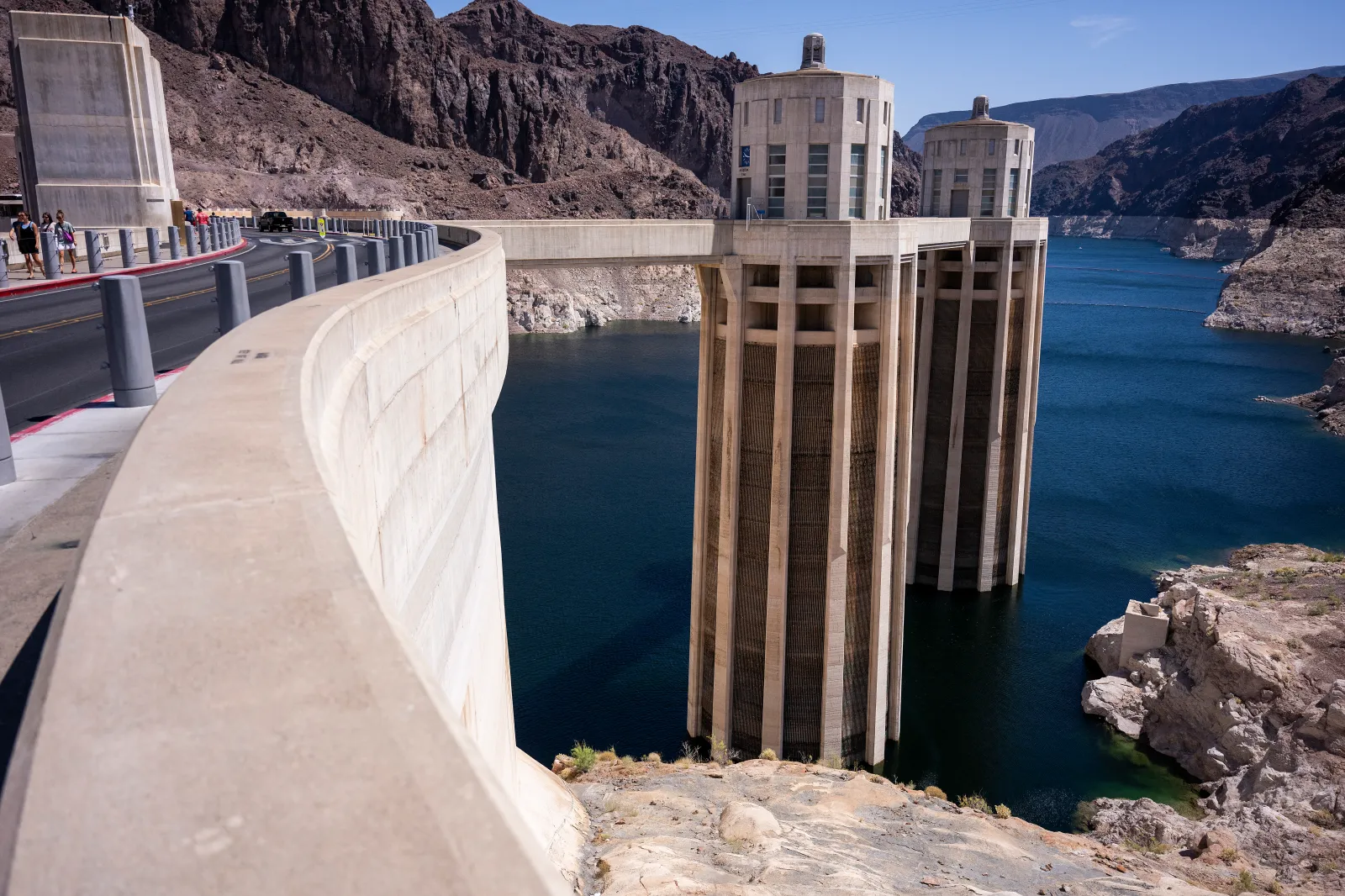
The Colorado River system, which includes the major reservoirs Lake Powell and Lake Mead, irrigates more than 5 million acres of farmland and provides water to some 40 million people across the Western U.S., according to the National Agricultural Law Center.
Read More on News
What To Know
One option detailed in the Friday draft report from the U.S. Bureau of Reclamation is the “Basic Coordination Alternative,” which the USBR says is designed to be put into action without requiring water users in the Basin to agree on how to share shortages on the lower Colorado River, how to store and deliver conserved water from reservoirs, or any other voluntary arrangements.
Another potential option involves building on ideas from Basin Tribes, federal agencies, and other stakeholders. Its goal is to protect critical infrastructure while supporting important resources like the environment, hydropower, and recreation. It does this by managing storage between Lake Powell and Lake Mead to strengthen the reservoirs’ ability to serve the Basin, the USBR said.
This plan also uses a proportional Lower Basin shortage distribution to assess how reductions would be shared among all main lower Colorado River water users in Arizona, Nevada, and California.”
The Maximum Operational Flexibility Alternative uses proactive measures, targeted reservoir management, and "flexible tools" to deal with increasingly unpredictable future water conditions. The goal is to stabilize system storage, encourage water conservation, and spread the benefits of flexibility and conservation across many resources.
This approach relies on "dual indicators"—system storage and recent hydrology—to decide annual water releases from Lake Powell and Lake Mead.
...
Another option, the Supply Driven Alternative, relies on Lake Powell based on historical natural water flow. Under this plan, Lake Powell’s annual releases would be set as a fixed percentage of the average natural flow at Lees Ferry over the past three years, while water deliveries to the Lower Basin would depend on Lake Mead’s elevation.
The agency also mentions a “No Action Alternative, which, while the USBR said would represent a change from current operations, “would not represent a decision by Reclamation to adopt a new set of long-term operating guidelines.”
What People Are Saying
Sharon Megdal, director of the University of Arizona Water Resources Research Center, told Newsweek in December: "Currently, the water-in-storage situation for the Colorado River system is not good.
“[There is] less in storage than last year, and current snow conditions are not good. Even if early 2026 snowpack is robust, the system will remain highly stressed. The region is faced with difficult choices regarding Colorado River water deliveries and dam operations, including those related hydropower generation.
"The debates regarding river management reflect these physical realities. There are many trade-offs to consider. We cannot keep drawing from savings (system storage) when the system is not making sufficient deposits of water. We must work with what nature is providing."
What Happens Next
Several agreements and management plans that guide how the Colorado River’s facilities are operated are set to expire at the end of 2026.
The USBR said that a formal public review and comment period will begin on January 16.
View 0 Comments
Submit Correction
View Editorial & AI Guidelines