...

By Joe Edwards
Reporter
0
Share
Newsweek is a Trust Project member
See more of our trusted coverage when you search.Prefer Newsweek on Googleto see more of our trusted coverage when you search.
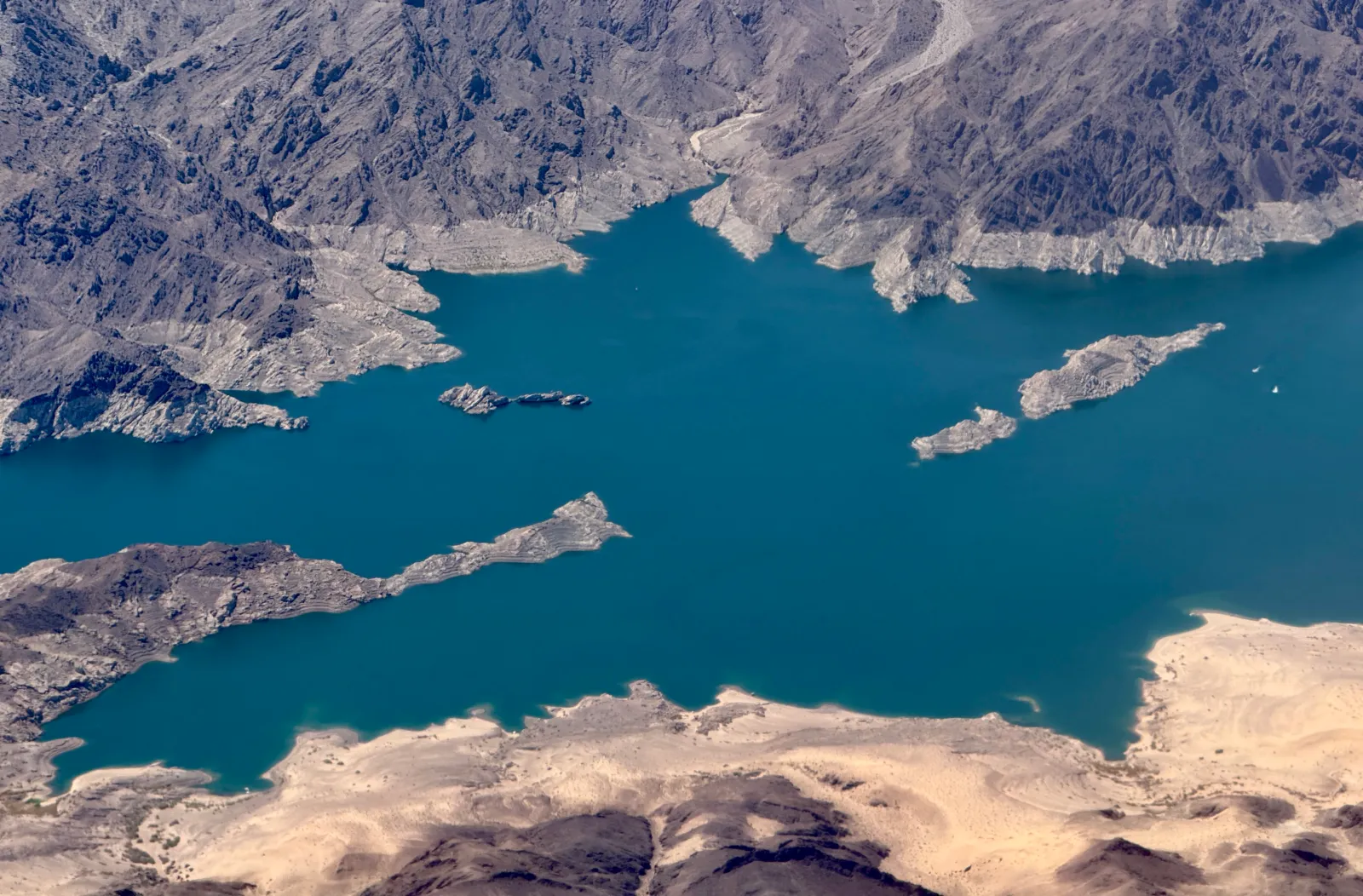
Federal projections, public health alerts, power reliability worries, and dangerous temperatures converged at Lake Mead this month, compounding risks for the nation’s largest reservoir and the millions who rely on it.
Why It Matters
The Colorado River system, including Lakes Mead and Powell, supplies water to roughly 40 million people and irrigates more than 5 million acres of farmland.
Read More on News
What To Know
Recent federal forecasts from the Bureau of Reclamation projected Lake Mead’s end-of-November 2027 elevation at 1,032.76 feet, lower than earlier expectations and below 2022 levels— when the lake was battling critically low water levels following years of drought.
Local reporting noted that the level would sit nearly eight feet under the prior low reached in 2022, when receding waters exposed skeletal remains.
...
Separately, the National Park Service reported a harmful algal bloom at Government Wash, warning that children and pets face higher risk if they ingest contaminated water and advising pet owners to keep animals leashed and away.
HABs typically occur from August through December, though they can form outside that window if conditions allow, the NPS said.
“Calm, warm, sunny conditions allow algae to concentrate in coves and form bright green scum,” the agency explained.
Meanwhile, SFGATE reported that hydropower output at Hoover Dam continues to decline as reservoir levels fall, raising reliability concerns for customers who have historically depended on the dam’s electricity.
The reservoir is also situated on the Nevada-Arizona border in the Southwest—an area that has recently baked under record-breaking heat waves.
Amid the dangerous conditions, federal officials closed several trails in the recreation area, including Goldstrike Hot Springs, Arizona Hot Springs, Liberty Bell Arch, White Rock Canyon, and Lone Palm, and urged visitors to carry extra water, avoid midday heat, and expect delayed emergency response.
SFGATE said the unseasonably warm weather across the West has also limited opportunities for water replenishment.
What People Are Saying
Peter Soeth, the Bureau of Reclamation's deputy chief of public affairs told Newsweek previously: “Reclamation continues to monitor hydrologic conditions and apply the best available information to guide operational decisions that support the long-term stability of the Colorado River system."
What Happens Next
As of March 22, Lake Mead was 33 percent full with 8,741,689 acre-feet in storage—roughly 53 percent of the average level for the date, according to Bureau of Reclamation data.
View 0 Comments
Submit Correction
View Editorial & AI Guidelines